Our Location
304 North Cardinal St.
Dorchester Center, MA 02124


Written by Sarah Chen – Export Manager at Hikinglass. With over 12 years of experience in the glass & mirror industry, I have helped 500+ importers from 40 countries (USA, UK, Germany, UAE) optimize their supply chain and reduce breakage rates to under 1%.
Last Updated: December 2025 | Topic: Supply Chain Optimization & Quality Control
In the B2B sector, the procurement of large-area dressing mirrors is technically demanding. Unlike small vanity mirrors, large sheets (e.g., 72″ x 36″) are prone to flexing. If you don’t account for glass mechanics during the ordering process, no amount of careful driving will save the product. This guide focuses on the root causes of deformation—which often start before the truck even moves—and how to ensure your mirrors arrive perfectly flat.
Why you need to read this guide: We are revealing the factory secrets that 90% of trading companies won’t tell you. We will cover 2026 specification standards, packaging engineering, and the critical logistics protocols to ensure your procurement of large-area dressing mirrors results in profit, not complaints.
According to recent data from Grand View Research, the global smart mirror and large-format decorative mirror market is projected to grow at a CAGR of 8.5% through 2026. The demand is shifting significantly in the USA and Germany towards floor-to-ceiling designs.
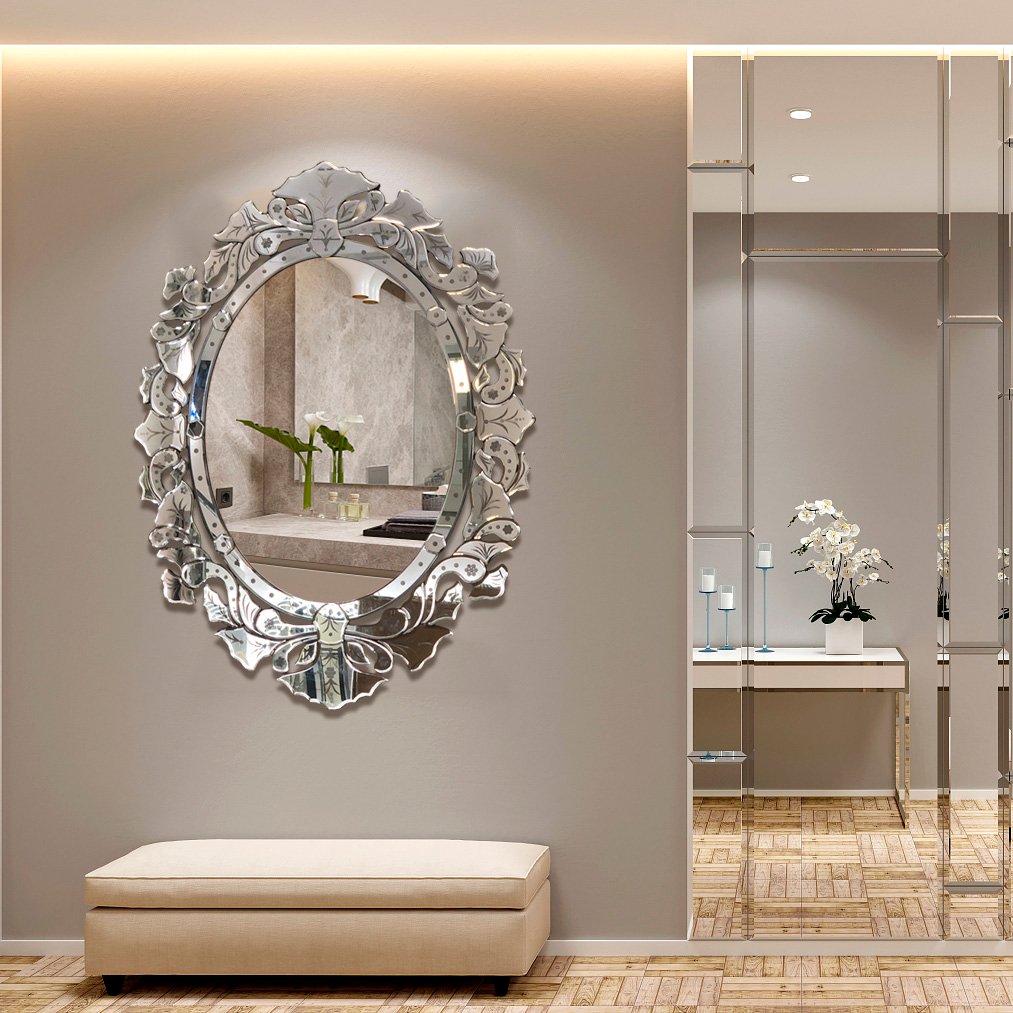
When we talk about avoiding deformation during the procurement of large-area dressing mirrors, we must distinguish between elastic deformation (temporary bending) and optical distortion (permanent defects).
Deformation during transportation usually occurs due to:
The #1 reason for deformation is not the truck—it’s the specification. Many factories will quote you 3mm or 4mm glass to win on price. Do not accept this for large-area dressing mirrors.
| Feature | Standard Construction Grade (G2) | Automotive Grade Float (G1) – Recommended |
|---|---|---|
| Flatness | ±0.2mm waviness | ±0.05mm waviness (Perfect Reflection) |
| Thickness Consistency | High variance | Precise uniform thickness |
| Deformation Risk | High (Distorts at distances > 1m) | Zero (True-to-life reflection) |
| Cost Index | 100% | 115% |
Pro Tip: At Hikinglass, we only use G1 Automotive Grade Float Glass for export orders to ensure zero optical distortion.
Image Suggestion: A side-by-side comparison photo. Left side: Cheap 3mm mirror showing a warped reflection of a straight line. Right side: Hikinglass 5mm mirror showing a perfectly straight reflection.
Alt Text: Comparison of optical distortion between 3mm cheap mirror and 5mm automotive grade silver mirror for B2B procurement.
Where should you source to balance quality and deformation risks?
This is the answer to the main question: How to avoid deformation during transportation? It comes down to physics compliant packaging. Referencing Large Packaging Standards [[1](https://www.ecfr.gov/current/title-49/subtitle-B/chapter-I/subchapter-C/part-178/subpart-P)], we utilize heavy-duty protocols.
Image Suggestion: Photo of a shipping container being loaded with wooden crates. Arrows indicating the vertical orientation and bracing bars holding the crates in place.
Alt Text: Professional container loading of large plywood crates for upvc windows and dressing mirrors to prevent transportation damage.
Compliance is part of quality assurance. A certified mirror is a tested mirror.
Prices below are estimated for a standard 1800mm x 600mm x 5mm Frameless Silver Mirror with Safety Backing (FOB China).
| MOQ (Pieces) | Unit Price Estimate (USD) | Production Lead Time |
|---|---|---|
| 50 – 100 | $28.50 – $32.00 | 15 Days |
| 101 – 500 | $24.00 – $27.00 | 20 Days |
| 501 – 1000 | $21.50 – $23.50 | 25 Days |
| 5000+ (Contract) | $18.50 – $20.00 | 30-40 Days |
Note: Prices fluctuate with soda-ash raw material costs and exchange rates. Contact us for a real-time quote.
Client: A luxury hotel chain in UAE.
Problem: Previous supplier shipped 4mm mirrors in standard cartons. The high heat in the container (60°C+) caused the adhesive backing to soften, and the glass bowed 3mm in the center.
Hikinglass Solution: We upgraded to 6mm Copper-Free Mirror. We used a “cool-chain” logic—insulating the container with thermal liners and using high-temp resistant epoxy backing.
Result: 1200 units installed, 0% deformation, client saved $45,000 in replacement costs.
A: No. Mixing sizes creates uneven pressure points. We pack identical sizes together or use internal dividers to separate them securely.
A: For 5mm thickness, we recommend staying under 2440mm x 1220mm. Anything large-area dressing mirrors requires 6mm thickness or lamination to maintain rigidity.
A: If you receive broken goods despite our wooden crate packaging, we offer a “Free Replacement + Air Freight” policy for the damaged units. Read our warranty policy.
Planning your 2026 inventory? Order a sample crate now and get Free Custom Logo Printing on packaging. Valid until January 31, 2026.
Don’t gamble with your reputation. Partner with a factory that understands the physics of glass.Get Free Quote in 12 Hours
Last Updated: December 2025
This article is independently written based on 12 years of real export experience and complies with International Packaging Standards.