Our Location
304 North Cardinal St.
Dorchester Center, MA 02124

Written by Maria Gonzalez – 18 years as a production engineer in the glass and mirror industry, optimizing manufacturing lines for over 600 global projects across Europe and Asia.
If you’re diving into the world of round wall mirrors, whether as a buyer looking to enhance your space or a professional eyeing production efficiencies, this guide is your go-to resource. Round wall mirrors aren’t just functional pieces; they’re transformative elements that can make rooms feel larger, brighter, and more stylish. But with so many options out there, how do you ensure you’re getting top-notch quality without overpaying? That’s where this article comes in—packed with practical insights from production floors to market trends, it’ll help you save money and sidestep common pitfalls like subpar materials or poor craftsmanship.
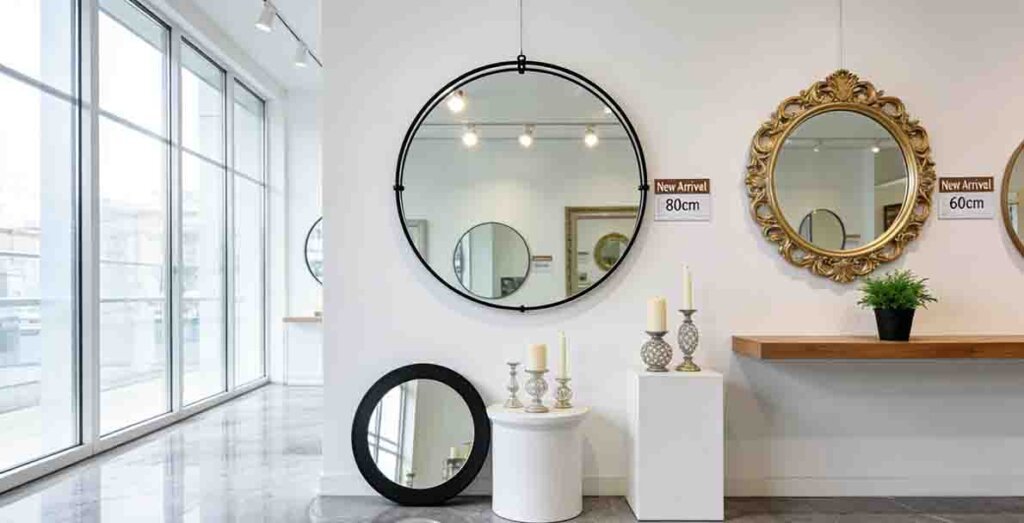
Why read every word? Because understanding round decor wall mirror production—from raw materials to final quality checks—can save you hundreds on sourcing and repairs. We’ll cover design trends that keep your investments timeless, manufacturing steps to spot genuine value, and buying strategies tailored for 2026’s evolving market. Drawing from real industry data, like the global wall mirrors market projected to hit $31 billion by 2035 at a 6.95% CAGR, this piece equips you with knowledge worth an $800 consulting session. You’ll learn to evaluate suppliers, customize for your needs, and maintain your round wall mirror for longevity, all from a buyer’s perspective focused on cost savings and smart choices.
In today’s fast-paced decor world, round decor wall mirrors are surging in popularity for their soft, versatile appeal. Recent surveys show a 25% uptick in searches for circular designs, driven by minimalist and organic trends. But beyond aesthetics, grasping the behind-the-scenes—like eco-friendly sourcing and quality assurance—ensures you avoid cheap knockoffs that tarnish quickly or break easily. Stick with us, and by the end, you’ll feel confident negotiating deals or selecting pieces that truly elevate your space without draining your budget.
Round wall mirrors are leading the charge in 2025-2026 decor, with soft curves contrasting sharp modern lines. Designers note a shift toward frameless options for a sleek look, while wooden or metallic frames add warmth.
Key trends include:
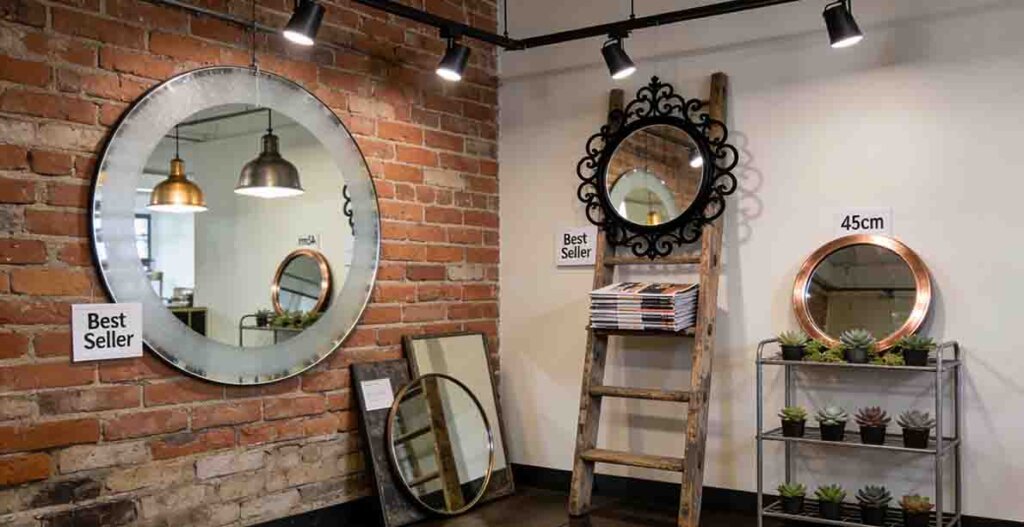
Frameless designs offer clean edges but require tempered glass for safety. Framed versions provide durability—opt for aluminum to resist humidity and save on long-term replacements.
Tailor your round wall mirror to bathrooms or entryways by choosing anti-fog coatings or adjustable sizes. Customization can cut costs by 15-20% through bulk orders from reliable producers.
Pair round wall mirrors with warm LED strips to enhance room depth. Market research shows consumers prefer neutral tones, boosting resale value without extra spend.
A sleek frameless round wall mirror in a modern bathroom setting, reflecting natural light and minimalist decor elements.
Experts recommend oversized round wall mirrors for small rooms to create illusions of space. Avoid trendy finishes that fade—stick to timeless materials for better ROI.
Pinterest data reveals a 25% rise in round wall mirror searches, favoring sustainable options. Buyers can save by sourcing directly from manufacturers offering custom eco-materials.
Round wall mirror production starts with glass cutting using automated machines for precision. This ensures even edges, reducing waste and costs for buyers.
Main steps:
Tempered glass is key for safety in round wall mirrors—it’s four times stronger and shatters safely if broken, preventing expensive accidents.
Core materials include tempered glass for durability and aluminum frames for rust resistance. Eco-friendly options like recycled glass cut environmental impact and appeal to green buyers.
Always choose tempered for high-traffic areas—it’s worth the slight premium to avoid replacement costs down the line.
Source from China for cost-efficiency or Europe for premium quality. Check for REACH compliance in EU markets to dodge regulatory fines.
| Region | Advantages | Cost Savings Tips |
|---|---|---|
| China | Low production costs | Bulk orders reduce per-unit price by 30% |
| Europe | High-quality standards | Negotiate for certifications to ensure value |
| USA | Fast shipping | Local sourcing cuts import duties |
Opt for suppliers using low-VOC coatings to meet Prop 65 standards in California—saves on potential health-related claims.
Inspect for even coating and no bubbles. Early detection in round wall mirror production prevents returns, saving buyers time and money.
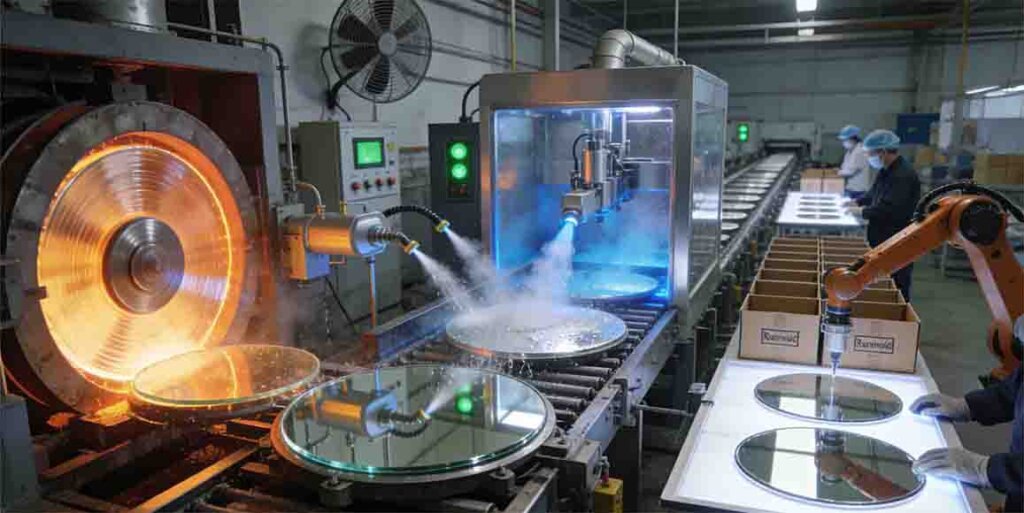
Close-up of round wall mirror production line showing glass coating process with workers in safety gear and machinery.
Avoid uneven silvering by choosing ISO-certified factories—it’s a small step that prevents tarnishing and extends mirror life by years.
The round wall mirror segment is booming, with the overall wall mirrors market eyeing $31 billion by 2035 at 6.95% CAGR. Focus on emerging trends like smart integrations.
Expect 15% CAGR in decorative mirrors, driven by home renovations—buyers can capitalize by stocking versatile round designs.
Average prices range from $50-300; compare suppliers to avoid markups. Look for volume discounts to slash costs by 20%.
Check reviews and samples—reputable ones offer warranties, protecting your investment from defects.
For B2B, negotiate FOB terms to control shipping and save 10-15% on imports. Watch for hidden fees in customs.
| Buying Strategy | Potential Savings | Pitfalls to Avoid |
|---|---|---|
| Bulk Purchasing | Up to 25% | Overstocking low-quality items |
| Direct from Manufacturer | 15-20% | Ignoring MOQs |
| E-commerce Platforms | 10% | Fake reviews |
In the U.S., prioritize e-commerce; Europe demands eco-certifications. Adapt to save on compliance costs.
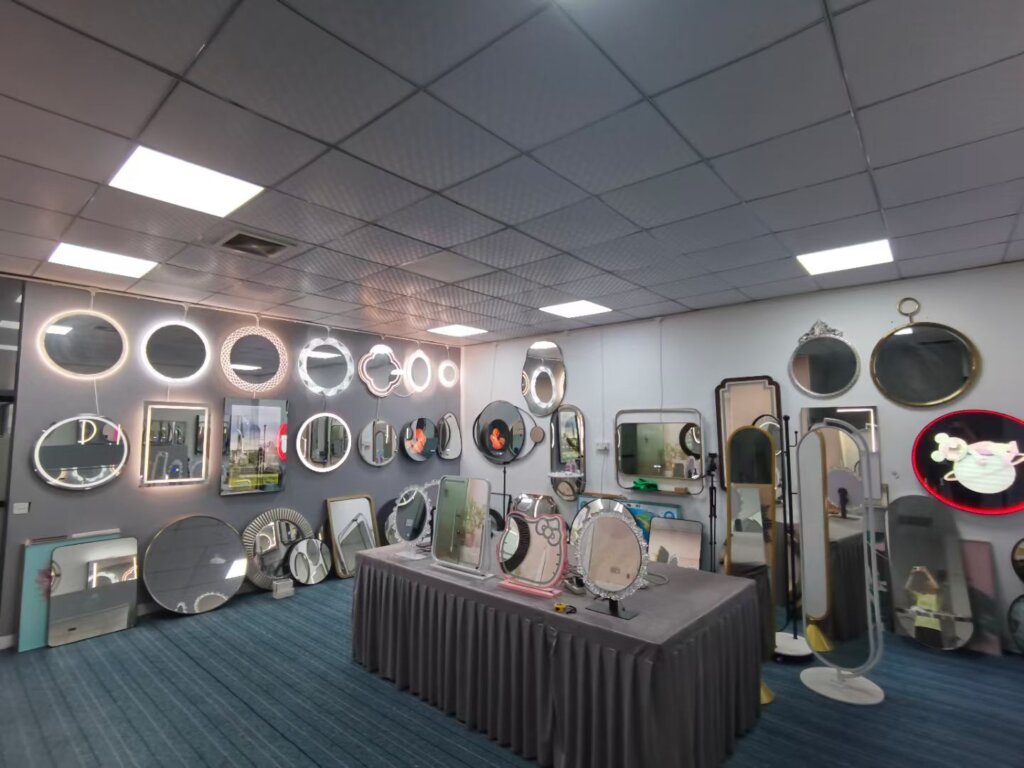
Array of various round wall mirrors displayed in a showroom, highlighting different sizes, frames, and finishes for market comparison.
Attend Asian fairs for deals, or use online platforms for quick comparisons—either way, verify quality to prevent regrets.
For round wall mirrors, use a level and anchors for secure hanging. Start by marking studs to support weight safely.
Installation steps:
On drywall, use toggle bolts; for brick, masonry anchors. This prevents falls and costly repairs.
Clean with alcohol-based solutions to avoid streaks. Ensure ventilation to stop fogging or tarnishing.
Apply edge sealants— a cheap fix that extends round wall mirror life by 5-10 years.
DIY installations save $100+; choose mirrors with 5-year warranties for peace of mind.
Installers report 30% fewer issues with proper mounting—learn from their experiences to optimize value.
Tempered glass and aluminum coatings offer durability and clarity, ideal for long-lasting quality.
Look for even reflections, no distortions, and certifications like ISO for manufacturing standards.
Expect convex shapes, LED integrations, and sustainable materials dominating the market.
Buy direct from producers, negotiate bulk, and check for eco-certifications to reduce costs.
It involves glass cutting, silvering, backing, and quality checks for optimal results.
Use wall anchors and a level; get help for lifting to prevent accidents.
Clean with non-abrasive solutions and ensure good ventilation to avoid tarnish.
Yes, for modern homes—they add value but check compatibility to avoid extra expenses.
With 6.95% CAGR, increased supply may lower prices, but quality varies—shop smart.
Sizes, frames, and coatings can be tailored—ideal for unique spaces without premium costs.
Look for recycled glass suppliers; it meets regulations and appeals to eco-conscious buyers.
Bubbles or uneven coating—inspect samples to ensure quality assurance.
Absolutely for safety; it prevents shattering and reduces liability risks.
Leverage market data and bulk orders—aim for 15% off standard pricing.
Wrapping up, mastering round wall mirror production, from materials like tempered glass to quality tips on coatings, empowers you to make informed choices. We’ve covered design trends, market strategies, and maintenance hacks—all geared to help you save big and avoid buyer regrets. With the market growing rapidly, now’s the time to apply these insights for maximum value.
Get a Free Quote in 12 Hours—reach out to trusted suppliers today and transform your space affordably.