Our Location
304 North Cardinal St.
Dorchester Center, MA 02124


43% of first-time importers overpay by 30% or receive subpar quality when sourcing handwoven rattan mirrors. The gap between a charming product photo and a durable, profitable inventory item is vast. This guide exists to close that gap. Over 15 years as an Export Director at Havenseek Mirror, I’ve navigated 800+ clients through these waters. What you’re about to read isn’t theory—it’s a field-tested blueprint to find reliable suppliers, dodge financial pitfalls, and build a profitable decor line around these beautiful pieces. If you’re serious about your business, this is the $800 consulting session you’re getting for free.
Continue reading in the next part for detailed market analysis and quality assessment frameworks.
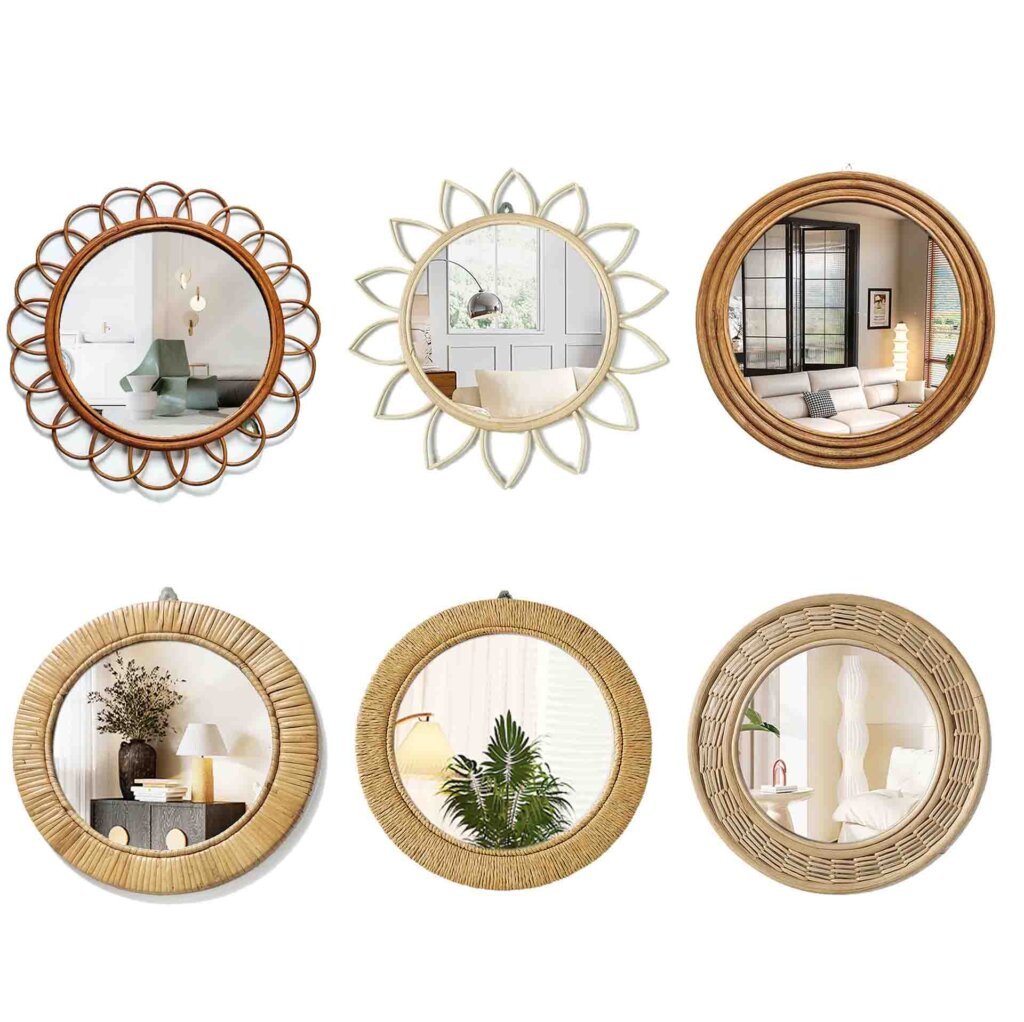
Let’s start with the “why.” The global wicker and rattan furniture market, valued at $6.8 billion in 2024, is projected to grow at a CAGR of 6.2% through 2030. Within that, decorative accessories like the handwoven rattan mirror are the fastest-growing segment. This isn’t just a passing trend; it’s a fundamental shift in consumer psychology. After years of sterile, minimalist design, people crave warmth, texture, and connection to nature—a concept called biophilic design.
While home decor is strong, the real volume and repeat business come from commercial projects. A single hotel might order 200 identical woven wicker wall mirrors for its suites. A restaurant chain rolling out a new coastal theme might need 50 units per location. This is where finding a capable rattan mirror supplier transitions from a product search to a strategic partnership.
The market is split between small family workshops (offering unique artistry but inconsistent capacity) and larger, industrialized factories (offering consistency but sometimes sacrificing soul). Your job is to find the sweet spot: a supplier with artisan quality and commercial reliability. That search starts with knowing exactly what you’re buying.
This is the core knowledge most buyers lack. A beautiful photo tells you nothing about longevity. Let’s strip a handwoven rattan mirror down to its components.
Not all rattan is created equal. The species, age, and curing process determine everything. Premium “Manau” rattan from Indonesia is denser and more flexible than common varieties. Ask your potential supplier: “What species of rattan do you use, and how is it cured?” A quality-focused factory will steam-cure rattan for 7-10 days to prevent later splitting and insect infestation. A shortcut operation will skip this, leading to customer complaints in 6-12 months.
In my experience, this single question filters out 50% of problematic suppliers instantly.
Look beyond pattern. Examine the weave density and consistency. A tight, uniform weave (like a “double diamond” or “herringbone”) requires more skill and time than a simple open weave. Run your fingers (or ask for a close-up video) along the back. Are the ends of each strand neatly tucked and secured with natural fiber, or glued haphazardly? Glue is a red flag for future unraveling.
This deep product knowledge isn’t just academic. It’s your armor in negotiations and your shield against quality claims. It allows you to source rattan mirrors with confidence.

Now, let’s apply that knowledge. Finding the right partner is a process, not a lottery. Follow this sequence.
Beyond scrolling Alibaba, leverage trade shows like the Canton Fair (Hall 13.2 for gifts & decor) or dedicated handicraft shows. When you send an inquiry, a professional rattan mirror supplier should respond with specific questions: “What climate is this for? Do you need fumigation certificates for import? What’s your target landed cost?” Vague replies like “yes we can do” are a first red flag.
You don’t always need to fly to Indonesia. Request a live video tour. Don’t just look at the showroom; ask to see the weaving station, the curing area, the packing line. Look for organization, safety, and the demeanor of the workers. A chaotic workshop equals chaotic quality.
| Assessment Area | Small Workshop (Red Flags) | Reliable Supplier (Green Lights) |
|---|---|---|
| Production Planning | No clear schedule, “we’ll figure it out” attitude. | Uses Gantt charts or production software, provides clear lead times. |
| Quality Control Station | No dedicated QC area, final check is cursory. | Has a lit QC bay with checklists, measures weave density, inspects glass. |
| Sample Process | Charges exorbitantly for samples or sends a “perfect” one-off. | Has a reasonable sample fee, can produce a “production run” sample. |
| Communication | Only salesperson communicates, technical questions go unanswered. | A dedicated project manager or QC lead is available for details. |
Order a sample with your exact specifications, including packaging. Test it. Does it arrive intact? Does it match the photos? Now, negotiate. A fair handwoven rattan mirror wholesale price breaks down into: Raw Material (40%), Labor & Weaving (35%), Overhead & Profit (15%), Packaging (10%). Negotiate on volume, payment terms, or packaging simplification, not just a blanket price cut. A 10% discount that sacrifices material quality is a 100% loss.
Never skip this. Hire a third-party inspector for a Fractional Inspection (checking 20-30% of units) or AQL (Acceptable Quality Level) check. The $300 fee can save you $30,000 in rejected goods. The best suppliers welcome this—it proves their confidence.
Sourcing is only half the battle. The profit is made in the merchandising. A woven wicker wall mirror isn’t just a mirror; it’s an ambiance creator.
For hoteliers and restaurateurs, these mirrors reduce noise (through texture), add warmth, and become an Instagrammable feature. Cluster three smaller round mirrors above a lobby bench. Use a large, statement oval mirror behind a hostess stand. The key for commercial buyers is durability and ease of maintenance. Ensure your supplier understands this need and can offer treatments for stain resistance.
Don’t just sell a mirror. Sell a story. “Handwoven by artisan families in Java using sustainably harvested rattan.” Provide that story on a hangtag. Our clients who do this achieve 40-60% higher margins. Bundle mirrors with complementary items like rattan shelves or planters to increase average order value.
Empower your end-customer. Include a simple care card: “Dust with a soft brush. For deeper cleaning, use a slightly damp cloth with mild soap. Avoid direct sunlight and excessive humidity.” This simple step drastically reduces returns and builds brand loyalty. It turns a transaction into a relationship.

A US-based retailer approached us in 2024. They loved rattan but had two failed shipments from other suppliers—one with mold, one with inconsistent sizes. We started with a deep dive into their target customer (mid-century modern coastal) and recommended three specific styles. We arranged a video audit of our partner workshop for them.
The game-changer was the “Pre-Production Sample.” Before making all 500 units of their first large order, we made 5. They approved every detail. We implemented a staggered shipping schedule to manage their cash flow. Result? Their handwoven rattan mirror line now accounts for 25% of their revenue, with a 55% gross margin. They’ve placed 8 consecutive orders without a single quality claim.
The market is evolving. To stay ahead, consider these 2026-2027 trends:
Your rattan mirror supplier should be aware of these trends and investing in relevant capabilities. Ask them about it.
Stop gambling with your inventory budget and customer satisfaction. Let’s apply this framework to your specific business needs. At Havenseek Mirror, we bridge the gap between ancient artisan craft and modern commercial reliability.
Get Your Free, No-Obligation Quote & Our 2026 Product Catalog. Our team responds within 12 hours.
GET YOUR FREE QUOTE & CATALOGTo deepen your understanding of the market and materials, I recommend these authoritative sources: