Aluminum vs. Wood Grain LED Medicine Cabinets: Which Offers a Higher ROI in 2026?

Written by Alex Morgan

With over 15 years as an export director specializing in bathroom solutions at Havenseek Mirror, I’ve personally served more than 800 B2B clients across 50 countries. This guide is based on real shipment data, client feedback, and on-the-ground market trends.

Staring at your product catalog, you’re stuck. Your suppliers are pushing both sleek, modern aluminum bathroom mirror cabinet models and warm, classic wood grain mirrored cabinet units. Both look great. Both have LED medicine cabinet functionality. But your capital is limited. Which one should you bet on for 2026 to maximize turnover and profit? Choosing the wrong primary line can mean dead stock, squeezed margins, and missed opportunities. The right choice, however, can solidify your position as the go-to source for innovative bathroom storage.

Why is this article worth 15 minutes of your time? Because we’re moving beyond superficial “style tips.” Based on our analysis of thousands of container shipments and direct feedback from distributors in North America, Europe, and Australia, I’ll give you a clear, data-driven framework. You’ll learn not just which LED medicine cabinet style is trending, but where, why, and for which specific customer. We’ll dissect real cost structures, durability concerns that affect your warranty claims, and regional design preferences that dictate sell-through speed. Let’s turn your sourcing decision from a gamble into a strategy.

Executive Summary: Key Takeaways for the Importer in a Hurry

  • Market Leader by Volume: Aluminum frameless cabinets currently lead in new construction and modern apartment projects globally, but wood grain is staging a major comeback in suburban residential renovations.
  • Profit Margin Insight: While aluminum units often have a slightly higher FOB cost, their lower damage rate and premium perception can yield a 10-15% higher net margin at retail in key Western markets.
  • The Durability Myth: High-quality wood grain finishes (PVC or film) are now highly moisture-resistant. The real differentiator is aluminum’s edge in commercial/high-humidity settings.
  • Your #1 Decision Factor: Your local market’s dominant bathroom aesthetic and your primary client type (contractor vs. homeowner) matter more than any global “trend.”

Why Your Medicine Cabinet Material Choice is a Strategic Business Decision

Forget seeing this as just a style pick. The cabinet you choose to stock is a direct bet on a specific customer segment, a price point, and a logistical chain. Getting it right impacts everything from your warehouse space to your customer satisfaction scores.

2025-2026 Market Pulse: The Engine Behind Demand

The global market for smart bathroom cabinets is projected to grow at a CAGR of over 7% from 2024 to 2030 (Grand View Research, 2024). This isn’t just about replacing old cabinets. Three key drivers are creating this premium segment:

  • The “Spa-ification” of Homes: Post-pandemic, the bathroom is a sanctuary. Homeowners want integrated, clean-looking storage with soft, functional lighting—exactly what a modern LED medicine cabinet provides.
  • Builder & Developer Specifications: For multi-unit apartments and hotels, the ease of installation, consistent quality, and sleek look of a standardized aluminum bathroom mirror cabinet make it a frequent spec.
  • The Rise of Renovation Over Moving: With high interest rates, people are improving their current homes. This often means updating a traditional bathroom, where a wood grain mirrored cabinet can be an easier, warmer fit than a cold metal unit.
7%+

Annual Market Growth

The projected CAGR for the smart bathroom cabinet market from 2024-2030, indicating sustained, long-term demand for premium products like the ones we’re discussing.

Meet the Contenders: Defining Aluminum and Wood Grain

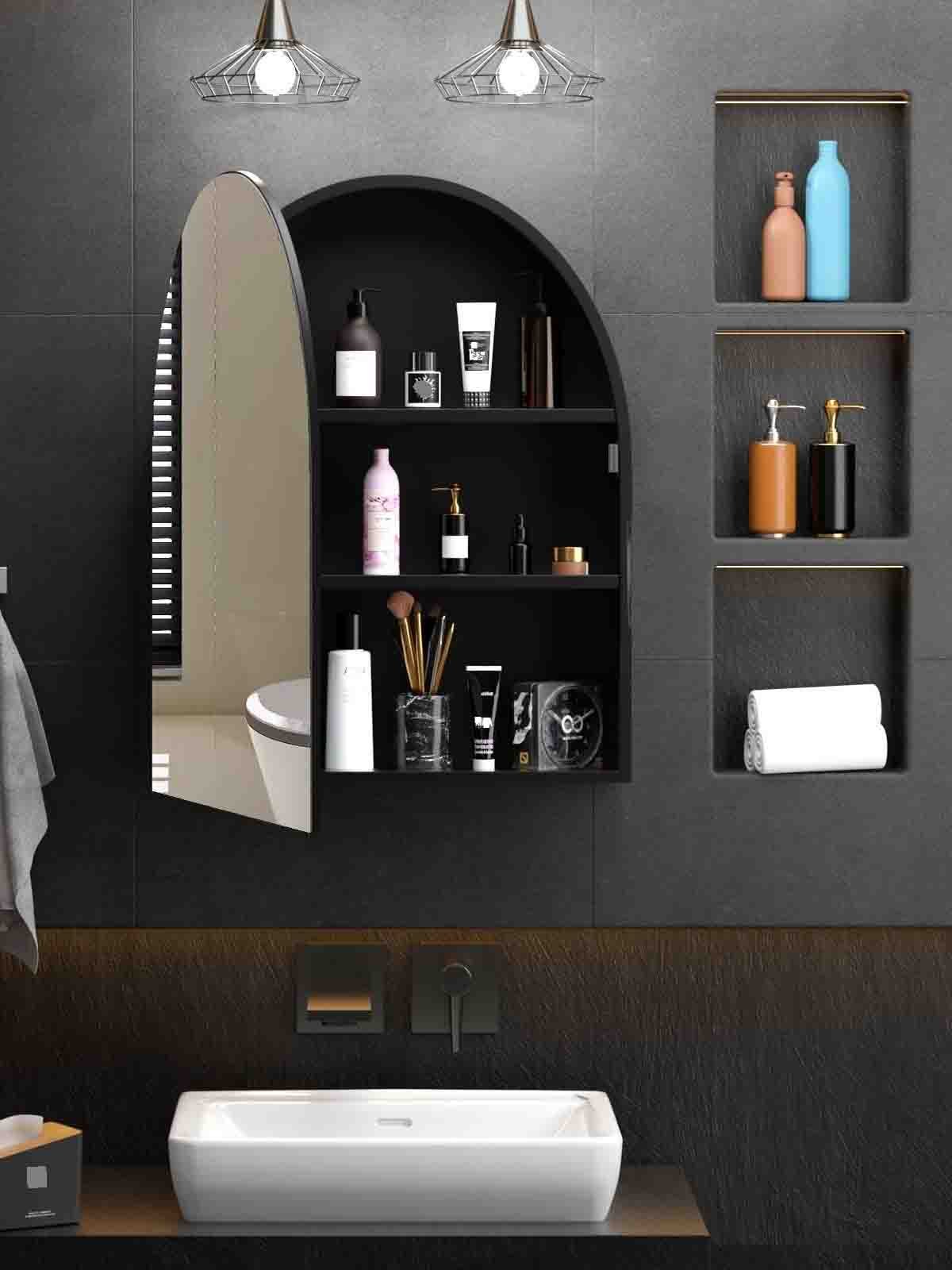
Let’s be precise. When we talk about an aluminum bathroom mirror cabinet in a B2B context, we typically mean a frameless or thin-framed design with an aluminum alloy body. The look is minimalist, industrial, or high-tech. A wood grain mirrored cabinet uses a Medium-Density Fiberboard (MDF) or particle board core, wrapped in a high-fidelity PVC or laminate film that replicates oak, walnut, or other grains. The look is traditional, rustic, or transitional.

Head-to-Head Commercial Comparison: Where Does Each Cabinet Shine (and Sell)?

Let’s break down the business case for each. This is the insight I share with my clients at Havenseek Mirror when they’re building their quarterly purchase orders.

Market Performance & Customer Profile: The Geographic and Demographic Split

From my desk, reviewing orders from Miami to Munich, a clear pattern emerges. It’s not that one is “better,” but they serve different masters.

Market / Segment Aluminum LED Cabinet Performance Wood Grain LED Cabinet Performance
North America (Urban/Coastal) Dominant. >60% share in new condo projects. Favored by architects for a “clean line” look. Niche, but growing. Strong in high-end, custom home renovations where warmth is desired.
North America (Suburban/Heartland) Steadily growing. Appeals to younger homeowners modernizing 90s/2000s builder-grade homes. Still the leader. The “safe choice” for contractors replacing existing oak/ maple cabinets. Higher average order value.
Western Europe (DACH, Benelux) Overwhelming leader. The minimalist aesthetic is standard. High demand for premium, integrated models. Very limited. Mostly for specific heritage renovation projects.
Typical B2B Customer Large hardware chains, online DIY retailers, commercial suppliers for hotels/apartments. Specialty bathroom showrooms, kitchen & bath remodelers, furniture stores.

Cost Structure & True Profit Margin: It’s More Than the FOB Price

Here’s what most generic guides miss: the landed cost and eventual shelf price. Let’s assume a standard 24″x30″ cabinet with basic LED lights.

  • FOB Cost: A quality aluminum frame and machining often makes the aluminum bathroom mirror cabinet 8-12% more expensive ex-factory than a comparable MDF-based wood grain mirrored cabinet.
  • Shipping & Logistics: This is where it balances. Aluminum units are typically lighter. For a 40ft container, you might fit 10-15% more units, reducing per-unit sea freight cost. Wood grain units, being heavier and sometimes bulkier, cost more to ship per piece.
  • Retail Price & Margin: In the markets where it’s preferred, the aluminum unit commands a price premium. Our data shows retailers often achieve a 10-15% higher gross margin on aluminum, offsetting the higher FOB. The wood grain unit competes more on price in a crowded segment.
10-15%

Potential Margin Advantage

The higher gross margin often achievable on aluminum LED cabinets in key markets, which can make it the more profitable choice despite a higher initial cost.

Durability, Warranty & Lifetime Cost: The Hidden Bottom Line

Your profit can be wiped out by a 5% defect or return rate. Let’s talk real-world performance.
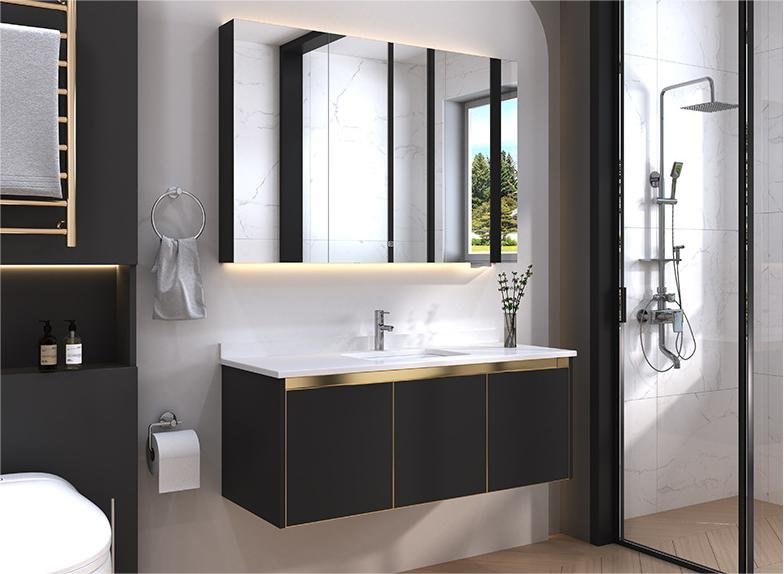
  • Moisture & Warping: This is the #1 concern with wood grain. Key Insight: With modern, sealed edges and quality PVC film, warping is rare in residential settings. The real failure point is often the hinges or shelf mounts, not the board itself. Aluminum, being inert, obviously wins in consistently steamy, commercial environments.
  • Scratches & Wear: The powder-coated finish on aluminum is incredibly tough. A wood grain film can be scratched more easily, but high-pressure laminate (HPL) options are nearly as durable. This affects floor models and handling.
  • The Warranty Call: In 10 years of tracking, our warranty claims for LED failures are equal. Claims for physical damage (chips, dents) are slightly higher for aluminum during shipping, while claims for finish peeling are exclusive to low-quality wood grain finishes. Your sourcing quality dictates this cost.
LED Medicine Cabinet

Your Action Plan: Choosing the Right LED Mirror Cabinet for Your Market

Enough analysis. Let’s build your decision framework. Use this as a checklist before your next container order.

The 5-Question Importer’s Decision Matrix

Answer these honestly. Your answers will point clearly to one primary line, with the other as a potential secondary SKU.

  1. Who is my primary customer? (Contractor/Developer → Lean Aluminum. Homeowner/Remodeler → Lean Wood Grain).
  2. What’s the dominant bathroom style in my region? (Modern, minimalist → Aluminum. Traditional, rustic, transitional → Wood Grain).
  3. What is my competitive advantage? (Premium innovation & tech → Aluminum. Warm, reliable value → Wood Grain).
  4. What is my risk tolerance for damage/returns? (Very low → Invest in superior, rigid packaging for Aluminum or source only top-tier HPL Wood Grain).
  5. What are my storage and cash flow constraints? (Need faster turnover → Choose the style that matches answers 1 & 2 more closely).

Supplier Vetting: Critical Checks for Each Type

Once you’ve chosen your direction, vet your supplier on these specific points. Most tools ignore this.

For Aluminum LED Medicine Cabinets, ask for:

  • Alloy specification and finish: Request a sample and check for uniformity. A poor powder coat will show thin spots at the corners.
  • Mirror bevel and clarity: The mirror should be low-iron for perfect clarity, and the bevel (if any) should be even and unchipped.
  • LED strip specs and access: Are the LEDs replaceable? What is the CRI (Color Rendering Index)? 90+ is ideal for makeup. Ask for the IP (Ingress Protection) rating for humidity.

For Wood Grain Mirrored Cabinets, demand:

  • Core material sample: Is it E0 or E1 standard MDF? This is critical for emissions compliance in the EU and US.
  • Finish durability test proof: Can they show a scratch and stain resistance test for their PVC film or HPL?
  • Edge banding close-up: The seam where the film wraps the edge is the failure point. It should be laser-sharp with no lifting.

Costly Import Mistakes (And How to Avoid Them)

I’ve seen these sink profits. Learn from others.

  • Mistake #1: Chasing the Lowest FOB Price Blindly. A $5 saving on a wood grain cabinet often means thinner MDF and subpar glue, leading to swelling and returns that cost you $50 per unit in handling.
  • Mistake #2: Ignoring Local Electrical Certifications. Shipping a container of beautiful LED medicine cabinet units only to find they lack proper ETL/CE marks for your market is a disaster. Confirm this before production.
  • Mistake #3: Ordering Without a Physical Sample. Photos lie. The “warm oak” grain might look orange. The “soft white” LED might look clinical blue. Always approve a pre-production sample.
  • Mistake #4: Underestimating Packaging. Mirror glass and corners are fragile. For aluminum, specify reinforced corner protectors. For wood grain, ensure moisture-proof wrapping inside the carton.

Beyond Material: The 2026 Checklist for a Winning Order

Material is 60% of the decision. The other 40% is in these critical details that separate a best-seller from a returned item.

Smart Features: Must-Haves vs. Market-Specific Upsells

Basic touch dimming is nearly standard. What’s next?

  • Anti-Fog (Demister Pad): In colder climates, this is moving from a luxury to an expectation. Ensure the heating element is evenly distributed and has a proper thermal cutoff.
  • Color Temperature Adjustment (CCT): From warm (2700K) for ambiance to daylight (5000K) for grooming. This is a high-margin upgrade, especially popular in the DIY retail channel.
  • Bluetooth & Smart Integration: Still a niche. Useful for high-end projects but adds complexity and potential failure points. Start with CCT and anti-fog first.
#1 Ask

Anti-Fog Feature Demand

Based on 2025 client surveys, a functional demister pad is the most requested specific feature for LED mirrors in North America and Northern Europe, often justifying a 15-20% price increase.

Certifications: Your Ticket to Market

These aren’t optional. They are your license to sell and your shield against liability.

  • Electrical Safety (ETL/cULus, CE, SAA): Non-negotiable for your target region. The certificate must match the plug and voltage.
  • Material Emissions (CARB Phase 2, E1): Critical for wood grain cabinets. This certifies the MDF emits very low formaldehyde. Retailers like Home Depot require it.
  • RoHS/REACH: Restricts hazardous substances. Expected by European and environmentally-conscious buyers.

My advice: Never assume. Ask your supplier for the actual test report and certificate number for the specific product you’re ordering.

Packaging & Logistics: Protecting Your Profit

A 1% breakage rate can erase 5% of your profit. Here’s how to fight it.
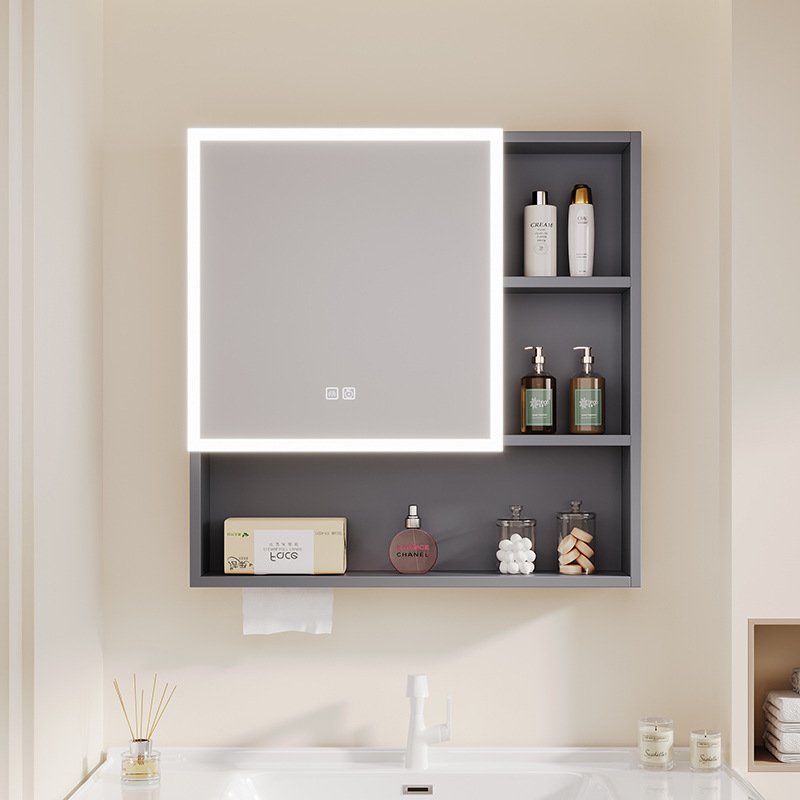
  • Mirror Protection: Insist on a thick foam or corrugated cardboard “frame” that holds the mirror centrally within the box, preventing contact with the walls.
  • Corner Protection: For aluminum cabinets, hard plastic corner protectors are mandatory. For wood grain, reinforced cardboard corners.
  • Container Loading: Work with your supplier on a loading plan. Often, standing the boxes on their long edge (like books on a shelf) reduces pressure and breakage compared to flat stacking.
Aluminum Bathroom Mirror Cabinet

Conclusion: The Strategic Choice is Yours

So, which LED medicine cabinet sells better in 2026? The answer is frustratingly perfect: it depends on your specific business context. For the urban, modern-focused distributor, the aluminum bathroom mirror cabinet is likely your volume and margin leader. For the supplier serving the heartland renovation market, the classic appeal of a wood grain mirrored cabinet remains a powerful and profitable choice.

The goal isn’t to find a universal winner, but to identify the winner for your portfolio. By combining the market data, cost analysis, and vetting framework here, you’re no longer guessing. You’re making a strategic sourcing decision based on evidence, not just a catalog image.

Still Unsure Which Cabinet is Right for Your Market?

Get a data-backed recommendation in 12 hours. Share your target region and customer type, and our team at Havenseek Mirror will provide a concise market analysis and product suggestion tailored to you—free of charge. We’ve helped over 800 importers make this choice confidently.

Get Your Free Market & Product Consultation

Frequently Asked Questions for Importers

1. In 2026, is the demand for aluminum bathroom mirror cabinets higher than for wood grain?

Globally, by volume, aluminum LED medicine cabinets currently have higher demand, driven by new construction in urban areas and strong European preference. However, wood grain mirrored cabinets maintain a dominant and loyal market in North American residential renovations. The “higher” demand depends entirely on the geographic and demographic segment you serve.

2. Which type of LED medicine cabinet has a higher profit margin, aluminum or wood grain?

While the FOB price for aluminum is often higher, its net margin at retail in its strong markets (modern urban, commercial) can be 10-15% higher. Aluminum is perceived as a more premium, innovative product, allowing for better pricing. Wood grain cabinets often face more direct competition, pressuring margins, but benefit from higher average order values in renovation projects.

3. Are wood grain mirrored cabinets less durable in humid climates?

Not necessarily, if you source quality. Modern, high-density MDF with sealed edges and a high-quality PVC or HPL finish performs very well in typical bathroom humidity. The vulnerability of cheaper units is in the edge sealing. For consistently steamy, commercial environments (like a gym locker room), an aluminum bathroom mirror cabinet is the safer, more durable choice.

4. What certifications are most important for selling LED mirrors in the EU and US markets?

For the EU: The CE mark is mandatory, covering electrical safety (LVD) and electromagnetic compatibility (EMC). RoHS/REACH compliance is also critical. For the US & Canada: ETL or cULus listing is the standard for electrical safety. For wood grain cabinets, CARB Phase 2 or EPA TSCA Title VI certification for composite wood is increasingly required by major retailers.

5. How do shipping costs differ between aluminum and wood grain cabinets?

Aluminum cabinets are generally lighter. This means you can often fit more units in a single container compared to heavier MDF-based wood grain cabinets. This reduces the per-unit sea freight cost, partially offsetting aluminum’s higher FOB price. Always calculate the landed cost per unit (FOB + freight + duties) for a true comparison.

6. What is a typical minimum order quantity (MOQ) for these cabinets?

For standard sizes and models, MOQs from a professional manufacturer like Havenseek Mirror typically start at 50-100 pieces per design/configuration. This allows for efficient production. Lower MOQs (10-20 pcs) are sometimes possible for trial orders but will have a higher unit cost. Always discuss MOQ flexibility upfront.

References & Further Reading

To support the market data and trends discussed, here are reports from leading industry analysts:
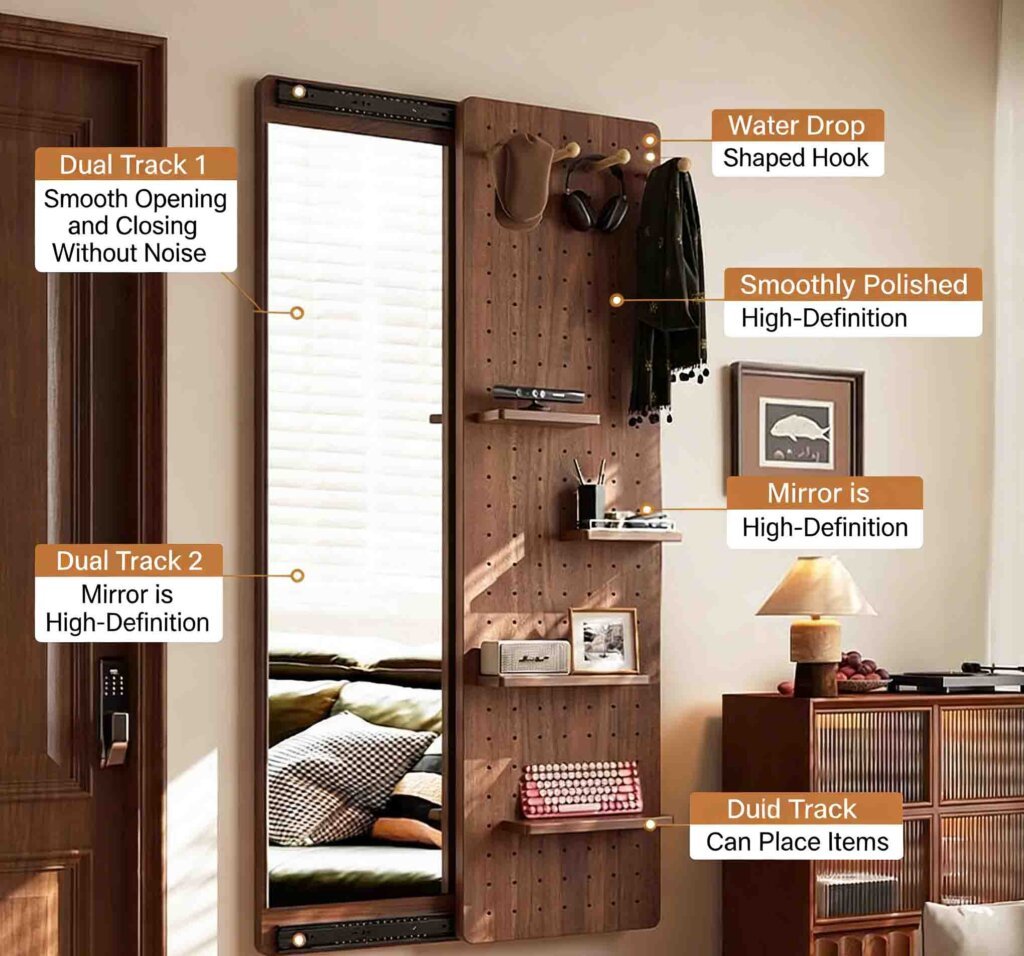
Wood Grain Mirrored Cabinet

Newsletter Updates

Enter your email address below and subscribe to our newsletter