Our Location
304 North Cardinal St.
Dorchester Center, MA 02124
Let me ask you a tough question. How much of your marketing budget is being wasted on items that are glanced at and immediately forgotten? Pens, stress balls, cheap USB drives—they all end up in a drawer, or worse, the trash.
Now, imagine a branding tool that your clients and customers actually want to use. One they keep in their purse, on their desk, or in their gym bag. One that creates a moment of positive, personal connection with your brand several times a day.
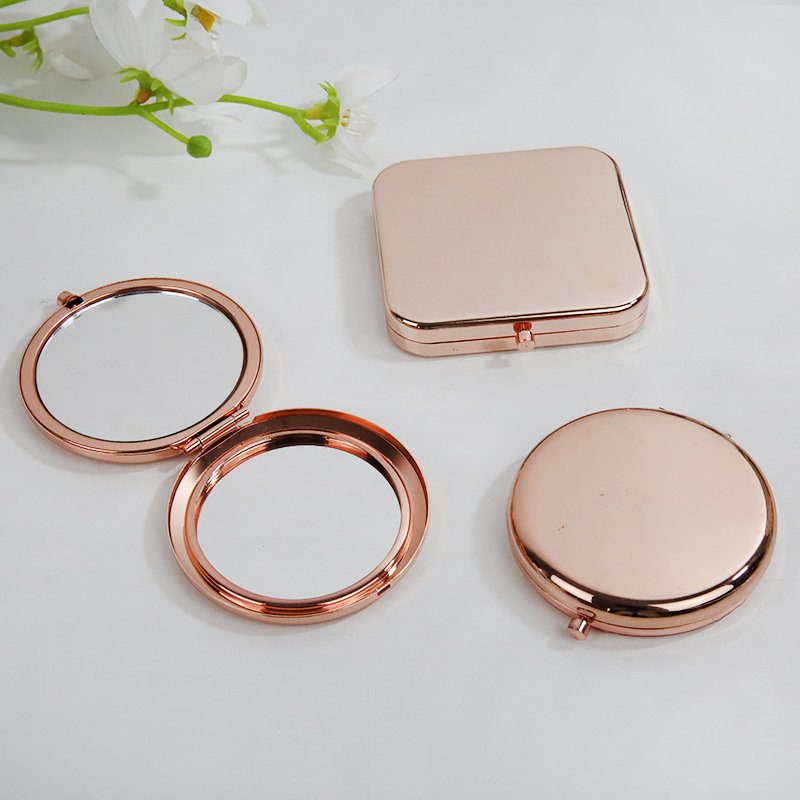
That tool is the custom portable vanity mirror. In my 15 years as an export manager at Havenseek Mirror, I’ve seen this simple product transform from a basic accessory into a strategic powerhouse for savvy businesses. This isn’t about selling you compact mirrors; it’s about showing you how to weaponize them for brand growth.
Why is this article worth 15 minutes of your time? Because I’m going to move beyond theory. You’ll get a proven blueprint, based on serving 800+ B2B clients, on how to conceptualize, design, and deploy portable vanity mirrors that deliver a measurable return on investment. You’ll learn the psychology behind their effectiveness, the step-by-step process to create yours, and the costly mistakes most first-time buyers make.
Most promotional products are interruptions. A custom mirror is an invitation. Let’s break down why.
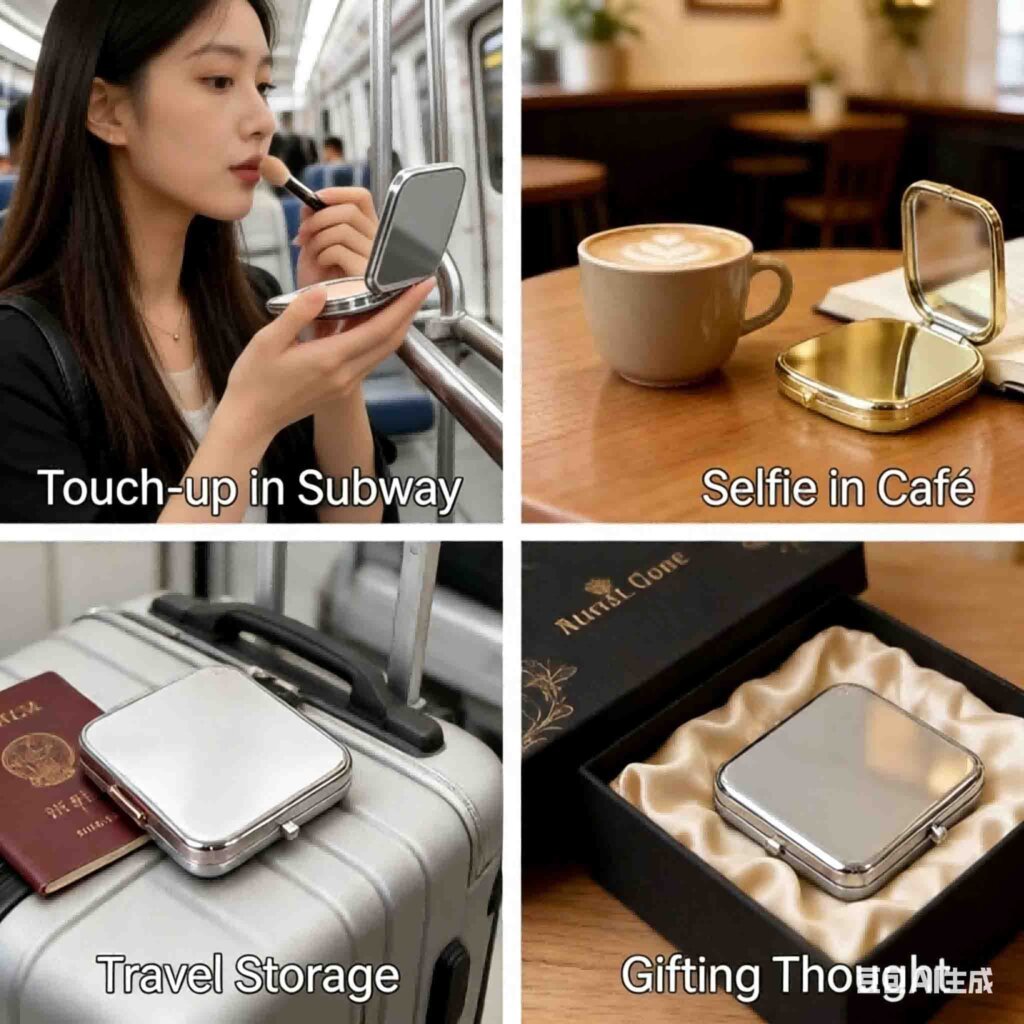
Think about the last time you used a compact mirror. It was likely a quick, private moment—checking your appearance before a meeting, after lunch, or prepping for an evening out. This context is marketing gold.
Frequency: Studies on consumer habits show that individuals check their reflection consciously 8-10 times a day. Your branded mirror becomes the vehicle for that action.
Intimacy: This isn’t a billboard on a highway. It’s a one-on-one interaction in a personal moment. The brand association is subtle, positive, and linked to self-care.
Duration: Unlike a digital ad seen for 2 seconds, a user spends 15-30 seconds with the mirror each use. That’s deep brand immersion.
When you compare this to a branded pen tossed in a jar, the difference in engagement is staggering. It transforms your brand from a logo into a trusted companion in the user’s daily ritual.
Here’s a truth I’ve seen consistently: the perceived value of a well-made, custom compact mirror far exceeds its unit cost. A client spending $5-10 on a premium metal mirror with elegant branding gifts an item that feels like a $25-30 retail purchase.
This perceived value directly elevates your brand by association. Gifting a cheap, flimsy item says you don’t value the relationship. Gifting a substantial, beautiful portable vanity mirror communicates quality, attention to detail, and respect.
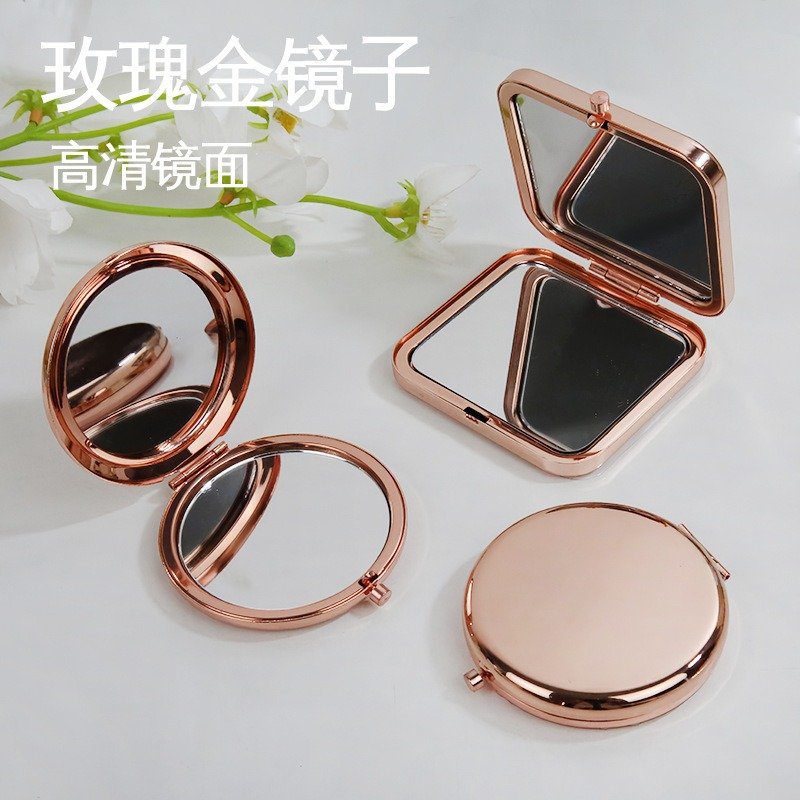
This isn’t just for cosmetic companies. The versatility of the custom portable vanity mirror is its superpower. Let’s explore the most effective use cases.
Hotels, resorts, and even airlines are in the experience business. A standard bathroom mirror is expected. A beautiful, portable vanity mirror left on the pillow or in the bathroom is a delightful surprise.
For brands in this space, a custom makeup mirror with logo is a no-brainer brand extension.
Finding a corporate gift that is universally appreciated, gender-neutral, and not another tech gadget is hard. A premium compact mirror solves this.
It’s useful for everyone, from executives to administrative staff. Engraved with the company logo or a motivational quote, it becomes a tangible token of appreciation that sits on a desk daily, reinforcing company culture far more effectively than a generic gift card.
This is where the magic—and most of the work—happens. Rushing this process with the wrong cosmetic mirror manufacturer is the number one reason for failure. Here’s how to do it right.
Before you sketch a single line, ask: What do I want this mirror to achieve?
Who is your end-user? A luxury hotel guest has different expectations than a festival attendee. This definition guides every subsequent decision on material, size, and finish.
This is the collaborative phase with your manufacturer. A good partner like Havenseek doesn’t just take your file; we advise you.
| Design Element | Options & Considerations | Impact on Cost & Perception |
|---|---|---|
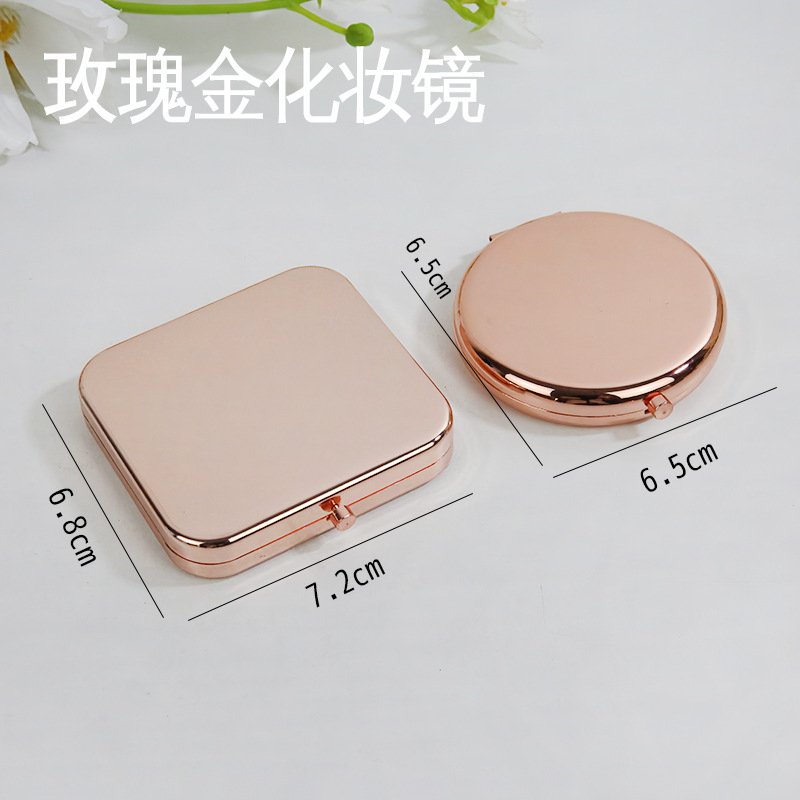
| Material | Zinc Alloy: Premium feel, durable, excellent for detailed engraving. Aluminum: Lighter, more affordable, good for anodized colors. Bio-Plastics: Sustainable option, lighter weight. | Zinc alloy is ~20-30% more costly than aluminum but conveys significantly higher quality. |
| Finish | Rose Gold, Gold, Silver, Gunmetal, Matte, Glossy, Textured. | Standard electroplating is cost-effective. PVD coating (Physical Vapor Deposition) is more expensive but offers extreme scratch and tarnish resistance. |
| Logo/Branding | Laser Engraving: Permanent, elegant, subtle. Screen Printing: Vibrant colors, good for complex logos. Debossing/Embossing: Tactile, premium feel. | Laser engraving has a higher initial tooling cost but negligible per-unit cost. Screen printing cost scales with colors used. |
| Mirror Type | Standard Glass, Magnifying (5x-10x), Anti-Fog (for bathrooms/shower), LED Light (battery/USB-C). | Adding LED lights is the single biggest cost adder but also the biggest “wow” factor, especially for mini travel mirrors. |
Never, ever skip the prototype/sample stage. A 3D render or even a 2D drawing cannot convey the tactile feel, hinge action, or true color. The small fee for a physical sample is the best insurance policy you can buy.
At Havenseek, our sample kit includes a quality checklist we use internally. We encourage clients to test it brutally:
Client: A boutique hotel chain in Southern Europe.
Initial Idea: “We want a nice mirror for our guests.”
Our Collaborative Process:
The Result: The mirrors became a signature amenity. Guest surveys showed a 40% increase in mentions of “thoughtful amenities,” and the hotel’s Instagram was flooded with tagged photos of the mirrors by windows with ocean views. The custom portable vanity mirrors became a silent, powerful marketing channel.
Packaging is Part of the Product. A beautiful mirror in a plastic bag feels cheap. Work with your manufacturer on a complete solution: a custom velvet pouch, a rigid gift box, or even a reusable travel case. This completes the unboxing experience.
Be Realistic on Timelines & MOQs. A complex custom design from scratch takes 8-12 weeks. Simple modifications to an existing model take 4-6 weeks. Minimum Order Quantities (MOQs) for full customization typically start at 500-1000 pieces. Discuss this transparently with your cosmetic mirror manufacturer early on to align expectations.
You’ve invested. Now, how do you know it worked? Track both hard metrics and soft brand value.
Having guided hundreds of first-time buyers, I see the same pitfalls. Avoid these to save time, money, and frustration.
For a fully custom design (new mold, unique shape), MOQs typically start at 1,000 to 3,000 pieces. For customizing an existing model with your logo and finish, MOQs can be as low as 500 pieces. The MOQ is directly tied to the cost of tooling (molds, stamping dies). A trusted cosmetic mirror manufacturer will work with you to find a solution that fits your budget and volume.
You should plan for a 12 to 16-week timeline for a new, fully custom project. This breaks down as: 2-3 weeks for design confirmation and prototyping, 4-6 weeks for mold/tooling creation, 4-5 weeks for mass production, and 2-3 weeks for ocean shipping and customs clearance. Simpler modifications can be done in 8-10 weeks.
The biggest factors are: 1) Mold/Tooling Cost: A completely new shape requires new molds, a one-time upfront investment. 2) Material: Zinc alloy is more expensive than aluminum or plastic. 3) Finishing: Special coatings like PVD or multi-color electroplating add cost. 4) Features: Adding an LED light module is the most significant feature cost increase. 5) Order Quantity: Higher volumes significantly reduce the per-unit cost.
Yes, but with different techniques. The case (metal/plastic) can be laser engraved, screen printed, or debossed. Putting a logo directly on the glass mirror is usually done via a high-quality, durable sticker applied to the back of the glass (so it’s visible in the reflection) or through a “hidden logo” technique that appears when the mirror fogs up. Discuss the visual effect you want with your manufacturer.
For heavy daily use, PVD (Physical Vapor Deposition) coating is the gold standard. It’s far more resistant to scratches, tarnishing, and corrosion than standard electroplating. A brushed or matte finish will also hide minor scratches and fingerprints better than a high-gloss finish. For the highest durability, choose a metal like zinc alloy with a PVD coating.
Absolutely. Sustainability is a growing request. Options include: mirrors made from recycled zinc/aluminum, cases from biodegradable or recycled plastics (like RPET), mirrors with FSC-certified paper packaging, and soy-based inks for printing. These choices may have a slight cost premium but resonate powerfully with environmentally conscious audiences.
A custom portable vanity mirror is more than a promotional item; it’s a strategic brand asset. It combines utility with emotion, quality with perception, and delivers sustained value long after the initial cost is forgotten.
The journey from idea to impactful tool requires the right partner. It requires a cosmetic mirror manufacturer who sees beyond the order sheet and becomes an extension of your marketing team.
At Havenseek Mirror, that’s the partnership we offer. We bring over a decade of experience turning brand visions into tangible success stories, one perfectly crafted mirror at a time.
Stop imagining and start creating. Let’s discuss your vision and build a custom mirror strategy that delivers real results.
👉 Get Your Free, No-Obligation Project Consultation & Quote Within 12 Hours.
Our team will review your needs and provide initial design ideas, a transparent cost breakdown, and a realistic timeline.
Start Your Custom Mirror Project TodayWritten by Alex Chen – 15-year export manager at Havenseek Mirror, served 800+ B2B clients across 50 countries. He specializes in translating brand stories into tangible products that drive growth.
To support the insights in this article, here are some valuable external resources on marketing psychology and promotional product effectiveness: