Our Location
304 North Cardinal St.
Dorchester Center, MA 02124
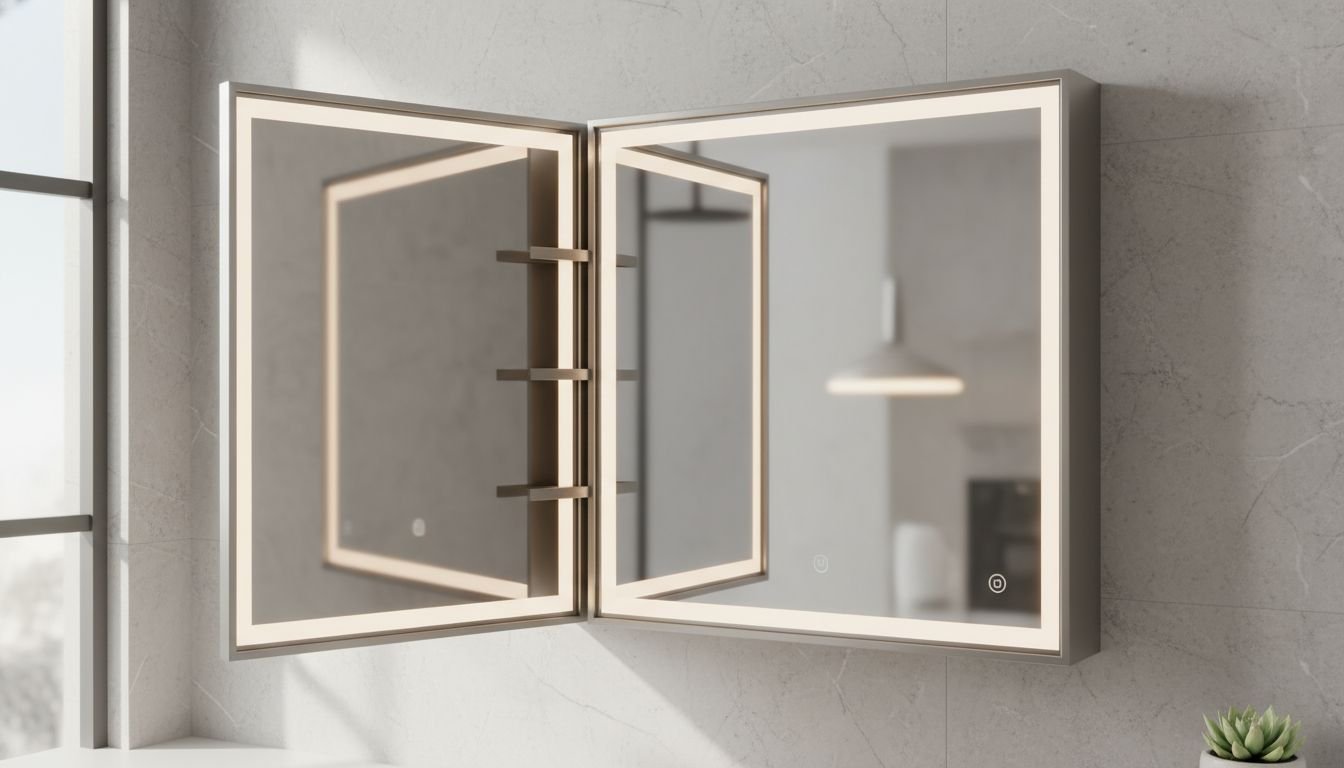
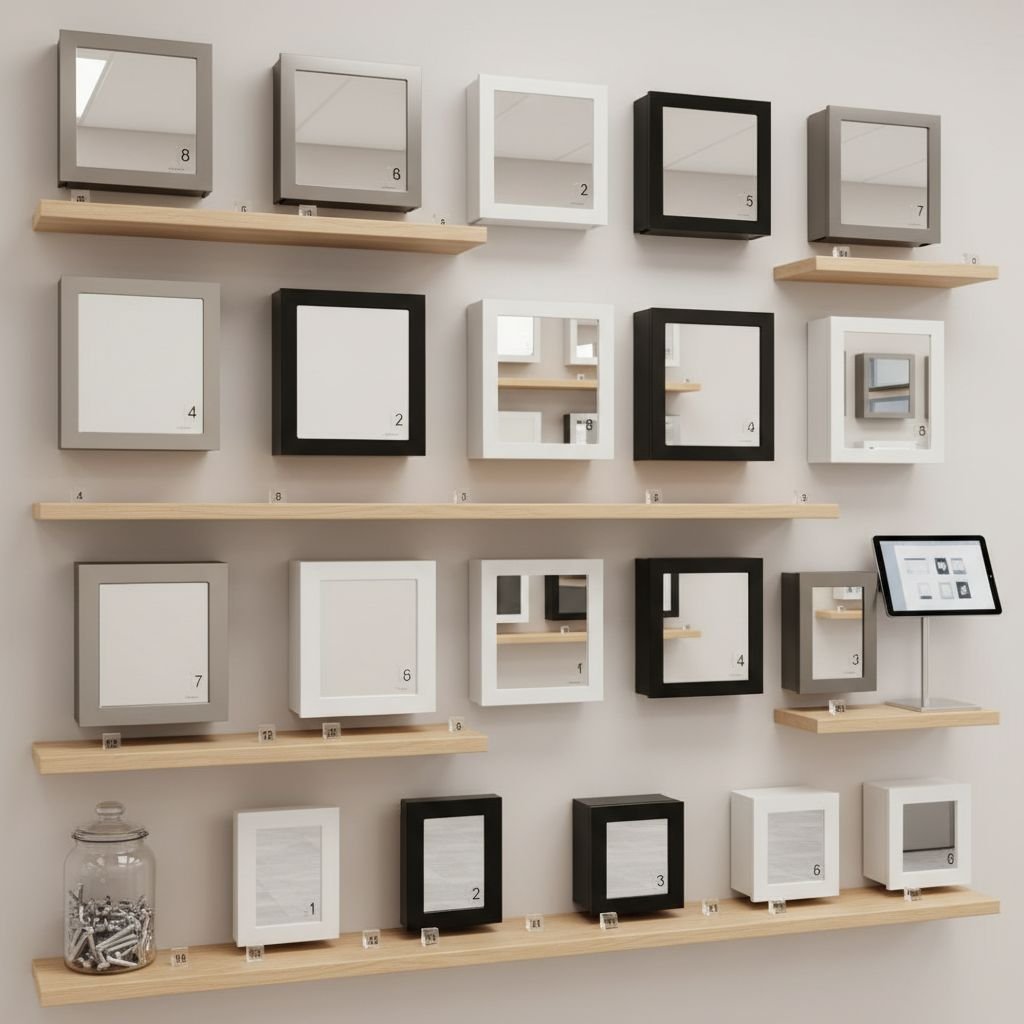
That sinking feeling when the container doors open, and you see hazy mirrors, misaligned doors, or worse—units that don’t fit the architectural drawings. Sourcing premium medicine cabinet with mirrors is a high-stakes endeavor where the true cost isn’t the unit price, but the risk of getting it wrong.
This isn’t another product list. Consider this your strategic procurement manual for 2026. We’re pulling back the curtain on global manufacturing to give you a vendor-agnostic, battle-tested framework for evaluating any medicine cabinet supplier or mirror cabinet supplier. By the end, you’ll know how to separate true manufacturers from middlemen, decode pricing, and build a supply chain that delivers on quality, time, and budget—every single time.
Why is this guide worth 15 minutes of your time? It’s distilled from over a decade of on-the-ground experience at Havenseek Mirror, overseeing production for 850,000+ units. We’ve seen every mistake a buyer can make. This is the playbook to avoid them, potentially saving your business tens of thousands in rework, delays, and damaged client relationships.
Part 2 of 5: This section covers market trends and the foundational framework for evaluating suppliers. ← Back to Part 1 | Continue to Part 3 →
Let’s be blunt: the post-pandemic supply chain chaos taught harsh lessons. The bathroom, once a utilitarian space, is now a central focus for wellness and design. This shifts the medicine cabinet with mirror from a commodity to a critical design element.
Homeowners and hotel guests now expect seamless functionality. A simple shelf behind a mirror no longer cuts it. They want integrated LED lighting that mimics daylight, USB outlets for razors and toothbrushes, and fog-free mirrors. This complexity means your medicine cabinet supplier must have electrical assembly expertise, not just carpentry skills.
Imagine this real scenario from a colleague: A mid-tier hotel chain sourced 1,000 recessed cabinets. Upon installation, the mounting systems failed because the supplier used weak, non-galvanized metal brackets. The result?
That “great price” suddenly became catastrophic. A reliable mirror cabinet supplier engineers these invisible components to withstand real-world stress.
Forget glossy brochures. Use this framework to pressure-test any potential partner. I’ve used this myself to audit our own sub-suppliers at Havenseek.
The Core Question: Are you talking to the people who actually make the product? Trading companies add a layer that obscures communication, increases cost, and dilutes quality control.
Verification Tactics:
The bathroom is a torture chamber of humidity, temperature swings, and chemical cleaners. Material choice is everything.
An uncoated MDF or particleboard back will swell like a sponge. The standard should be moisture-resistant MDF (MR-MDF) or, for premium/humid climates, PVC or aluminum composite panels. Ask the supplier: “What specific material do you use for the cabinet back, and what is its formaldehyde emission rating (E0 vs E1)?”
These are the moving parts that fail first. Insist on 304 stainless steel hinges, not plated zinc alloy. Ask for a sample of the hinge and try to scratch it with a magnet (304 is less magnetic). Soft-close dampers should be from known brands like Blum or compatible equivalents.
| Material | Best For | Key Advantage | Watch Out For |
|---|---|---|---|
| 304 Stainless Steel Frame | Luxury Hotels, Coastal Areas, High-Humidity Zones | Zero rust, incredibly durable, modern aesthetic | Higher cost; ensure welds are polished smoothly. |
| Powder-Coated Aluminum | Most Residential & Commercial Projects | Excellent rust resistance, lighter weight, cost-effective | Coating thickness (should be >60μm) and adhesion quality. |
| Moisture-Resistant MDF | Cost-Sensitive Projects (Interior parts only) | Allows for complex painted finishes, stable | Must NEVER be used on the rear panel facing the wall. |
A true partner helps you design the right product, not just sell you an existing one. Can they translate your architect’s vision into manufacturable specs?
A professional quote dissects the cost. Be wary of a single, opaque “per unit” price. A transparent breakdown from a credible medicine cabinet supplier might look like this for a mid-range unit:
This transparency allows for intelligent value engineering. “If we change from 5mm to 4mm tempered glass here, what’s the savings?”
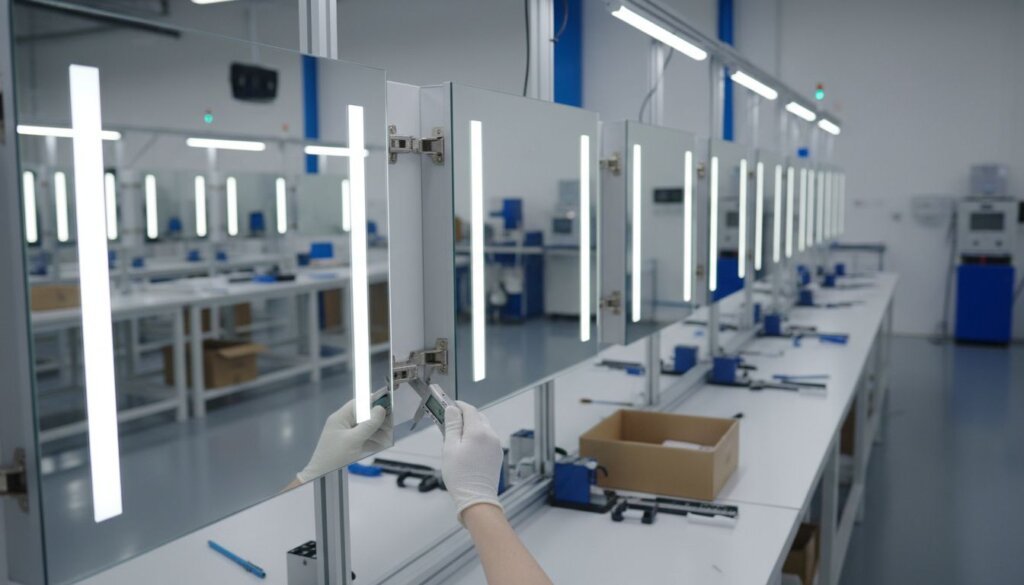
QC isn’t a single inspection; it’s a process integrated at every stage. Ask for their IPQC (In-Process Quality Control) checklist. At Havenseek, our process includes:
You have the right to request inspection reports (with photos/videos) at key stages, especially before packaging.
Part 3 of 5: This section dives deep into product specifications and the procurement process. ← Back to Part 2 | Continue to Part 4 →
Understanding these specifications empowers you to buy smarter and specify better. When evaluating a medicine cabinet with mirror, it’s not just about aesthetics—it’s about engineering, durability, and smart functionality.
Recessed cabinets save space and offer a sleek, built-in look but require wall cavity depth (typically 3.5″ to 7″) and precise installation around studs and plumbing. They’re ideal for new construction or major renovations where walls are open.
Surface-mount cabinets are easier to install and retrofit, projecting out from the wall. They’re perfect for remodels where you don’t want to open walls. The choice impacts your building plans and the supplier’s engineering—recessed units need a much stronger outer frame to handle wall stresses.
Thickness: 4mm tempered glass is standard; 5mm offers a more substantial, premium feel that reduces vibration and feels more luxurious.
Coating: A quality silvering coat behind the glass prevents black-edge corrosion. Ask about the copper and paint protective layers—these are what separate a mirror that lasts 5 years from one that lasts 20.
Safety: All glass must be tempered. The supplier’s certificate of compliance is mandatory for insurance and liability purposes.
Special Features: Anti-fog (a heated film or coating) is a game-changer for showers. LED-lit mirrors require even, shadow-free diffusion—look for edge-lit technology with high CRI (Color Rendering Index) for accurate color representation.
The inside of your cabinet matters as much as the outside. Consider:
This is where cheap suppliers cut corners. Quality hinges should:
Navigating the procurement process with a mirror cabinet supplier requires clear communication and milestone management. Here’s what a successful journey looks like.
Challenge: The hotel needed a unique, floating-surface look with integrated ambient lighting and recessed outlets. Their previous supplier couldn’t manage the wiring harness, resulting in visible cables and frequent electrical failures.
Our Solution (Havenseek as the mirror cabinet supplier): We designed a shallow-depth cabinet (5″) with a false-back to conceal all wiring. We pre-assembled the electrical components on a removable panel for easy field connection and future maintenance. We provided detailed installation templates and a video guide for the contractor.
Result: Zero call-backs for electrical issues. Installation time reduced by 30% due to pre-assembly. The hotel group standardized the design across 3 new properties, achieving both aesthetic consistency and operational efficiency.
Continue Reading: Part 4 covers common buyer mistakes and search optimization tactics →
Part 4 of 5: This section reveals common buyer mistakes and search optimization strategies. ← Back to Part 3 | Continue to Part 5 →
After 12 years in this industry, I’ve seen patterns. Certain mistakes keep repeating, costing buyers thousands. Here’s how to spot and avoid them when working with any medicine cabinet supplier.
The Trap: Choosing the cheapest quote without considering freight, installation complexity, maintenance costs, and product lifespan.
Real Example: A $120 unit with poor packaging that causes 5% breakage in transit effectively costs $126. Add extra installation labor for misaligned mounting points, and you’re at $140+ per unit—more than a well-made $135 unit that installs perfectly.
The Fix: Create a TCO (Total Cost of Ownership) spreadsheet that includes:
The Trap: Saying “I want a white medicine cabinet” without specifying dimensions, material, finish type (paint vs. laminate), hardware brand, or installation requirements.
The Consequence: You get what the supplier decides to send, not what you actually need. Disputes arise, projects get delayed.
The Fix: Create a detailed technical specification sheet including:
The Trap: Not specifying packaging details, then being shocked when mirrors arrive broken.
The Data: In our experience, 70% of shipping damage claims come from inadequate packaging, not rough handling.
The Fix: Specify packaging in your PO. Example: “Each unit to be wrapped in 2mm bubble film, placed in a 5-ply corrugated carton with 25mm foam corner protectors, 6 units per pallet, stretch-wrapped with 80mm overlap.”
The Trap: Approving production based on drawings or a “similar” sample, not your exact product.
The Reality: Drawings don’t show finish quality, hinge smoothness, or material feel. A “similar” sample might have different internal components.
The Fix: Always pay for and approve a pre-production sample. Test it thoroughly:
The Trap: Discovering defects after shipment with no agreed process for resolution.
The Nightmare Scenario: “We’ll send replacements on your next order” or “You need to return all units at your cost for inspection.”
The Fix: Include defect resolution terms in your contract:
Search engines are evolving. Traditional keyword stuffing doesn’t work anymore. Here’s how to leverage Generative Engine Optimization (GEO) and AI Overviews (AIO) for smarter sourcing.
Modern search engines understand intent, not just keywords. Instead of “medicine cabinet supplier,” try these more strategic queries:
These queries signal to AI search tools that you’re a serious buyer seeking authoritative information, not just price shopping.
When creating RFPs or searching for suppliers, include location-specific requirements:
This helps match you with suppliers who understand your specific market challenges and regulatory requirements.
Continue to Final Part: Part 5 covers FAQs, CTA, and author information →
Part 5 of 5: Final section with FAQs, call to action, and author credentials. ← Back to Part 4
Based on thousands of conversations with buyers like you, here are the most common questions about sourcing medicine cabinet with mirrors.
MOQs vary significantly based on customization. For standard designs, a reliable medicine cabinet supplier might have an MOQ of 50-100 units. For fully custom projects (unique size, material, finish), the MOQ can range from 200-500 units to offset mold and setup costs. Always discuss this upfront during your RFQ—transparent suppliers will give you clear guidelines.
We encourage due diligence. Request a live video tour of our production floor and QC area (we do this regularly). Ask for detailed factory audits, certifications (ISO, etc.), and raw material purchase invoices. A genuine mirror cabinet supplier like Havenseek will have transparent processes and physical assets to show. Trading companies typically hesitate or can only show finished goods warehouses.
Absolutely. Our engineering team provides complimentary design support. Share your floor plans or sketches, and we’ll create CAD drawings and 3D renders for your specific medicine cabinet with mirror, ensuring optimal fit, functionality, and style before any tooling begins. We consider plumbing, electrical, and structural constraints to deliver a manufacturable design.
For standard items, lead time is 30-35 days after deposit. For custom projects, allow 45-60 days. Factors that can delay include: complexity of your design, holidays (Chinese New Year affects 4-6 weeks), raw material market availability, and the clarity/timeliness of your approvals during the sampling stage. We provide a detailed production schedule upfront.
We use a 5-layer protective packaging system: 1) Corner protectors on the cabinet frame, 2) A protective film on the mirror, 3) Bubble wrap or foam sheeting, 4) A custom-sized, reinforced 5-ply carton, and 5) Secure palletization for container shipping. This method, honed over thousands of shipments, keeps our breakage rate for mirrors shipped via sea freight consistently below 0.5%.
Absolutely. We have extensive experience producing smart mirror cabinets. We can integrate standard US/EU outlets, USB-C ports, LED lighting with color temperature selection (2700K-6000K), touch sensors, motion activation, and anti-fog heating films. All our electrical assemblies are CE/RoHS certified and undergo rigorous testing, including 48-hour burn-in for lighting systems.
Commercial-grade units feature: thicker materials (1.2mm vs 0.8mm metal), industrial-strength hinges (tested to 100,000+ cycles), reinforced mounting systems, easier maintenance access, and standardized components for quick replacement. Residential units focus more on aesthetics and cost-effectiveness while still maintaining quality. We help you choose the right grade for your application.
Yes, we offer comprehensive OEM/ODM services. We can apply your logo via laser etching, silk screening, or metal plates. Custom packaging with your branding is standard for private label orders. We maintain strict confidentiality and can sign NDAs to protect your brand identity throughout the manufacturing process.
You’ve now got the complete playbook—from market trends and supplier evaluation to product specifications and procurement strategy. The knowledge gap between you and a perfect sourcing outcome has been closed.
Now it’s time to apply this knowledge with confidence. Stop researching and start executing with a partner who speaks your language—both literally and in terms of quality standards, project timelines, and business objectives.
Get Our Complete Sourcing Toolkit – FREE
Download our editable Supplier Evaluation Checklist & 2026 Cost Breakdown Template—the same tools our team uses to vet suppliers. Plus, receive our 2026 Bathroom Cabinet Materials Guide with latest pricing trends.
PLUS: Get a Free, No-Obligation Quote Analysis
Send us your current spec or RFQ. Within 12 hours, our senior sourcing team will:
Limited to qualified buyers. Response guaranteed within 12 business hours.
Complete Guide Navigation: Part 1: Introduction & TOC | Part 2: Market Trends & Framework | Part 3: Product Specs & Procurement | Part 4: Common Mistakes & Search Tactics | Part 5: FAQs & CTA (Current)