Our Location
304 North Cardinal St.
Dorchester Center, MA 02124

Written by Kevin Zhang – 15 years export manager in Chinese safety equipment manufacturing, served 800+ clients in 50 countries
If you’re responsible for safety in a warehouse, retail store, parking lot, or even your own driveway, you’ve probably dealt with blind spots that cause near-misses—or worse. A good safety mirror eliminates those risks, but the wrong one wastes money and leaves dangers unchecked. In my 15 years helping buyers source convex mirrors directly from factories, I’ve seen clients overpay by 50-100% on branded products that underperform, or choose cheap options that fade, crack, or distort in months.
This guide cuts through the noise. You’ll learn exactly how to pick the right convex mirror for your needs, spot low-quality imports, and source durable safety mirrors at wholesale prices without middleman markups. By the end, you’ll avoid costly mistakes, boost safety, and potentially save thousands on your next purchase. It’s practical advice worth far more than the time you’ll spend reading it—think of it as free consulting from someone who’s shipped millions in convex visibility tools worldwide.
Let’s dive in and make sure your next safety mirror investment pays off big time.
A convex mirror, commonly used for safety, curves outward to provide a wide-angle view—typically 160 degrees or more. This design shrinks images but expands your field of vision, perfect for spotting hidden dangers.
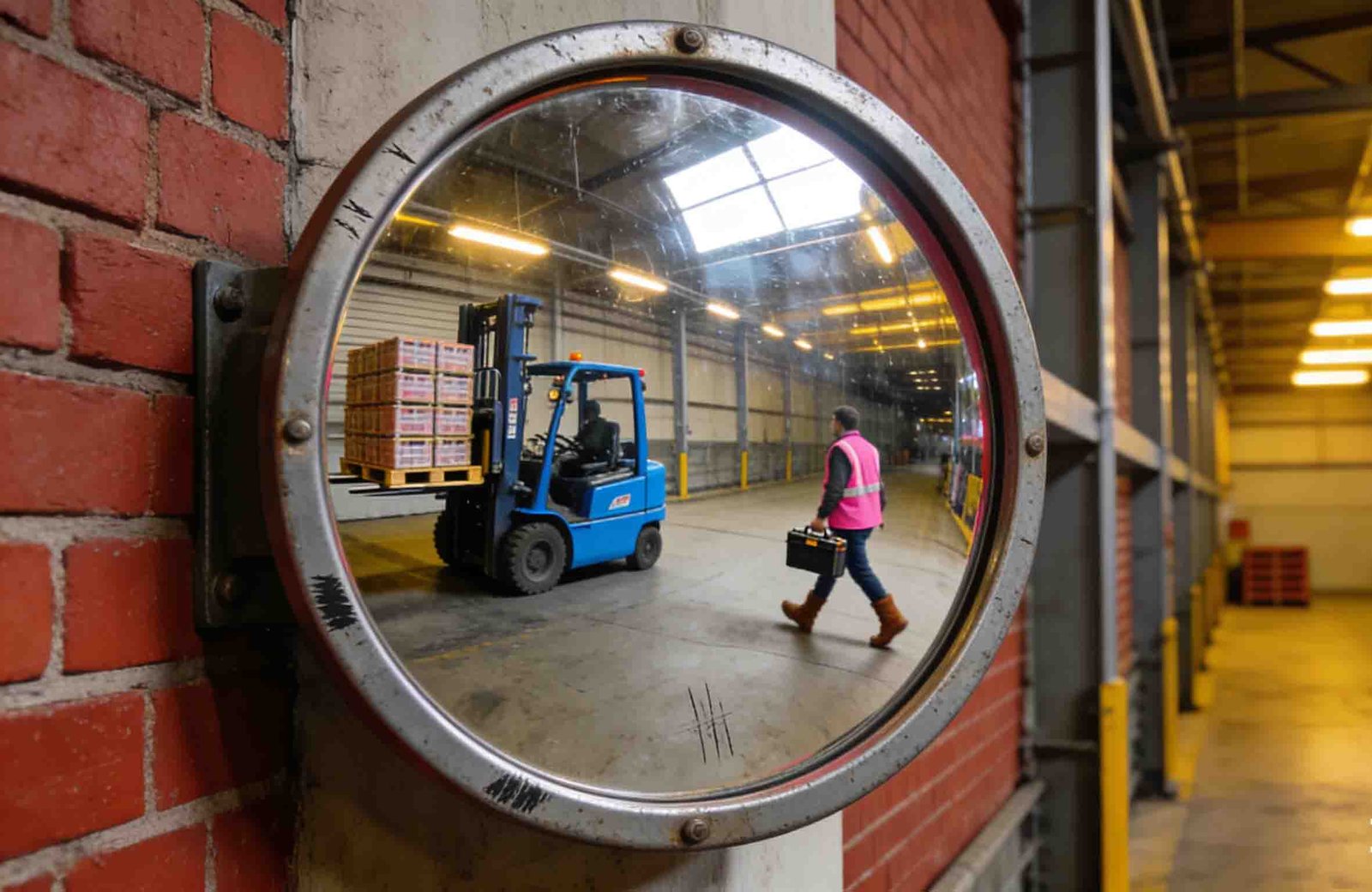
Many buyers think “any mirror will do” or “cheaper is fine.” Reality? Low-end options distort views or fail outdoors, creating false security.[Image: High-quality convex safety mirror installed in a busy warehouse aisle, showing clear wide-angle reflection of forklifts and workers approaching a blind corner. Core focus on the durable convex mirror eliminating blind spots for industrial safety.]
These weather-resistant convex mirrors mount on poles or walls to cover blind driveways, intersections, or parking lots. Look for UV-protected backs to prevent fading. Outdoor convex traffic safety mirror mounted on a pole at a residential driveway exit, clearly reflecting oncoming road traffic and vehicles for blind spot elimination.
AI generation prompt: Photorealistic image of a large polycarbonate convex safety mirror on a metal pole beside a driveway, showing reflection of approaching cars on a rural road, sunny day, highlighting outdoor durability and traffic safety features.
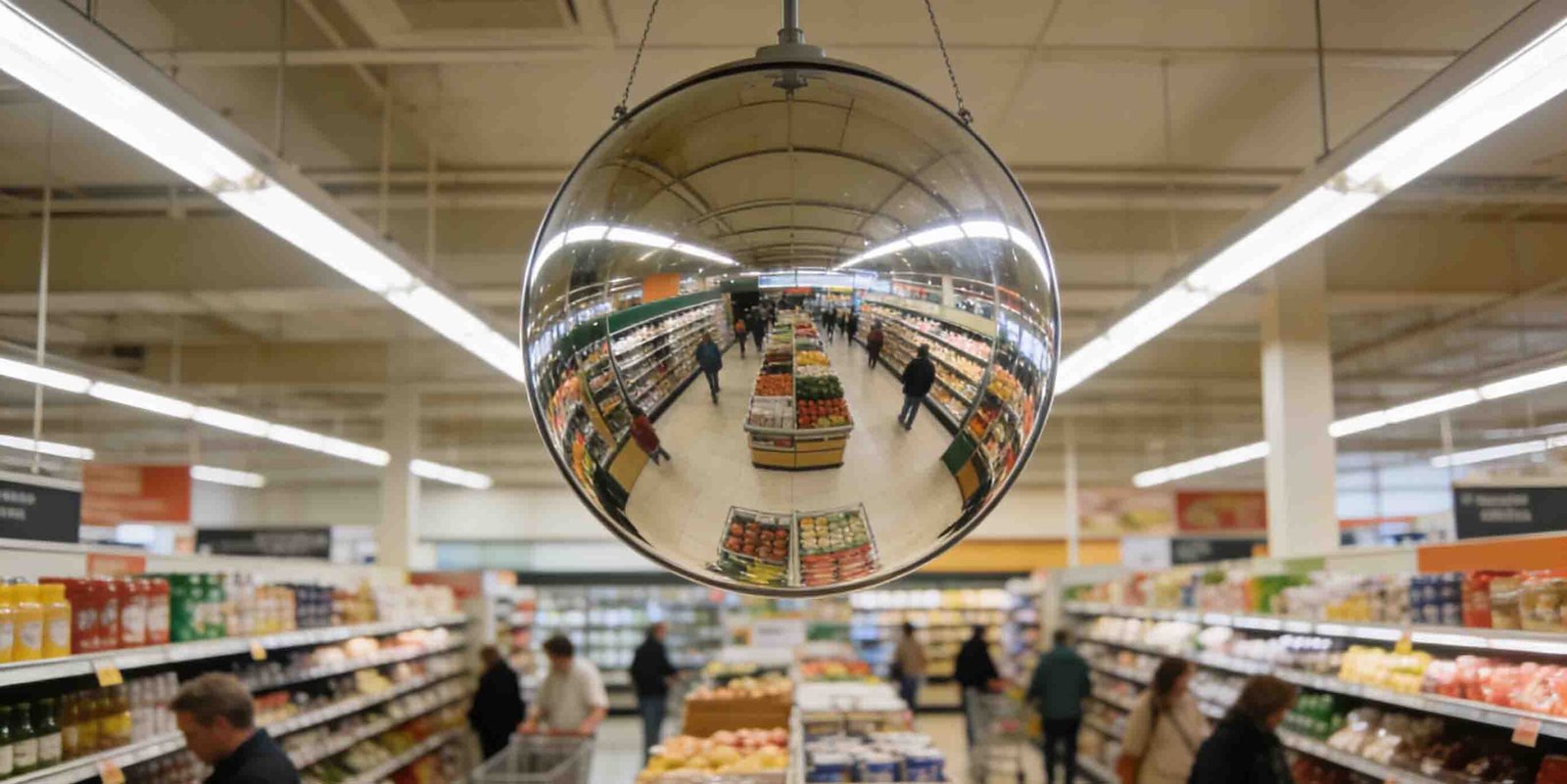
Round or rectangular convex mirrors suit aisles, while dome versions (full, half, quarter) cover multi-directional views from ceilings.[Image: Full dome safety mirror ceiling-mounted in a retail store, providing 360-degree view of aisles and customers to deter theft and enhance security.]
Handheld or under-vehicle mirrors for security checks, or hemispheric domes for 360-degree warehouse coverage.
| Type | Best For | Viewing Angle | Typical Size |
|---|---|---|---|
| Round Convex | General use | 160° | 18-36 inches |
| Dome (Full/Half) | Intersections | 180-360° | 18-48 inches |
| Outdoor Pole-Mount | Driveways | 160° | 24-48 inches |
Rule of thumb: 1 inch of diameter per 1-1.5 feet of viewing distance. A 26-inch convex mirror covers up to 35-40 feet effectively.
| Mirror Diameter | Max Viewing Distance | Ideal Application |
|---|---|---|
| 12-18 inches | 15-25 feet | Small stores, garages |
| 24-32 inches | 30-45 feet | Driveways, medium warehouses |
| 36-48 inches | 50+ feet | Large lots, intersections |
Close-up comparison of polycarbonate and acrylic convex mirror materials, showing thickness, clarity, and impact resistance differences side-by-side.
Use sturdy brackets—Z-style for walls, telescoping for poles. Avoid hardboard backs; opt for steel or ABS.Step-by-step installation of a convex safety mirror on a wall using heavy-duty brackets, showing secure mounting for long-term stability.
Big-box brands mark up 100%+. Go direct to manufacturers for the same (or better) quality at half the price.
Cheap acrylic fades in sun; impacts shatter it. Pay a bit more upfront for polycarbonate—it lasts 5-10 years longer.
Too small? Blind spots remain. Too distorted? Useless views. Always match to viewing distance.
Direct sourcing means customization, lower MOQs, faster lead times, and strict quality control. No middlemen inflating prices.
From experience, smart buyers save 30-50% while getting superior convex visibility solutions.
Polycarbonate—it’s virtually unbreakable, UV-resistant, and maintains clarity longer than acrylic.
Use the 1:1.5 rule—mirror diameter in inches should cover 1.5 times the viewing distance in feet.
For multi-direction intersections, yes—full domes give 360° views from one spot.
Absolutely—visible mirrors deter shoplifters and allow discreet monitoring.
Outdoor versions have weatherproof backs and UV coatings to resist fading and moisture.
Polycarbonate models last 8-10 years outdoors; acrylic 3-5 years with proper care.
Yes—top factories offer OEM quality at 40-60% less than branded, with certifications.
Minimal—just gentle cleaning with soft cloth and mild soap; avoid abrasives.
Many factories offer customization with low MOQs for bulk buyers.
OSHA recommends them for blind spots, but no specific mandate—best practice for liability reduction.
Reliable suppliers ship samples in 3-7 days; full orders 20-45 days.
Quality ones minimize distortion while maximizing view—larger sizes reduce it further.
One prevented accident or theft easily covers cost—many clients see payback in months.
Ready to upgrade your safety setup without overspending? Get a free quote in 12 hours or request free samples today. Download our 2026 Convex Mirror Catalog PDF for full specs and pricing.