Our Location
304 North Cardinal St.
Dorchester Center, MA 02124

Written by Alexander Thorne – 15-year Production Director at Havenseek Mirror, overseeing the craftsmanship of 100,000+ cabinet units for luxury hotels, hospitals, and residences worldwide. My passion is turning raw materials into heirlooms for the bathroom.
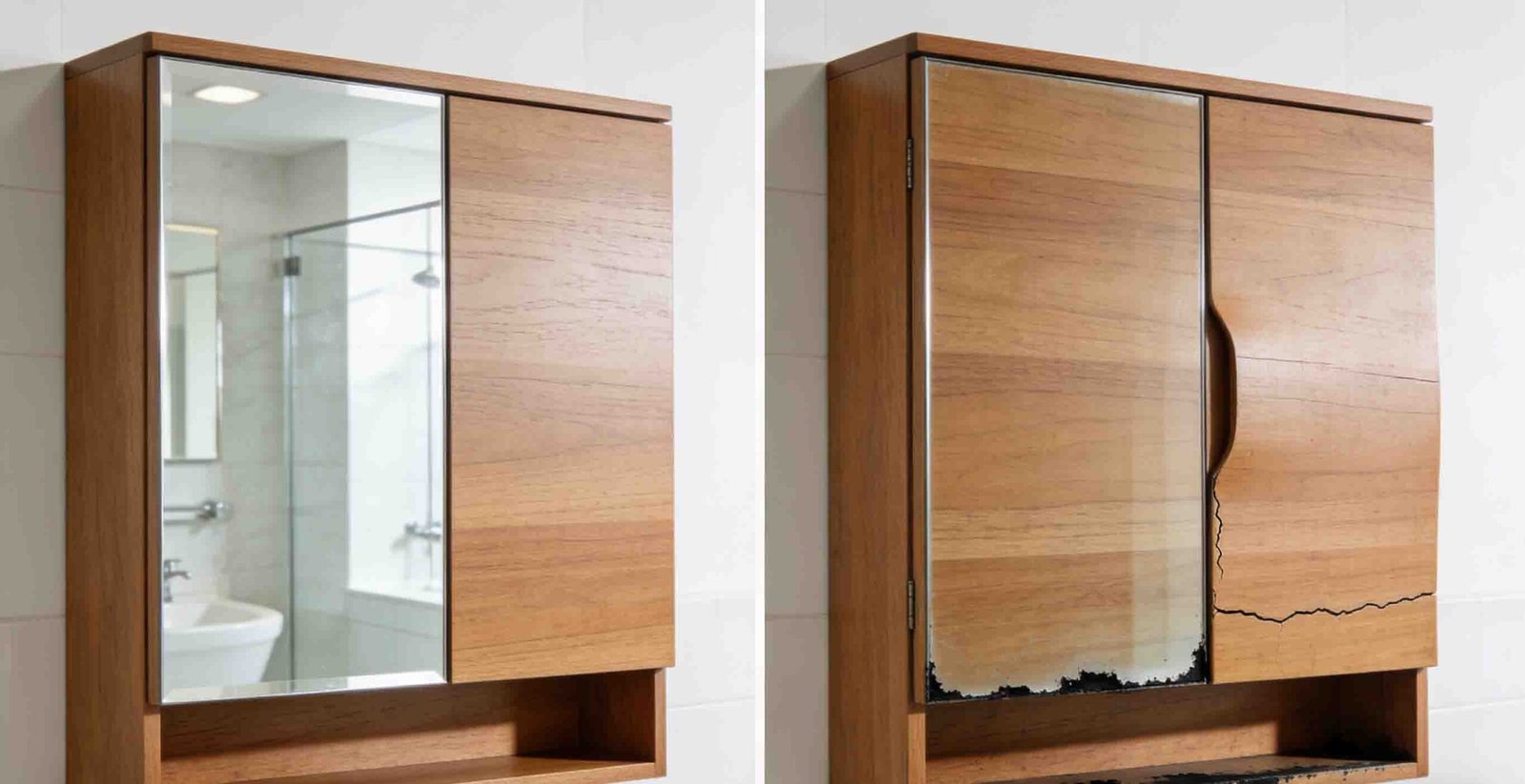
Have you ever purchased a beautiful wood medicine cabinet with mirror, only to find the edges swelling six months later? Or worse, noticed a mysterious fog creeping behind the glass? The market is flooded with options, but the painful truth is that most failures are not design flaws—they are manufacturing sins, shortcuts taken where you can’t see them.
The real difference between a cabinet that becomes a bathroom headache and one that becomes a cherished fixture lies in the invisible journey from forest to frame. A truly premium wooden medicine cabinet is a masterpiece of material science and old-world craftsmanship, designed to battle daily steam and splashes. This article is your all-access pass behind the factory doors.
Why is this article worth your next 10 minutes? Because I will arm you with the insider knowledge used by top architects and hotel procurement teams. You’ll learn to spot quality from a mile away, understand where your money actually goes, and be able to ask suppliers the right, hard questions that separate marketers from true craftsmen. This isn’t just a story about making a cabinet; it’s a guide to making a smarter, lasting investment for your home or project.
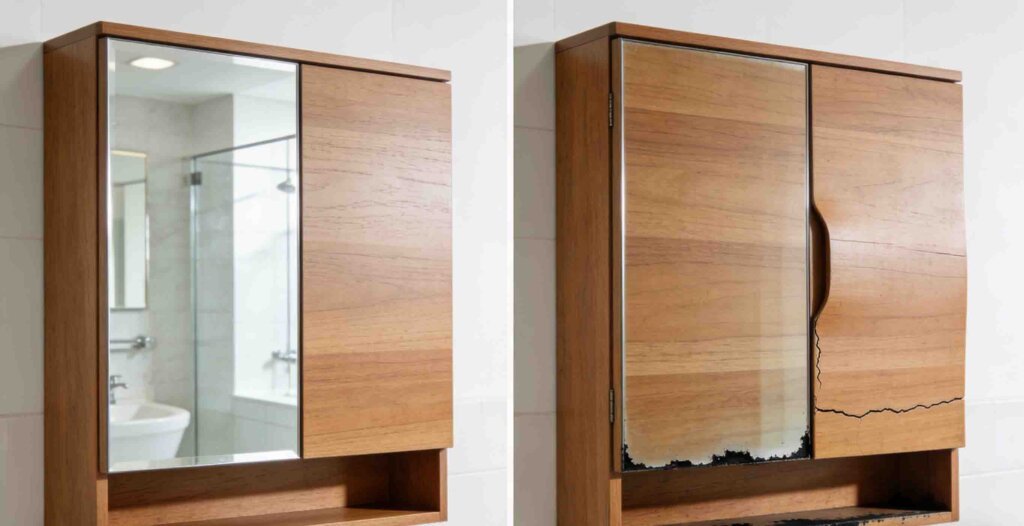
Every masterpiece begins with the right canvas. In bathroom furniture, the wrong wood is a ticking time bomb. Humidity isn’t just moisture in the air; it’s a relentless force that causes wood fibers to absorb water, expand, and then contract as they dry. This cycle, repeated daily, destroys poorly chosen materials.
Many budget cabinets use softwoods like pine or engineered boards like MDF (Medium-Density Fiberboard). Pine, while attractive, is porous and soft. MDF is essentially glued-together wood dust—it acts like a sponge when exposed to moisture, swelling irreversibly. Choosing these for a humid environment is a compromise you’ll see on your wall within a year.
After testing dozens of species and composites, we stake our reputation on high-grade Baltic Birch plywood. Here’s why this is the gold standard for a durable wood medicine cabinet:
| Material | Dimensional Stability (1-10) | Moisture Resistance | Typical Use Case | Our Verdict for Bathrooms |
|---|---|---|---|---|
| Baltic Birch Plywood (Our Choice) | 9 | Excellent (with sealing) | High-end furniture, marine applications | Ideal. The benchmark for longevity. |
| Solid Oak | 7 | Good | Furniture, flooring | Good, but can crack if not quarter-sawn. Expensive. |
| Pine / Fir | 4 | Poor | Budget furniture, framing | Avoid. Too soft and prone to warping. |
| MDF / Particle Board | 2 | Very Poor | Inexpensive case goods (dry areas only) | Never. Will swell and disintegrate. |
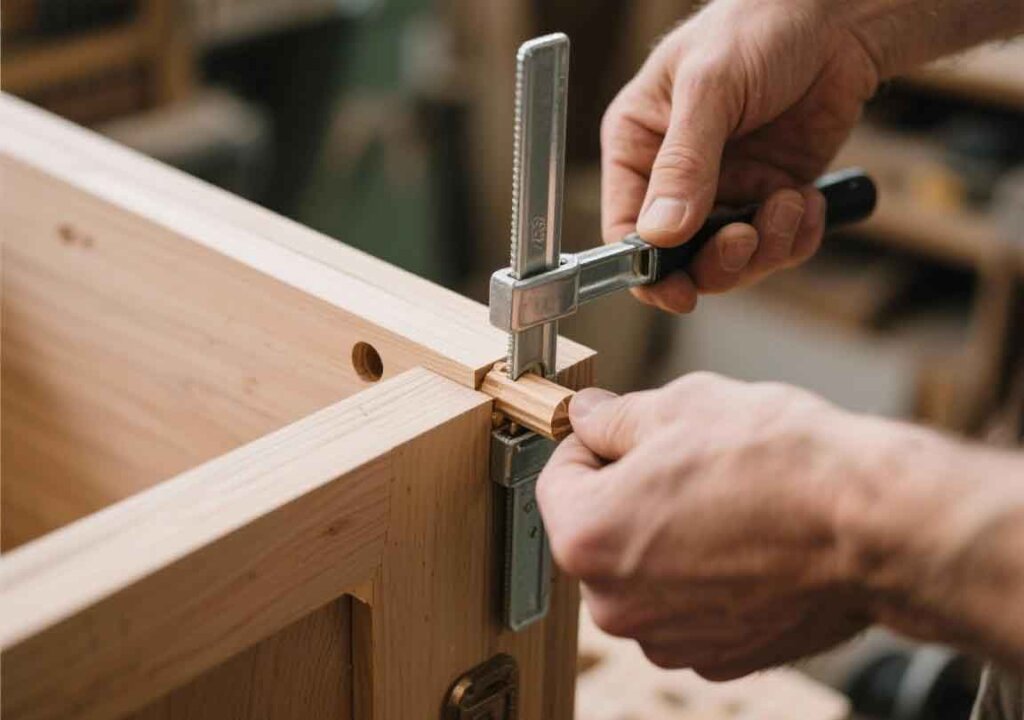
Once the panels are acclimatized in our factory, they meet the CNC (Computer Numerical Control) router. This isn’t just a saw; it’s a sculptor guided by digital blueprints. The CNC machine achieves tolerances within 0.2mm, ensuring every joint, every dowel hole, and every cutout for a future medicine cabinet with outlet is perfectly precise.
This precision is non-negotiable. It means doors hang flush, shelves sit level, and the entire assembly comes together seamlessly. Hand-cutting or using lower-grade equipment introduces variability—the enemy of quality.
Choosing the right wood is only 30% of the battle. The remaining 70% is about protecting it. Our sealing process is a three-stage fortress built around each cabinet component.
Before any assembly, every individual panel is treated with a penetrating sealer primer. This thin, watery liquid is designed to wick deep into the wood’s pores, not just sit on top. It creates a hydrophobic barrier inside the wood fiber itself, significantly reducing its ability to absorb ambient moisture.
The cut edges of plywood are its Achilles’ heel, exposing the vulnerable end grain. We apply 0.45mm thick PVC edge banding using heat and professional adhesive. This creates a continuous, waterproof seal along all visible edges. Furthermore, at every joint—dado, rabbet, or dowel—we apply a bead of waterproof PVA glue before assembly. This glue line acts as a secondary gasket, blocking moisture from creeping into the joint itself.
The final finish must be beautiful, tough, and safe. We use advanced water-based lacquers and paints. They offer:
Low VOCs: For better indoor air quality.
Exceptional Durability: Resistant to scratches, common bathroom chemicals (toothpaste, alcohol).
Yellowing Resistance: Unlike some oil-based finishes, they stay true in color over time.
We apply multiple thin coats, sanding between layers, to build a deep, resilient surface that enhances the wood’s grain while standing guard against daily life.
The mirror is the soul of the cabinet. It’s what you interact with every day. A cheap, poorly made mirror ruins the experience of even the best cabinet frame. Our process ensures flawless reflection and absolute safety.
We start with 5mm clear float glass, known for its optical clarity and lack of distortion. The silvering process involves:
1. Meticulous Cleaning: Any dust or oil prevents proper adhesion.
2. Silver Layer Application: A pure silver coating is deposited, creating the reflection.
3. Protective Copper & Paint Backing: Layers of copper and special protective paint are applied to shield the silver from corrosion, which causes the dreaded “black edge” rot.
Every single mirror we produce is made from tempered (toughened) glass. This is a legal and moral requirement for bathroom safety. The glass is heated to over 600°C and then rapidly cooled. This process puts the surface into compression, making it 4-5 times stronger than annealed glass. If it does break, it shatters into small, granular chunks with no sharp, jagged edges.
A beveled edge is more than decoration. The precise grinding and polishing of the mirror’s edge serve to:
Remove the Sharp Edge: Creating a safe, smooth finish for handling and installation.
Create a Captivating Light Play: The angled edge catches and reflects light, adding a sophisticated, multi-dimensional frame to the mirror itself.
This is a step automated machines often do poorly. Our skilled artisans oversee this process, ensuring a consistent, brilliant bevel on every piece.

This is where engineering meets daily convenience. Adding an electrical outlet inside a cabinet that lives in a humid room is a serious responsibility. We don’t just cut a hole and add a socket; we design a fully integrated safety system.
The most critical feature is the completely isolated electrical chamber. This is a sealed, boxed-off compartment at the back of the cabinet, typically behind a small, gasketed access panel. All wiring and connections are confined here, with a physical, airtight barrier separating them from the main storage area where toiletries, and potentially moisture, reside. This design is the fundamental reason our medicine cabinet with outlet is safe.
We partner with leading electrical component manufacturers (like Legrand or Hubbell) to use their hospital-grade or IP44-rated outlet sockets. These are designed for durability and have built-in protective shutters. Internally, we use 105°C rated, stranded copper wire with full UL/CE certification, sized appropriately for the load and run within flexible conduit for added protection.
Before any unit is packed, it must pass our electrical safety gauntlet on a dedicated test bench:
1. Ground Continuity Test: Ensures a fail-safe path for fault current.
2. Insulation Resistance Test (Dielectric Strength): Applies high voltage to ensure no current leaks through the insulation.
3. Functional Load Test: Plugs in a device to verify the outlet delivers stable, correct power.
Only after passing all three does the unit get a “PASSED” sticker. This process eliminates the risk of shipping a defective or dangerous product.
Now, all the perfected components come together. This stage is about marrying them with hardware that lasts and inspecting with an eagle eye.
We use premium, 6-way adjustable concealed hinges (like those from Blum). These are tested to over 200,000 open/close cycles—that’s over 50 years of use if you open the door four times a day. Their soft-close mechanism is not just a luxury; it prevents slamming that can loosen the cabinet over time. Shelf supports are metal pins or adjustable clips that can hold over 25kg per shelf.
Every single cabinet is scrutinized. Here’s a glimpse of our checklist:
1. Door alignment and gap consistency (top, bottom, sides).
2. Smooth operation of hinges and any catches.
3. Mirror surface: zero scratches, chips, or distortions.
4. Finish consistency: no drips, sags, or thin spots.
5. For a medicine cabinet with outlet: verify test stickers, access panel fit, and socket function.
6. Shelf stability and level.
7. Cleanliness of interior, free of dust or debris.
… and 13 more specific points. This human touch is the final gatekeeper of our reputation.
Our packaging is armor. High-density foam corners protect the cabinet frame. The mirror is covered with a protective film and then a separate foam sheet. The entire unit is wrapped in plastic for moisture resistance before being placed in a rigid, double-wall carton. We’ve designed this system based on shipping thousands of units globally—it works.
Understanding the superior craftsmanship behind your Havenseek cabinet is the first step. Proper installation is the critical final step that ensures decades of reliable performance, stunning aesthetics, and, most importantly, safety. This concise, professional guide will walk you through the key phases, helping you avoid the common pitfalls that compromise less-informed installations.
Before you drill a single hole, your success depends on preparation. Use a high-quality stud finder and wire detector to meticulously scan your wall. You must identify and clearly mark:
Once your wall is mapped, follow this sequence for a flawless, level installation.
Final Pro-Tip: Apply a thin bead of high-quality silicone caulk along the top and sides where the cabinet meets the wall. This seals out moisture, improves aesthetics, and prevents dust accumulation. Remember, if you are ever unsure about locating studs or handling electrical components, hiring a professional is a wise investment that guarantees safety and preserves your beautiful investment. A correctly installed wood medicine cabinet with mirror is built to last a lifetime.
As you’ve seen, a premium wood medicine cabinet with mirror from Havenseek Mirror is the sum of hundreds of correct decisions, from the forest to your wall. It’s a product where every layer—wood, sealant, glass, hardware, electricity—is engineered to support the others in the challenging bathroom environment.
Choosing this level of craftsmanship means choosing peace of mind. It means no late-night calls about a failed installation or a warped door. It means delivering a bathroom that feels cohesive, luxurious, and built to last for your clients or family. In a world of disposable furniture, this is an heirloom in the making.
Now that you understand what goes into a truly great cabinet, you’re equipped to make an informed decision. Don’t settle for vague promises. Demand the details that matter.
Put the knowledge from this factory tour to work. Request our detailed Material & Process Whitepaper, which includes full technical specifications, certification summaries, and our customization portfolio. Let’s discuss how we can craft the perfect solution for your project.
Get Your Free Whitepaper & Technical ConsultationRequest My Free Whitepaper Now
Our engineering team typically responds within 12 hours.
From raw material selection to final packaging, our standard production cycle for a custom order is 25-30 working days. This timeline ensures each of the 12 critical steps—from wood acclimatization and multi-layer sealing to thorough electrical safety testing for models with an outlet—is given the time and attention required for flawless results. Rush production can compromise quality, which we never allow.
Our extensive testing and 15 years of feedback point to high-grade Baltic Birch plywood as the champion. Its cross-banded laminated structure provides exceptional dimensional stability, resisting the warping and swelling common in solid woods. Combined with our proprietary 3-stage sealing process, it creates a wood medicine cabinet built to thrive in humid environments for decades.
Absolutely, when engineered correctly. Safety is non-negotiable. Our medicine cabinets with an outlet feature a fully isolated, gasketed electrical chamber that separates all wiring from the storage compartment. We use IP44-rated outlet sockets and UL-listed internal wiring. Every single unit undergoes mandatory ground continuity, leakage current, and dielectric strength testing before shipment.
The 1mm difference impacts durability, clarity, and perceived quality. We exclusively use 5mm clear float glass for our mirrors. It provides 56% more rigidity, reducing the chance of distortion or ‘oil-canning’ effects in larger mirrors. The thicker glass also allows for a deeper, more beautiful bevel and provides a substantial, premium feel that 4mm glass cannot match.
Yes, customization is our strength. We can adjust shelf heights, add dedicated slots for toothbrushes or razors, incorporate glass shelves, or even create pull-out organizers. For a medicine cabinet with an outlet, we expertly plan the shelf layout around the sealed electrical compartment to maximize usable space without compromising safety or access.
Our products are designed to meet and exceed international standards. They carry CE marking for the European market and are manufactured to UL standards for electrical components. We can provide specific test reports for EMC (Electromagnetic Compatibility) and LVD (Low Voltage Directive). Full certification packets are available for project specifiers and bulk buyers.
To deepen your understanding of bathroom design and materials, we recommend these authoritative resources: