Our Location
304 North Cardinal St.
Dorchester Center, MA 02124

Expert Profile: Written by Marcus Thorne – 15 years export manager in Chinese mirror manufacturing. I have personally managed supply chains for over 800 clients in 50 countries, specializing in commercial glass procurement and quality control.
Imagine opening a shipping container holding a $30,000 architectural glass order, only to find scratched backings and inconsistent patterns. This nightmare happens daily in global trade. If you are a procurement manager, you already know the risks involved in cross-border glass sourcing. The stakes are simply too high for guesswork. Today, mastering antique mirror sheet manufacturing is no longer just about aesthetics. It is strictly about protecting your project margins and maintaining your professional reputation.
Why is this comprehensive article worth your time today? Because most suppliers will never reveal their internal cost-cutting measures. I will expose the exact methods factories use to hide poor quality. We will explore the genuine distressed glass production process and why it matters. You will learn the hidden truths behind oxidized mirror factory techniques that ensure longevity. Finally, I will break down the exact vintage mirror glass making protocols that prevent shipping disasters.
By the end of this read, you will evaluate suppliers with the sharp eye of an industry veteran. You will avoid costly desilvering issues in high-humidity commercial environments. You will negotiate better terms knowing exactly where the factory margins are hidden. This is your definitive blueprint for securing high-yield, flawless decorative glass for your upcoming 2026 commercial projects.
Before we dive deep, keep these critical benchmarks in mind when sourcing bulk materials.
| Sourcing Criteria | Standard Requirement | Expert Tip |
|---|---|---|
| Backing Protection | Double-coated fenzi paint | Crucial for high-humidity areas |
| Oxidation Method | True chemical reaction | Reject printed faux patterns |
| Export Packaging | A-Frame steel + ISPM 15 wood | Mandatory for sea freight safety |
The global demand for vintage aesthetics in commercial spaces has skyrocketed recently. Hospitality brands are moving away from minimalist designs toward rich, textured interiors. This shift places enormous pressure on commercial oxidized glass suppliers to deliver fast. Unfortunately, speed often compromises the delicate chemical processes required for authenticity.
According to a recent 2025 B2B Sourcing Report, over 42% of imported decorative glass shipments contain minor defects. The primary reason is that many factories rush the chemical oxidation phase to meet tight deadlines. Authentic antique mirror sheet manufacturing requires precise environmental controls that cannot be rushed. When production lines speed up, the chemical reaction becomes unstable and unpredictable.
When you compromise on your B2B vintage mirror procurement, the financial fallout is severe. You are not just losing the cost of the damaged goods. You face delayed project timelines, expensive site cleanups, and furious downstream clients. Investing time in strict architectural glass supplier evaluation is the only way to protect your profit margins.
A massive problem in today’s market is the rise of printed replica glass. Dishonest factories use advanced digital printers to apply a vintage pattern directly onto standard mirrors. While these might look acceptable in a small emailed photograph, they fail miserably in commercial settings. I have seen buyers lose entire contracts because their shipments turned out to be cheap printed fakes.
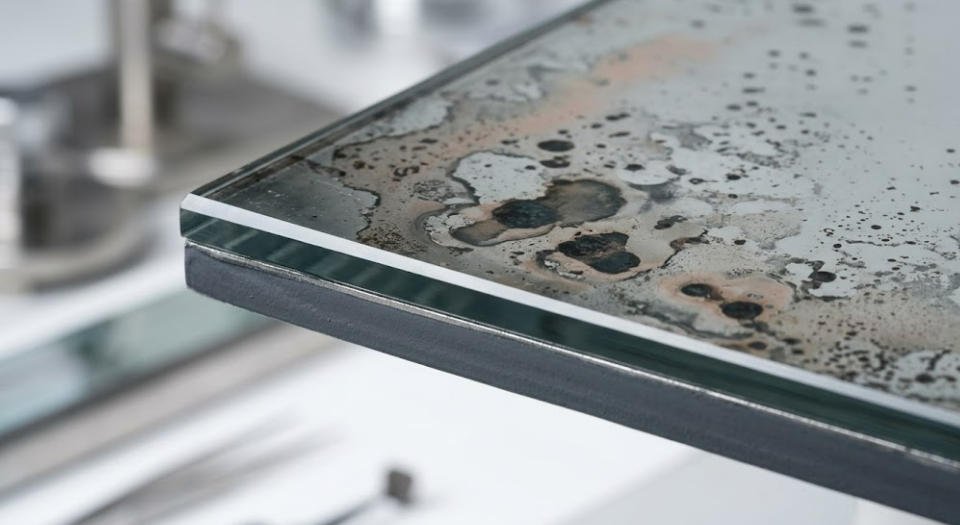
You must know how to perform authentic oxidized mirror verification upon sample arrival. Real chemical oxidation creates genuine depth within the glass layers. The dark spots should appear to float slightly beneath the clear top surface. Printed glass looks entirely flat and lacks the three-dimensional light refraction of a genuine product.
My favorite fast-check method involves a simple tactile edge test on the sample. Run your fingernail gently along the back painted edge of the mirror sheet. A true chemically treated mirror will have a seamless, highly bonded paint layer securing the silver. Printed versions often have a slightly raised, sticker-like edge where the digital film terminates.
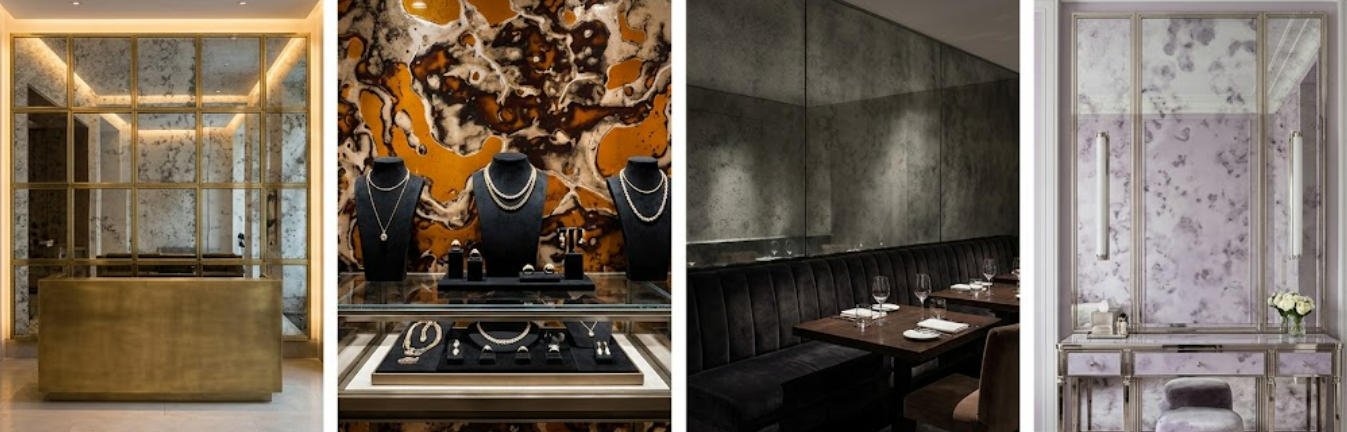
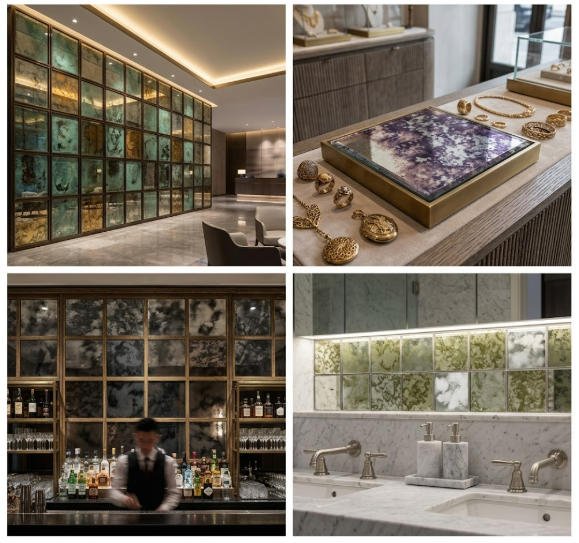
The debate between faux vs authentic antique glass is critical for high-end procurement. When outfitting a five-star hotel lobby, the visual impact must be flawless from every angle. Printed mirrors suffer from pixelation when viewed from less than three feet away. Authentic manufacturing creates organic, unrepeatable patterns that exude genuine luxury and sophistication.
Interior design distressed glass is specifically chosen for its ability to bounce light elegantly. The silvering process in authentic sheets reacts organically with ambient lighting. Printed patterns absorb light rather than reflecting it, creating a dull, lifeless appearance on the wall. Your high-end retail clients will immediately notice this lack of vibrancy and depth.
Beyond aesthetics, printed glass fails rapidly when exposed to commercial cleaning agents. The digital ink layers can scratch or peel off entirely during routine maintenance. True antique mirror sheet manufacturing seals the distressed pattern safely behind thick, protective glass. This structural integrity guarantees that the visual appeal remains completely intact for decades of heavy use.
Achieving perfect consistency across 500 large format antique glass sheets is incredibly difficult. It separates premium manufacturers from amateur workshops.
Many designers request highly specific aging patterns for custom antiqued glass process orders. Achieving this requires precise manipulation of the chemical agents applied to the silver backing. If a factory lacks standardized mixing protocols, the pattern will drift significantly during a large run. The first fifty sheets might look perfect, while the last fifty appear entirely different.
The secret to distressed mirror visual consistency lies in strict climate control within the factory. The chemical oxidation reaction is highly sensitive to ambient temperature and airborne moisture. Premium facilities maintain a constant 22°C and 45% humidity during the silvering and oxidation phases. This ensures every sheet in a bulk order reacts exactly like the approved master sample.
Managing a massive order of bulk antique mirror sheets requires rigorous standard operating procedures. A slight delay between the washing and silvering stations can ruin an entire batch. Efficient factories utilize automated conveyor systems to ensure perfect timing for every chemical application. This industrial precision is mandatory for fulfilling large-scale commercial contracts on strict deadlines.
Imagine a hotel hallway lined with twenty large vintage mirrors mounted side by side. If the distressed mirror visual consistency is off, the entire corridor looks mismatched and cheap. Your role as a buyer is to audit the factory’s batch tracking capabilities before signing contracts. Ask them directly how they monitor and adjust chemical mixtures during a continuous production run.
Effective distressed glass quality control must happen on the line, not just before shipping. I strongly recommend hiring a third-party inspector to visit the facility mid-production. They should randomly select sheets from the curing racks and compare them against your signed master sample. Catching an oxidation error early saves you from rejecting a fully packed shipping container later.
One of the most catastrophic failures in our industry is edge desilvering in humid environments. When moisture penetrates the backing paint, it corrodes the delicate silver and chemical layers instantly. This process turns beautiful vintage glass into an ugly, blackened mess within just a few months. As a procurement specialist, preventing this specific failure must be your top priority.
Hotel bathroom antique mirrors face daily assaults from hot steam and aggressive chemical cleaners. If the factory uses a single, thin coat of cheap backing paint, moisture will definitely invade. The resulting “black edges” lead to immediate client complaints and massive replacement costs. You cannot afford to install poorly sealed mirrors in any high-humidity hospitality or spa project.
Effective antique mirror desilvering prevention starts at the factory level with proper material selection. The manufacturer must thoroughly wash and dry the glass before applying any silvering chemicals. Any residual dust or moisture on the raw float glass creates microscopic weak points in the coating. These tiny vulnerabilities act as gateways for future moisture ingress and rapid silver corrosion.
The most critical component of the entire antique mirror sheet manufacturing cycle is the backing paint.
🛡️ Over 68% of commercial glass returns stem from cheap backing paint failures.
If a supplier offers a price that seems too good to be true, they are almost certainly cutting corners on the protective paint layers. This is a non-negotiable area for quality assurance.
I absolutely insist on double-coated, lead-free backing paint for every B2B order I manage. The first coat acts as a rigid chemical barrier protecting the delicate oxidized silver layer. The second coat provides crucial mechanical defense against scratches during transport, handling, and final installation. Without this dual-layer system, your architectural distressed mirrors are vulnerable to catastrophic onsite damage.
Understanding the antiqued mirror silvering process helps you negotiate from a position of absolute authority. The chemical oxidation occurs immediately after the silver is deposited, but before the copper layer. This timing is incredibly sensitive; a delay of mere seconds can ruin the desired vintage aesthetic. Factories that master this precise timing deserve to be your long-term wholesale vintage mirror factory partners.
Even perfectly manufactured glass can fail rapidly if the installation protocols are fundamentally flawed. Commercial contractors often use acidic silicone adhesives that eat directly through the protective backing paint. You must actively educate your downstream buyers on correct installation methods to prevent unfair warranty claims. Supplying high humidity antique glass means you must also supply the correct technical knowledge.
When custom shapes are cut on-site, the factory-sealed edges are completely exposed to the environment. Applying a specialized antique mirror edge sealant is mandatory immediately after any cutting or grinding occurs. This clear, non-acidic sealant creates a waterproof barrier over the newly exposed silver and paint layers. I have personally seen this simple $15 step save $50,000 worth of hotel mirrors.
Successful antique mirror installation B2B requires using only neutral-cure, mirror-safe construction adhesives on the walls. The installers must apply the glue in vertical beads, never in complete circles or thick blobs. Vertical adhesive lines allow any trapped moisture or condensation behind the mirror to drain safely downward. This ventilation prevents corrosive micro-climates from forming between the wall and the fragile glass backing.
You can source the most beautiful glass in the world, but it means nothing if it shatters. Ocean freight is violently unforgiving; containers endure massive temperature swings, high humidity, and severe physical impacts. Standard carton packaging is a guaranteed death sentence for large format architectural glass sheets. You must enforce strict heavy duty mirror packaging protocols in every single purchase contract.
For oversized sheets, A-frame glass packaging standards are the only acceptable method for international shipping. The sheets lean against a solid steel or thick wooden A-frame structure bolted directly to the crate. This angle evenly distributes the immense weight of the glass, preventing localized stress fractures during transit. Never allow a factory to pack large commercial interior vintage mirrors flat on their backs.
The exterior wooden crates must be constructed from robust, ISPM 15 certified fumigated plywood or timber. I require a minimum crate wall thickness of 12mm to withstand forklift impacts at busy ports. Inside the crate, every individual glass sheet must be separated by protective cork pads or specialized paper. These separators prevent the heavy sheets from rubbing together and destroying the delicate surface polishing.
Physical breakage is not the only enemy during a five-week ocean voyage. Extreme temperature fluctuations create massive amounts of condensation inside steel shipping containers.
This phenomenon, known as “container rain,” occurs when humid ocean air cools rapidly at night. The condensation drips directly onto your wooden crates, eventually soaking through to the glass inside. Prolonged exposure to this acidic moisture can initiate early-stage desilvering before the mirrors even reach your warehouse. Proper antique mirror sea freight safety requires aggressive moisture absorption strategies inside the locked container.
Always instruct your OEM vintage glass manufacturing partner to include high-capacity silica gel packs inside the shrink-wrap. Furthermore, request detailed loading photographs before the container doors are sealed at the factory yard. These photos serve as crucial evidence if you need to file an insurance claim for transit damage. Proper documentation is your best defense against catastrophic supply chain losses.
Finding a reliable factory requires looking far beyond a glossy Alibaba profile or a slick website. You need to dig into their actual production capabilities, machinery brands, and raw material supply chains. A true partner in antique mirror sheet manufacturing will welcome your detailed technical questions with transparent answers. Evasive replies regarding paint brands or silvering methods are massive red flags for B2B buyers.
When conducting an architectural glass supplier evaluation, ask for video tours of their silvering and washing lines. Ensure they are using automated water purification systems, as hard water ruins the chemical oxidation process. Request data on their daily output capacity to confirm they can handle your bulk peak-season orders. Finally, demand references from other international buyers in comparable commercial markets.
Many trading companies pretend to be factories, adding hidden markups to your wholesale oxidized mirror pricing. You can often expose them by asking highly specific technical questions about their chemical oxidation glass techniques. A genuine factory manager can instantly explain their exact temperature tolerances and backing paint curing times. Trading company sales reps will usually need to “check with the engineers” and delay their responses.
Cost reduction should never come at the expense of core product stability and long-term durability. Instead, optimize your commercial glass margin optimization by forecasting demand and consolidating your container shipments. Ordering mixed sizes on a single large run is far cheaper than placing multiple small, custom orders. Strategic planning is the key to unlocking the best pricing from top-tier Chinese manufacturers.
The custom antiqued glass process carries inherent premium costs due to the skilled manual labor involved. Technicians must physically monitor and sometimes manually adjust the chemical reaction to achieve specific distressed patterns. You are paying for this specialized expertise just as much as you are paying for raw materials. Understanding this helps you justify your own premium pricing to your demanding downstream customers.
To improve your margins, standardize your procurement around three or four highly popular vintage pattern templates. Custom pattern replication requires expensive factory resets and trial runs, which drastically inflate your unit costs. By offering your clients a curated, standardized catalog of furniture grade distressed glass, you streamline operations. This allows you to order in massive bulk, driving down your landed cost per square meter.
As a distributor, your sales team must know how to sell the value of authentic manufacturing.
📈 High-end buyers will pay a 40% premium when they understand the craftsmanship involved.
Do not just sell a mirror; sell the complex chemical artistry and the guaranteed longevity of the product. Educated clients become loyal, high-margin repeat buyers.
When pitching to luxury furniture manufacturers, anchor your value in scratch resistance and edge stability. Explain that your mirrors utilize double-coated backing systems designed to survive heavy commercial framing and transport. Highlight that cheap alternatives will flake off during their furniture assembly process, ruining their expensive wood frames. Positioning your glass as a risk-mitigation tool makes your higher price tag completely irrelevant.
Interior designers are deeply moved by the narrative of authentic antique mirror sheet manufacturing. Explain to them how the silver reacts organically, meaning no two sheets in their project are identical. Use phrases like “hand-monitored chemical oxidation” and “bespoke visual depth” during your presentations. This technical storytelling transforms a simple building material into a crucial, artisanal design element for their projects.
Last year, a major European contractor approached me after a catastrophic failure with a cheap supplier. They had installed 300 faux printed mirrors in a boutique hotel, which peeled within two months. They desperately needed authentic architectural distressed mirrors delivered within a brutal six-week project rescue deadline. This case perfectly illustrates the critical importance of specialized supply chain management.
The client required highly specific hospitality decorative glass sourcing to match the hotel’s 1920s aesthetic perfectly. The primary challenge was executing the custom antiqued glass process flawlessly on the very first production run. We had zero buffer time for sample remakes or extended chemical adjustments on the factory floor. The glass also required immediate high-humidity sealing, as the installations were right next to luxury walk-in showers.
We partnered with a top-tier facility capable of precise temperature-controlled vintage mirror glass making. We implemented rigorous on-line quality control, checking the silvering depth every 30 minutes during the rapid run. The sheets were packed in reinforced A-frames with double desiccants and shipped via an expedited ocean route. The project was completed on time, and the authentic mirrors remain completely flawless today.
You stop it at the source by purchasing mirrors with double-coated, lead-free backing paint. During installation, use only neutral-cure adhesives and apply dedicated edge sealants after cutting.
For commercial wall cladding and large frames, 5mm and 6mm are the absolute industry standards. Using 4mm for large formats risks severe warping and distortion in the reflection.
Inspect the glass up close; true oxidation has profound depth and organic, non-repeating variations. A tactile test on the painted edge should reveal a smooth, deeply bonded chemical layer, not a printed sticker.
Heavy duty A-frame steel or thick wooden racks inside ISPM 15 fumigated crates are mandatory. The glass must be separated by cork pads and shrink-wrapped with desiccants to prevent moisture damage.
Black edges occur when moisture or acidic cleaning chemicals penetrate cheap backing paint and oxidize the silver. This is highly common in poorly ventilated bathrooms or when acidic adhesives are used for mounting.
A reliable factory usually requires 15 to 25 days for bulk production after you sign the master sample. Rushing this timeframe severely compromises the chemical stability of the final product.
Mastering antique mirror sheet manufacturing procurement is a complex, high-stakes endeavor for any B2B buyer. By rejecting printed fakes, enforcing strict packaging protocols, and understanding the chemical silvering process, you eliminate extreme risks. You are now equipped to ask factories the tough, technical questions that expose poor quality before you buy. Implement these rigorous standards, and your commercial glass margins will remain highly profitable and deeply secure.
Stop risking your projects on unverified suppliers. Get factory-direct access to authentic, double-coated distressed mirror sheets engineered for commercial durability.