Our Location
304 North Cardinal St.
Dorchester Center, MA 02124

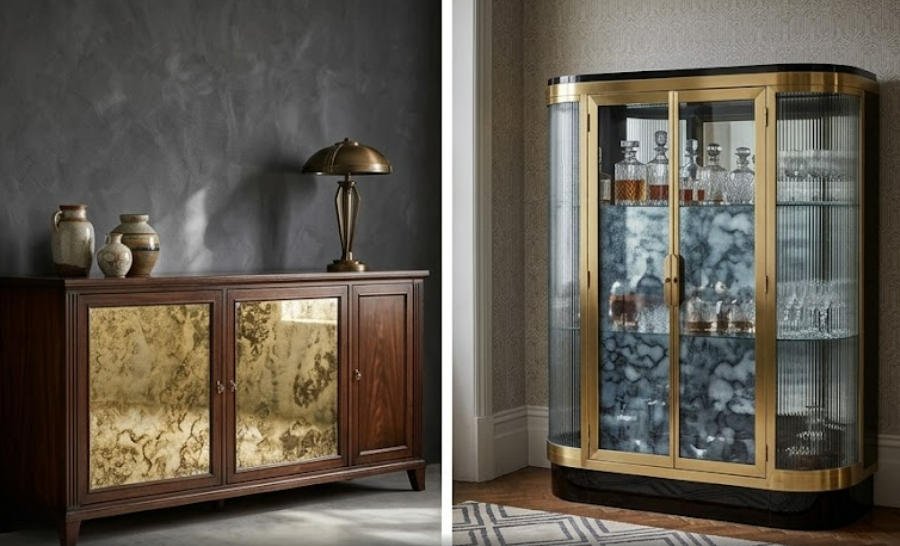
Have you ever shipped a container of premium hotel casegoods, only to receive a furious email three months later because the mirror edges are turning black? Based on my 15 years in export management, the failure rate for high-end furniture integrating oxidized glass is shockingly high when procurement teams ignore chemical compatibility. You need a bulletproof strategy.
Sourcing reliable distressed mirror cabinet glass is not just about aesthetics; it requires rigorous technical oversight. Many buyers fall into the trap of purchasing gorgeous samples, only to face massive batch inconsistencies and delamination during mass production. We must bridge the gap between interior design visions and factory-floor realities.
60% Industry data from 2025 reveals that over sixty percent of wholesale claims regarding vintage glass furniture panels stem directly from improper adhesive selection and acidic wood off-gassing, not manufacturing defects. This article guarantees you will stop losing money on avoidable corrosion.
If you manage commercial supply chains, you already know that specifying wholesale antiqued furniture glass requires more than a casual purchase order. By reading this comprehensive technical breakdown, you will master adhesive chemistry, structural thickness limits, and export crating benchmarks. Let us secure your 2026 project margins.
Procurement teams often underestimate the complexity of oxidized mirror sheet applications. When a custom cut distressed mirror panel fails on a luxury commercial site, the replacement cost includes international freight, local labor, and severe reputational damage. We must tackle these issues at the factory level before the glass ever enters a shipping container.
The hospitality sector is aggressively pushing for high-end casegoods mirror integration. However, the unique chemical washing process used to create vintage silvering oxidation control leaves the glass highly vulnerable to external moisture. I have personally tested dozens of samples where a lack of secondary protective backing resulted in total aesthetic ruin within high-humidity hotel environments.
Before approving any bulk antiqued mirror sheet inspection report, buyers must verify three critical pillars of quality. First, the mechanical strength of the glass. Second, the uniformity of the distressed patterns across multiple batches. Third, the chemical resilience of the protective backing paint against common furniture adhesives.
Every genuine piece of antique mirror for furniture contains a delicate layer of silver nitrate that has been intentionally oxidized. If the factory fails to seal this layer properly, the oxidation process continues uncontrollably. Buyers must demand a double-coated epoxy backing to halt any further chemical reactions once the glass leaves the production line.
Edge sealing for bathroom cabinet mirrors is not just a recommendation; it is an absolute necessity. When glass is cut to specific furniture dimensions, the raw edges expose the silvering to the atmosphere. Applying a specialized clear edge sealant prevents moisture and cleaning chemicals from wicking into the delicate metal layers and causing black edge creep.
The most devastating mistake I see furniture manufacturers make is treating vintage glass furniture panels like standard float glass. Standard adhesives contain acetic acid, which smells like vinegar. This acid aggressively eats through the mirror backing, causing large black spots to bloom around the edges and center of the panel weeks after assembly.
Mirror adhesive compatibility wood furniture is the number one topic I discuss with factory engineers. You must exclusively utilize acid-free adhesive for oxidized mirrors. Neutral-cure silicone sealants do not release corrosive byproducts during the curing phase, ensuring that the heavy wardrobe mirror glass mounting remains perfectly intact without degrading the silver backing.
Zero By enforcing a strict neutral-cure adhesive policy on the assembly line, our top furniture clients have achieved exactly zero claims regarding silicone sealant corrosion on silvered glass over a five-year period. This simple chemical switch fundamentally protects your profit margins and client trust.
Even if you use the correct glue, the furniture frame itself can be the enemy. MDF, commercial plywood, and certain hardwoods naturally emit formaldehyde and organic acids over time. When wholesale antiqued furniture glass is trapped tightly against these substrates without proper ventilation, the off-gassing concentrates and steadily corrodes the protective backing paint for mirrors.
To neutralize this threat, manufacturers must apply a non-porous primer or a thin melamine barrier to the wood substrate before mounting the glass. This physical separation prevents wood resins and moisture from making direct contact with the distressed mirror cabinet glass, drastically extending the lifecycle of the furniture piece in diverse climates.
Relying solely on the original factory paint is risky. For high-end hospitality project antique mirror specs, I always advise buyers to specify an additional layer of anti-corrosion backing paint for mirrors. This secondary defense acts as a robust shield, absorbing any residual chemical stress from adhesives or wood resins before they can penetrate the vulnerable silver layer.
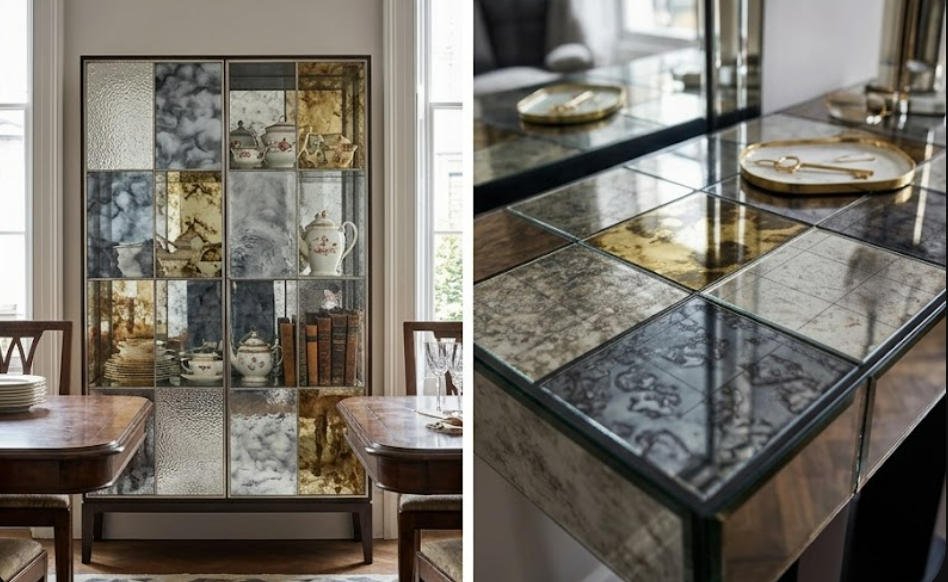
Selecting the correct thickness for vintage glass furniture panels is a delicate balancing act between aesthetic depth, structural durability, and hardware limitations. Specifying glass that is too thin results in dangerous breakage, while overly thick panels cause hinges to sag and wooden frames to warp under immense gravitational strain.
The debate surrounding 4mm vs 5mm vintage mirror thickness is critical for B2B buyers. For small sideboards or decorative nightstands, 4mm offers a lightweight, cost-effective solution. However, for full-height commercial wardrobes, 5mm is the absolute minimum standard required to prevent bowing and ensure heavy wardrobe mirror glass mounting remains rigidly secure.
Engineers must accurately calculate the mirror panel weight on cabinet hinges. A standard 5mm thick oxidized mirror sheet weighs approximately twelve point five kilograms per square meter. When designing a two-meter tall wardrobe door, this immense dead weight necessitates heavy-duty, multi-pivot concealed hinges to prevent catastrophic sagging and maintain smooth operational mechanics over thousands of cycles.
Adhesive alone should never be trusted to hold massive vertical glass loads. Commercial hotel furniture mirror durability demands the integration of mechanical fixing clips for heavy mirrors. These discreet metal brackets physically support the bottom edge of the distressed mirror cabinet glass, transferring the vertical shear weight directly to the wooden chassis rather than relying entirely on chemical bonds.
100% Compliance with commercial safety codes requires one hundred percent utilization of safety backing films. Applying a high-strength PE or PVC shatterproof membrane to the rear of the antique mirror tabletop safety backing ensures that if a massive impact occurs, the shattered shards remain bound together, eliminating severe laceration hazards in public hotel spaces.
The most frustrating challenge buyers face with wholesale antiqued furniture glass is unpredictable batch variation. Because the oxidation process involves reactive chemicals, no two sheets are ever perfectly identical. However, wild swings in color density or pattern clustering can ruin the cohesive aesthetic of a multi-room commercial hotel installation.
To conquer batch oxidation consistency in glass, you must move beyond verbal agreements. I heavily advise implementing a digital master sample sign-off process. Buyers must require furniture grade mirror panel suppliers to provide high-resolution, unedited photos of the golden sample under standardized 4000K lighting, establishing a permanent visual contract before mass production begins.
You cannot expect robotic perfection from a chemically distressed product. Instead, establish clear custom antique mirror panel grading tolerances. Define the acceptable maximum diameter for dense black oxidation spots, and explicitly agree on the required percentage of clear reflective space. This mathematical approach removes subjective emotion from the quality control inspection process.
Understanding the factory’s manufacturing technique is vital. Hand-distressed panels offer a highly organic, artisanal look but carry a massive risk of inconsistency across large orders. Conversely, automated chemical spray lines deliver highly predictable wholesale antiqued glass quality control, making them the superior choice for high-volume commercial furniture runs requiring strict aesthetic uniformity.
Never authorize final payment without a rigorous bulk antiqued mirror sheet inspection. Third-party inspectors must randomly pull panels from the wooden crates to verify thickness with calipers, check edge polishing quality, and compare the distressed pattern against the signed digital master. Catching an overly dark batch at the factory saves thousands of dollars in unusable furniture panels.
3-Point Implement a rigid three-point inspection system before export: verify exact dimensional tolerances, cross-reference pattern density against the golden sample, and physically test the adhesion of the backing paint. This systematic checklist is the ultimate safeguard against receiving unusable oxidized mirror sheet applications.
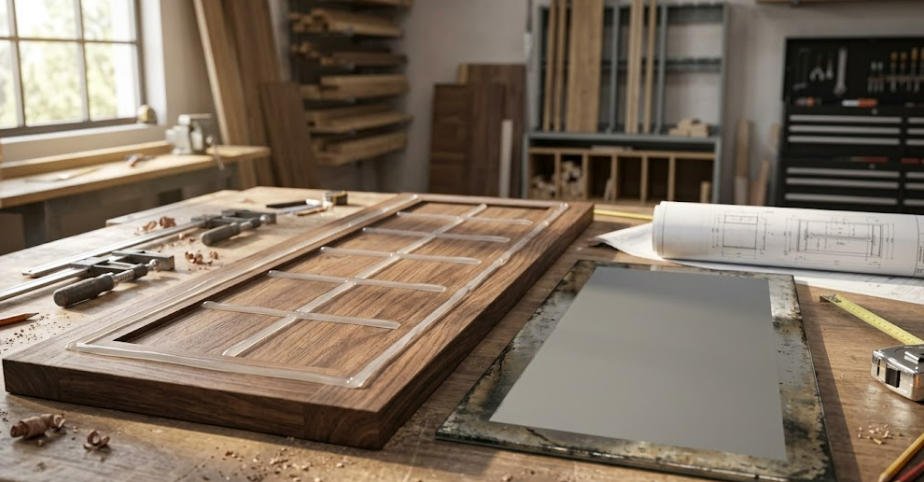
Shipping heavy, fragile antique mirror for furniture across the ocean is a logistical nightmare if handled poorly. The dynamic stress of rolling cargo ships and rough forklift handling can quickly turn a container of premium glass into worthless shards. Masterful packaging architecture is just as critical as the manufacturing process itself.
When evaluating wooden crate packaging for antique mirrors, you must demand A-frame architecture for bulk sheets. Storing glass vertically on an angled A-frame directs the weight downward into the reinforced base, minimizing shear stress. Flat-packing large vintage glass furniture panels is a guaranteed recipe for catastrophic pressure fractures during turbulent ocean transit.
Glass never shatters from the center; it shatters from edge impacts. Factories must utilize heavy-duty plastic corner protectors on every custom cut distressed mirror panel. Furthermore, inserting thick EPE foam interleaving sheets between each mirror panel completely eliminates surface scratching and provides critical shock absorption against harmonic vibrations inside the shipping container.
What is a realistic goal for transit breakage reduction for antique glass? Through strict enforcement of the A-frame glass crating shipping benchmark, top-tier B2B buyers consistently maintain a breakage rate of under two percent. Anything higher indicates a fundamental flaw in the supplier’s packaging engineering or poor container loading practices.
Your responsibility as a supplier does not end at delivery. High-end casegoods mirror integration requires proactive education regarding long-term maintenance. If a hotel housekeeping team uses aggressive, ammonia-based window cleaners, they will rapidly dissolve the edge sealants, causing premature mirror oxidation repair and prevention nightmares.
We must explicitly warn procurement teams about maintenance risks. Ammonia and heavy bleach formulas violently react with the exposed silvering on wholesale antiqued furniture glass. Buyers must provide their clients with strict maintenance manuals specifying the use of mild, pH-neutral soapy water and soft microfiber cloths to preserve the distressed aesthetic indefinitely.
10+ When properly installed with neutral adhesives, sealed edges, and maintained without harsh chemicals, premium oxidized mirror sheet applications boast a commercial lifecycle exceeding ten years. This incredible durability provides immense ROI for hospitality project antique mirror specs, completely justifying the initial premium investment.
You must mandate the use of strictly acid-free adhesive for oxidized mirrors, ensure the factory applies a secondary anti-corrosion backing paint, and require clear chemical edge sealing before the glass is mounted into the wood frame.
For full-height wardrobe doors, 5mm is essential to provide structural rigidity and prevent bowing. 4mm should only be used for small, non-load-bearing accent panels or solidly backed sideboards.
Implement a digital master sample sign-off, define strict custom antique mirror panel grading tolerances for spot density, and hire third-party inspectors to conduct random sampling during the bulk antiqued mirror sheet inspection phase.
Always specify heavy-duty, fumigated A-frame crates with steel strapping. Combine this with plastic corner protectors and thick EPE foam interleaving to achieve the industry-leading A-frame glass crating shipping benchmark.
Unfortunately, once the silver layer has been chemically burned by acidic adhesives, the damage is permanent. The only solution for mirror oxidation repair and prevention at that stage is completely replacing the distressed mirror cabinet glass panel.
Adhesives degrade over decades. Mechanical clips provide permanent physical support, transferring the massive shear weight of the glass directly to the wooden chassis, ensuring lifetime commercial hotel furniture mirror durability.