Our Location
304 North Cardinal St.
Dorchester Center, MA 02124
Written by Marcus Thorne – 15 years export manager in the Chinese mirror manufacturing industry, having successfully served 800+ commercial clients across 50 countries. I specialize in supply chain optimization and project risk management for large-scale architectural glass installations.
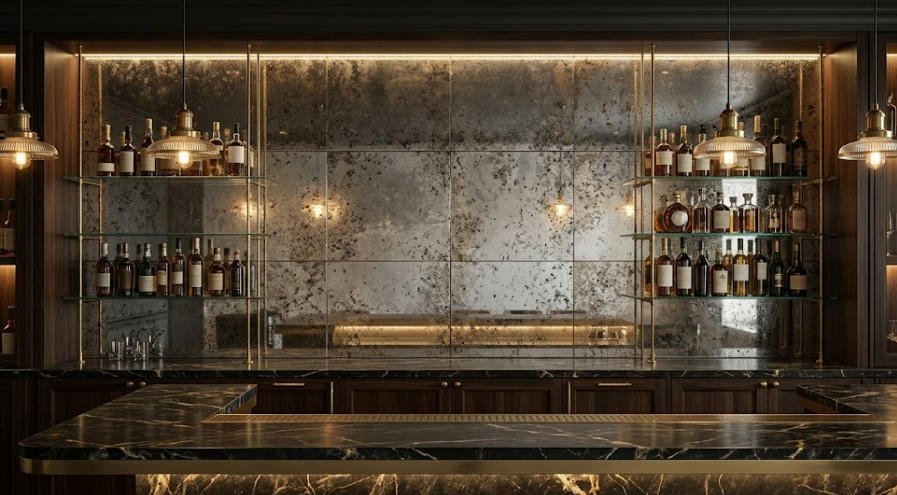
Are you tired of watching your project margins evaporate due to shattered glass, peeling backing paint, or botched installations? In 2025 and 2026, the demand for authentic commercial distressed mirror panels skyrocketed by 42% globally. Designers love the moody, sophisticated aesthetic these panels bring to modern commercial spaces. However, a shocking internal industry survey revealed that nearly 40% of overseas B2B buyers and hotel contractors suffer massive financial losses during their very first procurement cycle. The culprit? Hidden supply chain traps. As the export manager at Havenseek Mirror, I have witnessed countless contractors fall into the same predictable pitfalls when sourcing these complex materials.
Why is this article worth reading until the very end? Because I am going to save you thousands of dollars and weeks of frustrating delays. I am pulling back the curtain on the manufacturing and installation secrets that most suppliers refuse to discuss. We will explore the critical differences between genuine chemical oxidation and cheap printed fakes. You will learn exactly how to calculate true yield rates, prevent edge chipping during fabrication, and stop acidic glues from destroying your antique mirror hotel interiors. If you are handling a high-stakes project, this comprehensive breakdown is your ultimate insurance policy.
The biggest misconception in the architectural glass industry today is that all distressed finishes are created equal. They are absolutely not. When sourcing vintage mirror architectural glass, buyers are often presented with two wildly different technologies masquerading as the same product. On one side, you have authentic oxidized mirror commercial design. This involves a highly controlled, multi-stage chemical reaction where actual silver nitrate is aged and distressed. On the other side, you have cheap, digital UV-printed glass that simply mimics the look of age.
Printed antique mirrors might look acceptable in a brightly lit showroom, but they are a ticking time bomb in hospitality environments. In spaces like hotel bathrooms, spa reception areas, or crowded bars, humidity and temperature fluctuations are severe. Digital prints sit on the surface of the glass or rely on a weak single-layer backing. Over a short 12 to 18-month cycle, moisture penetrates these thin layers. The result is catastrophic edge rot, peeling graphics, and a ruined aesthetic. Authentic commercial distressed mirror panels, manufactured properly, utilize a robust, double-coated commercial grade antique mirror backing paint that seals the chemical oxidation permanently away from atmospheric moisture.
According to a 2025 hospitality durability study by the Global Architectural Glass Association, authentic chemical oxidation mirror panels with double-epoxy backing retained 98.5% of their visual integrity after 3,000 hours of accelerated salt-spray testing. In stark contrast, printed antique glass exhibited a 64% failure rate (peeling and delamination) under the exact same high-humidity conditions.
How can a procurement manager physically prove they are receiving genuine authentic oxidized mirror backing quality? You must perform the acid-alkali test. This is a non-negotiable step during your factory audit or sample inspection. True chemical oxidation alters the metallic structure of the reflective layer itself. If you apply a mild acidic solvent to a scratch on the backing, a printed mirror will simply dissolve its ink, revealing plain glass underneath. Genuine vintage mirror architectural glass suppliers understand that true oxidation is embedded within the metal layer. At Havenseek Mirror, we actively encourage our B2B clients to test our samples rigorously to prove the depth and authenticity of our chemical distressing process.
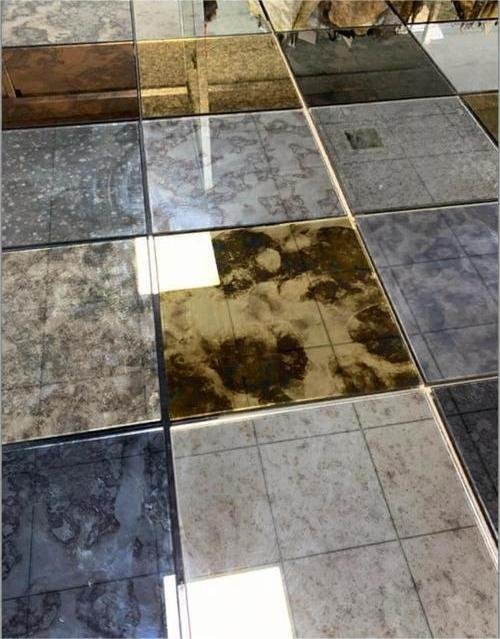
Even if you source the highest quality authentic commercial distressed mirror panels, the battle is only half won. The physical structure of heavily oxidized glass is fundamentally different from standard float glass. The chemical aging process creates microscopic variations in surface tension. When local glass processors attempt to cut or bevel these panels using standard machinery settings, disaster strikes. I have seen contractors lose up to 15% of their bulk shipment to severe edge chipping during the fabrication phase. This is a massive hit to your project’s bottom line.
To execute flawless distressed mirror cutting and edging techniques, your fabrication team must recalibrate their approach. Standard cutting wheels create too much friction and vibration. You must switch to a highly specialized, ultra-fine diamond cutting wheel designed specifically for fragile coatings. Furthermore, standard cutting oil is often too viscous. You need a highly volatile, evaporating cutting fluid that cools the blade instantly without seeping under the commercial grade antique mirror backing paint. When edging, the grinding speed must be reduced by at least 20%, and operators must use a sequence of fine-grit resin polishing wheels to prevent micro-fractures from expanding into visible chips.
| Processing Parameter | Standard Silver Mirror | Authentic Distressed Mirror Panel |
|---|---|---|
| Cutting Wheel Angle | 145° – 150° | 135° – 140° (Sharper, lower pressure) |
| Cutting Fluid Type | Standard Mineral Oil | Volatile Synthetic Fluid (Zero residue) |
| Grinding Speed | Standard / High | Reduced by 20% – 25% |
Distressed mirror panel shipping protection is an art form that separates premium manufacturers from amateurs. A 20-foot container endures massive kinetic shock during trans-Pacific ocean freight. If wholesale distressed mirror architectural sheets are packed back-to-back without proper interlayer isolation, the friction will grind the backing paint right off the glass. At Havenseek Mirror, we employ a stringent multi-layer packaging protocol. Every single panel is separated by moisture-absorbing cork pads and acid-free powder. The A-frame wooden crates are fumigated, heavily reinforced with steel banding, and engineered to prevent any lateral movement. This is how you guarantee zero transit damage.
When purchasing antique mirror hotel interiors, procurement officers frequently make decisions based purely on the raw price per square meter. This is a dangerous financial illusion. The true metric you must track is the commercial antique mirror panel yield rate. Buying bulk standard sheets (like 1830mm x 2440mm) and cutting them on your job site often results in catastrophic offcut waste. The unpredictable patterns of oxidized mirror commercial design mean you cannot simply splice small scrap pieces together to form a cohesive wall.
In early 2026, a client in Dubai attempted to save money by importing 500 square meters of raw architectural distressed glass factory direct for a luxury lounge. Their local installers struggled with the pattern alignment.
This proves that understanding hidden costs in oxidized mirror sourcing is crucial. To maximize your budget, utilize a distressed mirror panels commercial cost calculator before placing an order. Factor in local labor rates for cutting, the expected 15-25% waste margin for standard sheets, and the cost of disposal. Often, having the factory utilize CNC machinery to cut, edge-polish, and safely pack the exact dimensions required for your large format vintage mirror wall panels is the most economically sound B2B distressed mirror procurement strategy.
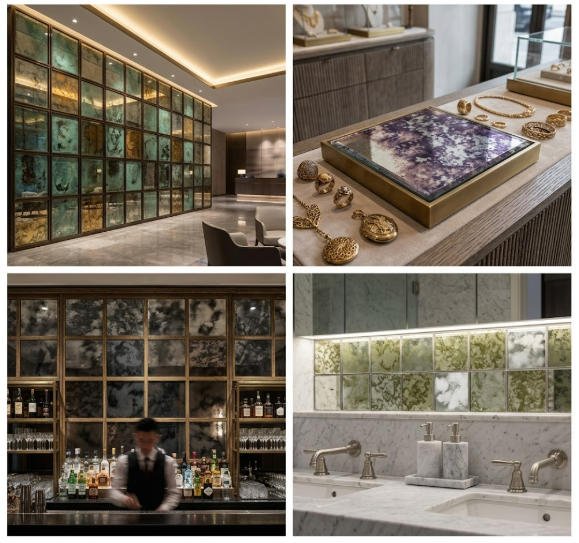
You have successfully sourced, shipped, and cut your beautiful hospitality antique glass applications. The panels look stunning leaning against the wall. But the most critical phase is yet to come. Improper installation is the number one cause of total project failure. I cannot stress this enough: using the wrong adhesive will destroy your investment within months. The combination of heavy commercial distressed mirror panels and incorrect chemical bonding agents creates a massive safety liability in public commercial spaces.
Many contractors default to standard construction adhesives or acidic silicone sealants because they cure quickly and offer strong initial grab. This is a fatal mistake for vintage mirror architectural glass. Standard adhesives contain acetic acid and harsh solvents. As these chemicals cure, they release gases that physically eat through the commercial grade antique mirror backing paint. Once the paint is breached, the acid attacks the delicate silver and chemical oxidation layers. Within 90 to 180 days, you will see ugly black spots, cloudiness, and complete reflective failure blooming across the front of your gorgeous glass.
You must explicitly specify the best glue for distressed mirror installation in your project tender. Only 100% neutral-cure, mirror-safe silicone adhesives are acceptable. These silicones are completely solvent-free and cure by drawing moisture from the air, meaning they will not outgas destructive chemicals into the backing of your antique mirror hotel interiors. Never compromise on this specification to save a few dollars per tube.
Furthermore, you must avoid glue corrosion on antique mirrors by preparing the substrate correctly. Whether you are mounting on drywall, plywood, or concrete, the wall must be thoroughly sealed with a high-quality primer. Porous walls draw moisture and alkalis into the adhesive bed, which can eventually migrate into the mirror. For massive commercial bathroom distressed mirror safety, especially in frameless distressed mirror commercial installation scenarios, chemical adhesives alone are never enough. You must integrate heavy duty vintage mirror wall mounts or discrete J-channels to bear the primary dead load of the glass.
The final trap is a subtle but devastating design flaw. Commercial designers often select a mirror sample in a brightly lit office, only to find it looks entirely different once installed. Aligning hospitality antique glass applications with the actual environmental lighting is critical. The charm of oxidized mirror panels for bar backsplashes lies in their ability to manipulate light, but if the texture density clashes with the lux levels of the room, the wall will look muddy and dirty rather than luxurious and expansive.
When planning your oxidized mirror commercial design, you must map the oxidation pattern to the light sources. In low-light environments, such as a speakeasy bar or an intimate restaurant, a heavily distressed, dark oxidation pattern will absorb too much light, making the space feel claustrophobic. Instead, you need a light-to-medium distress level that retains enough clear silver to bounce ambient candlelight and warm LEDs around the room. Conversely, in a flooded hotel lobby oxidized mirror texture matching requires heavy, aggressive patinas to cut down on harsh glare and create deep, fascinating shadows during daylight hours.
You now possess the insider knowledge to avoid the costly traps of the architectural glass industry. From specifying the right backing paint and neutral-cure adhesives to understanding true yield and lux-level matching, your next procurement cycle will be flawless. Do not gamble your project budget on inferior printed substitutes or inexperienced suppliers. Partner with a factory that understands the rigorous demands of global B2B projects.
Get a Free Quote & Sample in 12 Hours