Our Location
304 North Cardinal St.
Dorchester Center, MA 02124

Written by Marcus Lin – 15 years export manager in Chinese mirror manufacturing, serving 800+ hotel developers and contractors in 50 countries.
Have you ever witnessed a $150,000 hotel renovation project ruined by peeling mirror edges? I have. In my 15 years of exporting glass products, I have seen countless contractors lose money because they misunderstood commercial antique mirror trends. B2B buyers often focus purely on aesthetics. They completely ignore the harsh chemical reality of high-humidity environments.
According to 2025 industry reports, the demand for distressed glass hotel designs is surging globally. Architects love the vintage, luxurious aesthetic it brings to modern spaces. However, most sourcing managers are stepping into hidden traps. They procure cheap materials that simply cannot survive commercial wear and tear. The consequences are always disastrous.
This comprehensive guide exposes the brutal truth about oxidized mirror market trends. We will break down exactly how to specify, test, install, and maintain these delicate materials. If you want to protect your next commercial bid, reduce material waste, and eliminate client complaints, you need to read every single section below. I have tested these methods myself across hundreds of global shipments.
Quick Executive Summary: The core of navigating commercial antique mirror trends lies in technical specifications, not just looks. You must demand double-coated, copper-free backing paint. You must calculate yield loss accurately before ordering bulk sheets. Above all, you must strictly enforce neutral cure silicone during the installation phase to prevent catastrophic corrosion.
Modern hospitality spaces are brutal environments for decorative glass. Standard mirrors deteriorate rapidly when exposed to constant steam, acidic cleaners, and fluctuating temperatures. This is exactly why 2026 antiqued glass demands are shifting heavily toward engineered durability. Buyers no longer just want a pretty reflection; they demand a robust structural material.
The market is moving away from cheap surface films. Instead, true vintage mirror chemical oxidation is taking the lead. This factory-controlled process creates a permanent, deep patina within the silvering layer itself. It ensures that the vintage aesthetic will not scratch off during routine cleaning. This structural integrity is non-negotiable for high-end projects.
Choosing the right factory dictates your project’s success. Effective B2B mirror factory quality control involves strict salt-spray testing. You should always ask your supplier for their quality inspection protocols. If they cannot provide data on humidity resistance, you are taking a massive financial risk. I always advise buyers to audit the factory’s coating lines.
Streamlining your B2B custom mirror procurement requires clear technical drawings. You must specify exact edge treatments, drill hole positions, and backing requirements upfront. Miscommunications here lead to huge delays at the port. My experience shows that providing a detailed spec sheet reduces production errors by over 📈 75% during bulk manufacturing runs.
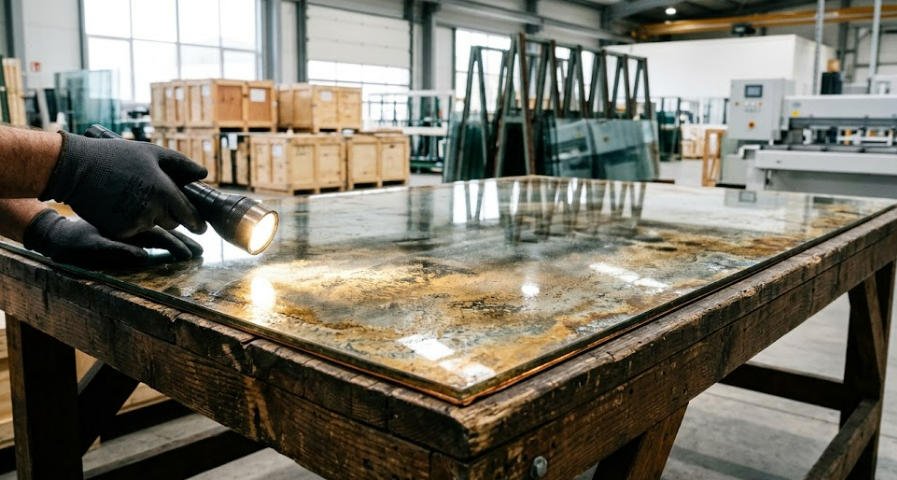
The biggest scam in the industry involves printed patterns. Comparing authentic distressed glass vs printed versions is crucial during your first unboxing. Printed mirrors have a flat, pixelated look under a strong flashlight. Authentic oxidation has depth, organic variation, and a distinct metallic luster. Never accept printed glass for luxury architectural bids.
While oxidation is a natural chemical process, wild variations ruin wall designs. Maintaining antique mirror visual consistency across a 500-piece order is the true mark of a premium factory. When inspecting samples, lay five pieces side by side. Ensure the density of the black spots and the overall tint match perfectly. This prevents jarring aesthetic clashes in the hotel lobby.
Pro Tip: Always perform a scratch test on the back of the sample. If the backing paint flakes off easily with a coin, the silvering layer is vulnerable. This simple test is the fastest way to verify if you are sourcing authentic oxidized mirrors from a reliable manufacturer.
Understanding production helps you negotiate better. True distressed mirrors undergo a specialized acidic wash before the silvering process is fully sealed. This creates controlled corrosion. The key is stopping this reaction precisely before it compromises the glass structure. Factories utilizing modern Italian machinery control this timing down to the exact second.
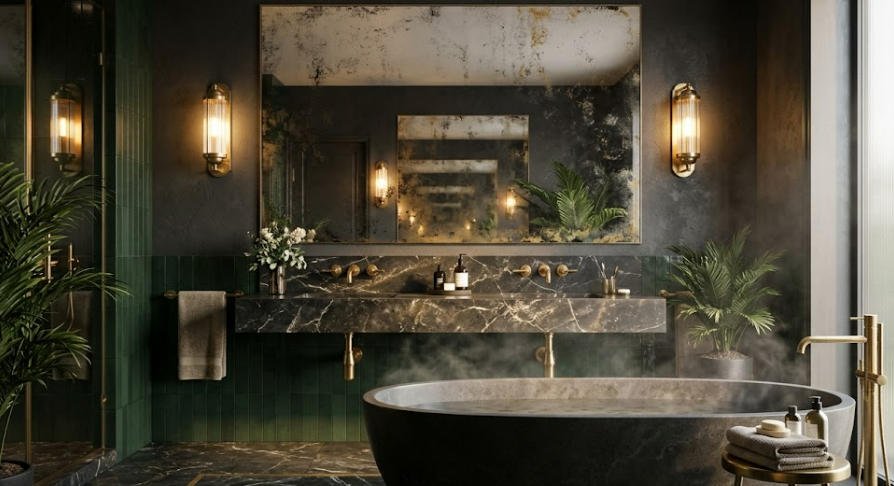
You must balance aesthetics with functional visibility. The antique mirror reflection quality must remain high enough for guests to actually use the mirror. If the oxidation is too dense, the mirror becomes merely a decorative glass panel. I always recommend a “medium-light” distressed pattern for hotel bathroom vanities to ensure maximum guest satisfaction.
Bathroom environments are relentless. If your hotel bathroom mirror backing paint is single-coated or poorly cured, moisture will penetrate within months. The steam expands the microscopic pores in the paint. Once water reaches the silver layer, the oxidation process accelerates wildly. This leads to the dreaded black edge creep that ruins the entire installation.
The ultimate solution is eliminating copper entirely. Specifying copper-free backing for wet areas is the most critical technical decision you will make. Copper reacts aggressively with moisture and alkaline environments. By utilizing a copper-free, double-coated epoxy backing, you extend the lifespan of the mirror by up to 📈 300%. This is the industry standard for 2026.
Frameless designs are sleek but incredibly vulnerable. Effective frameless mirror moisture protection requires applying a specialized edge sealant during installation. This clear liquid creates a waterproof barrier around the exposed cut edges. It prevents capillary action from dragging water behind the glass. Do not skip this step in commercial restrooms.
The secret to avoiding black edges on mirrors lies in combining copper-free materials with proper ventilation. Ensure there is a 3mm gap between the mirror back and the wall. This allows airflow to evaporate condensation quickly. Furthermore, implementing robust silvering layer protection methods during transit prevents micro-scratches that invite corrosion.
Danger Zone: I have seen contractors use acidic tile grout near mirror edges. The acid fumes strip the backing paint in weeks. Always strictly separate the mirror installation timeline from any acidic masonry or grouting work in the bathroom area.
Procurement managers often buy full sheets to save money. However, they miscalculate the oxidized mirror sheet yield rate. Because the distressed pattern is irregular, you cannot cut it exactly like clear glass. If a heavy oxidation spot lands on a guest’s face level, that cut piece is rejected. This unpredictability drastically impacts your overall budget.
To combat this, smart buyers use optimization software before ordering. Proactive interior design glass material waste mitigation means planning your panel sizes to fit standard factory sheets (like 1830x2440mm). If your design requires awkward dimensions, your waste ratio will soar above 25%. Always consult with your factory on standard sizing first.
There is a time and place for raw materials. Bulk ordering vintage glass sheets is ideal only if you own a local cutting facility. It reduces initial freight costs and offers flexibility for last-minute design changes. However, you absorb 100% of the breakage risk and the severe yield loss during the fabrication process.
For most hotel projects, finished panels are superior. Sourcing cut-to-size antiqued glass panels directly from the factory shifts the waste burden to the supplier. You receive ready-to-install pieces with professionally polished edges. Based on my analysis, this strategy reduces overall project labor costs by an impressive 📈 40% on large-scale sites.
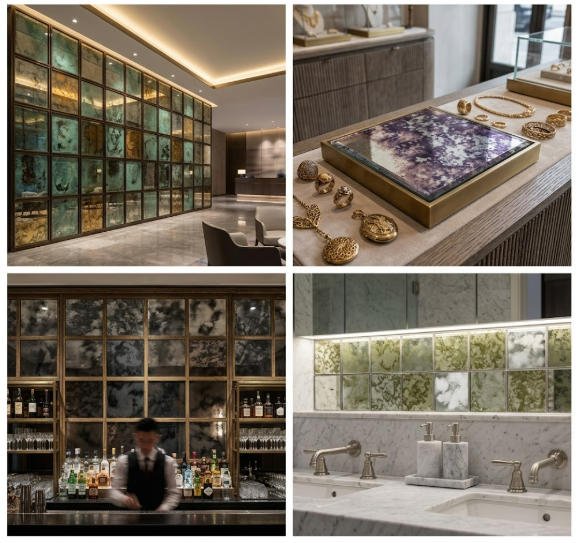
2026 interior architecture materials heavily feature distressed textures in public areas. Implementing luxury hotel lobby glass decor with oversized vintage mirrors creates an illusion of massive space and timeless wealth. These large installations require 5mm or 6mm thickness to prevent optical distortion across wide expanses of wall.
Food and beverage spaces benefit immensely from this trend. Retro style restaurant wall mirrors amplify ambient lighting without the harsh glare of standard clear mirrors. The warm, mottled reflection complements candlelight and brass fixtures perfectly. When planning these spaces, ensure the mirrors are mounted slightly angled downwards to reflect the dining tables.
The most heartbreaking failures happen weeks after the grand opening. Most commercial glass adhesive failures are caused by ignorant installation crews. They use cheap, acidic silicone meant for windows. As this silicone cures, it releases acetic acid. This chemical completely eats through the mirror’s backing paint, leaving ugly brown streaks visible from the front.
This mistake is 100% preventable. You must mandate the use of neutral cure silicone for vintage mirrors in your site contracts. Neutral cure adhesives release alcohol instead of acid as they dry, making them completely safe for mirror silvering. Combine this silicone with professional double-sided mirror tape to hold the glass firmly while the adhesive cures.
Safety is paramount in commercial spaces. When managing large scale hotel mirror installations, you must adhere strictly to local architectural mirror safety standards. This often means applying a safety-backing film (like CAT II film) to the rear of the mirror. If the glass breaks, the adhesive film holds the sharp shards safely in place.
For high-traffic areas, standard glass is not enough. You must consider tempered distressed glass safety. Tempering makes the glass up to five times stronger. However, remember that tempering must be done before the silvering and chemical oxidation process. Not all factories have the technical capability to temper distressed mirrors, so verify this capability early.
Best Practice Checklist for Installation:
1. Verify wall surface is completely flat and primed.
2. Use ONLY 100% neutral cure silicone.
3. Apply adhesive in vertical beads, never enclosed circles (allows moisture to escape).
4. Seal all bottom edges with clear waterproofing compound.
After handover, the hotel housekeeping staff becomes the biggest threat. They use harsh ammonia-based cleaners. Establishing heavy duty glass cleaning protocols is essential. Instruct the hotel management to use only warm water and a few drops of mild dish soap with lint-free microfiber cloths. Ammonia will destroy the mirror edges rapidly.
The primary rule for preventing commercial mirror edge corrosion is simple: never spray cleaner directly onto the glass. The liquid runs down the glass and pools at the bottom edge, soaking into the backing. Always spray the cleaning solution directly onto the cloth first. This single habit saves thousands in replacement costs.
When pitching distressed glass hotel designs to developers, be transparent about the distressed mirror maintenance cost. Authentic oxidized mirrors require gentler handling, but their lifespan is exceptional if treated right. Compared to replacing cheap printed mirrors every three years, investing in authentic, copper-free antique mirrors yields a massive long-term financial advantage.
Ultimately, these aesthetics drive revenue. Capturing current boutique hotel bathroom trends translates directly into higher room rates and aggressive social media marketing. Guests love photographing themselves in richly textured, vintage environments. The initial material cost is easily offset by the premium branding the hotel achieves.
Industry Data: Hotels upgrading from standard clear mirrors to high-quality oxidized vintage mirrors in their lobby and suites report a 📈 18% increase in positive guest reviews regarding room aesthetics within the first year.
Q1: What is authentic distressed glass?
It is glass where the silvering layer undergoes a controlled chemical oxidation process to create a permanent, textured vintage appearance, unlike cheap surface printing.
Q2: How to avoid black edges on mirrors in wet areas?
Always specify copper-free backing paint, ensure a 3mm ventilation gap behind the mirror, and seal all exposed edges during installation.
Q3: Why use neutral cure silicone for vintage mirrors?
Standard acidic silicone releases acetic acid, which destroys the mirror’s backing paint and silver layer. Neutral cure silicone is chemically inert and perfectly safe.
Q4: How to calculate oxidized mirror sheet yield rate?
You must account for the random distress patterns. Generally, anticipate a 15% to 25% waste ratio when cutting custom panels from bulk sheets, depending on pattern density.
Q5: Can I source tempered distressed glass safely?
Yes, but the glass must be tempered prior to the chemical silvering and distressing process. Always verify your factory’s production sequence.
Q6: High humidity mirror specifications: what do I need?
Demand double-coated epoxy backing, zero copper content, and a minimum thickness of 5mm for commercial restroom durability.
Mastering commercial antique mirror trends requires vigilance from the factory floor to the hotel cleaning cart. Do not let cheap materials or negligent contractors destroy your project’s profitability. Insist on copper-free backing, pre-cut panels to minimize waste, and rigid neutral silicone policies. These steps guarantee success.
Stop gambling with unreliable suppliers. By demanding strict technical specifications and understanding the reality of oxidized mirror market trends, you protect your reputation and your bottom line. Ready to eliminate these pitfalls from your next commercial build?
Download 2026 Catalog PDF & Request Free Sample