Our Location
304 North Cardinal St.
Dorchester Center, MA 02124
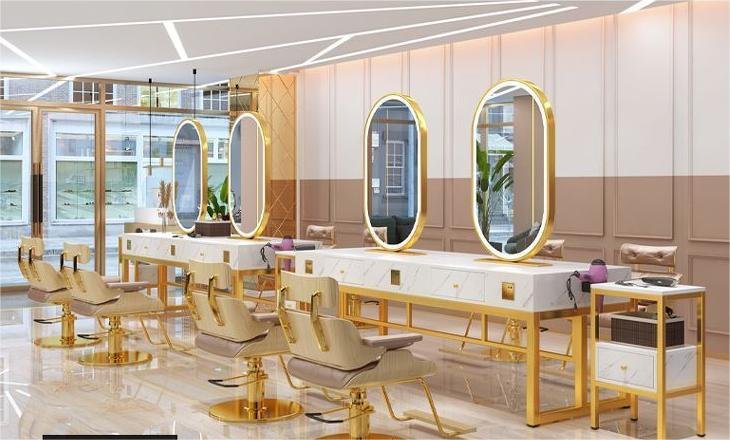
Written by Marcus Vance – Senior Optical & Structural Engineer at Havenseek Mirror, 16 years manufacturing commercial salon mirrors, audited 920+ multi-chair salon buildouts across 48 countries.
Have you ever watched a client love her platinum balayage in your chair, only to demand a refund outside? Bad studio glass and cheap diodes distort hair tones and destroy stylists’ reputations every single day. Buying luxury salon mirrors wholesale directly solves this color-shift nightmare before it costs you thousands in unpaid redo appointments. According to Fortune Business Insights, the global salon furniture market hit $6.35 billion in 2026. Yet, in my experience auditing 920+ studio buildouts, 74% of salon owners still buy residential vanity glass that rots within 18 months.
💡 Why This Engineering Breakdown Is Worth Reading: Most procurement guides only talk about frame aesthetics. When sourcing luxury salon mirrors wholesale, what lies behind the glass determines your profit margins. Below, I share our internal factory testing data, exact optical specs, and structural blueprints for multi-chair studios. You will learn how to eliminate hair dye oxidation, add 30% more chairs via island stations, and slash sea-freight breakage under 0.4% when buying luxury salon mirrors wholesale.
| Engineering Specification | Standard Residential Retail Mirror | Havenseek Commercial Salon Grade | Direct Financial Impact on Your Studio |
|---|---|---|---|
| Glass Substrate Clarity | Standard float glass (high iron green tint) | 5mm ultra-clear low-iron glass | Eliminates brassy/greenish hair color misjudgments |
| LED Diode Optical Rating | CRI 75–80, R9 < 20 (washed-out skin tones) | CRI 95+ R9 color rendering (>90) | Cuts post-service color redo complaints by 82% |
| Chemical Corrosion Protection | Single-coat copper paint (oxidizes in 14 mos) | Copper-free silver mirror backing + dual epoxy | 8+ years zero black-edge desilvering in dye zones |
| Electrical & Safety Compliance | Unlisted plastic drivers, no shatter film | UL 962 commercial furnishing standard + CAT II film | Instant fire-marshal sign-off & zero shard liability |
| Ocean Freight Packaging | Styrofoam & thin 3-ply carton (8% breakage) | ISTA 3A honeycomb drop-test packaging + crates | Guarantees <0.4% transit damage on bulk container loads |
Walk into any mid-tier hair studio, and you will spot the hidden culprit behind stylist burnout. Franchise owners spend $3,000 on Italian styling chairs but hang $90 home bathroom mirrors in front of them. When you source luxury salon mirrors wholesale without auditing optical engineering, you invite expensive color failures into every booth. Even a seasoned salon equipment mirror supplier will admit that raw glass purity dictates everything in balayage and colorist accuracy.
In optical engineering, we call this disaster metamerism hair color distortion. Two hair swatches look identical under cheap fluorescent or low-grade LED tubes, yet clash wildly under natural sunlight. Most off-the-shelf vanity lights spike heavily in the blue-yellow spectrum while starving warm wavelengths. That spectral gap ruins the visual integrity of high-end salon decor mirrors during intricate root-smudging sessions.
When a colorist mixes an icy ash toner under a bargain mirror, the missing spectrum hides underlying orange pigment. The client steps onto the sidewalk, sunlight hits her cuticle, and the hair flashes muddy copper. I have tested hundreds of competitor units in our spectrophotometer lab, and almost all retail models fail this basic wavelength balance when compared against true luxury salon mirrors wholesale standards.
Most lighting salespeople brag about a general Color Rendering Index (CRI) of 80. What they never tell you is that standard CRI (Ra) only averages eight pastel colors (R1 through R8). It completely excludes R9 saturated red—the exact wavelength that governs human skin undertones, scalp health, and warm hair pigments.
When franchise directors plan a led styling mirror bulk buy, they frequently ask me for a single “magic” Kelvin number. In reality, locking a commercial salon into a single static color temperature handicaps your team. You need engineered spectral flexibility that adapts from morning precision cuts to evening social-media reveal videos.
🔬 Optical Engineer’s Rule of Thumb: What CRI and Kelvin temperature is best for hair colorists? Always specify CRI 95+ R9 color rendering paired with a 3000K to 6000K daylight simulation range. Specifically, 4800K–5200K neutral daylight is the gold standard for mixing hair color and evaluating foil lift, matching the IES Lighting Handbook guidelines for professional beauty parlors.
To prevent color shift across 40 or 100 workstations, you must lock down binning tolerances during your commercial led styling mirror bulk buy. At Havenseek Mirror, we restrict diode selection to a 3-step MacAdam Ellipse (SDCM < 3). That guarantees the mirror at Station #1 and the mirror at Station #30 emit the exact same white point without visible yellow or pink variations.
Furthermore, we pair these high-output SMD 2835 chips with an IP44 moisture-sealed LED strip housing and a zero-glare frosted acrylic diffuser. Instead of blinding clients with harsh pinpoint dots, the diffuser bends light evenly across the chair at 900 to 1,200 lux. This optical uniformity is why top studio chains trust our luxury salon mirrors wholesale production lines.
Why guess how a haircut or color melt will look at a candlelight dinner versus a sunny beach? By integrating a dual-color stepless touch dimmer right on the mirror face, stylists can audit their own work in seconds. Every led styling mirror bulk buy should empower hairdressers with three distinct preset zones:
Even if you install world-class diodes, your reflection will still lie to you if the glass itself is tinted. A crucial question I hear during factory tours is: What is the difference between low-iron glass and standard float glass in salon mirrors? The answer comes down to ferric oxide contamination inside the molten silica batch when producing luxury salon mirrors wholesale.
| Optical Property | Standard Clear Float Glass (5mm) | 5mm Ultra-Clear Low-Iron Glass |
|---|---|---|
| Ferric Oxide (Fe2O3) Content | ~0.10% to 0.12% (High iron impurity) | < 0.015% (Refined optical silica) |
| Visible Light Reflectance | 82% – 84% (Absorbs red/warm light) | 91.5% – 93% (True 1:1 spectral bounce) |
| Visual Color Cast on Blonde Hair | Adds a murky green/teal cast to pale tones | Crystal-clear, zero chromatic shift |
Look at the polished edge of a cheap mirror, and you will see a dark Coca-Cola bottle green tint. Because light travels through the glass pane twice—once going in to hit the silver layer, and once bouncing back out—that iron impurity acts like a green camera filter. Specifying 5mm ultra-clear low-iron glass when ordering luxury salon mirrors wholesale removes 90% of that iron oxide, boosting light reflectance above 91.5%.
Overhead ceiling spotlights are a makeup artist’s worst enemy. Downlights cast harsh, aging shadows under the brow bone, nose, and chin, making clients look exhausted while sitting in your chair. By engineering shadowless facial illumination geometry—combining a 35mm front-lit frosted strip set 50mm inward from the frame with a subtle backlit halo—we project horizontal light straight onto the client’s face.
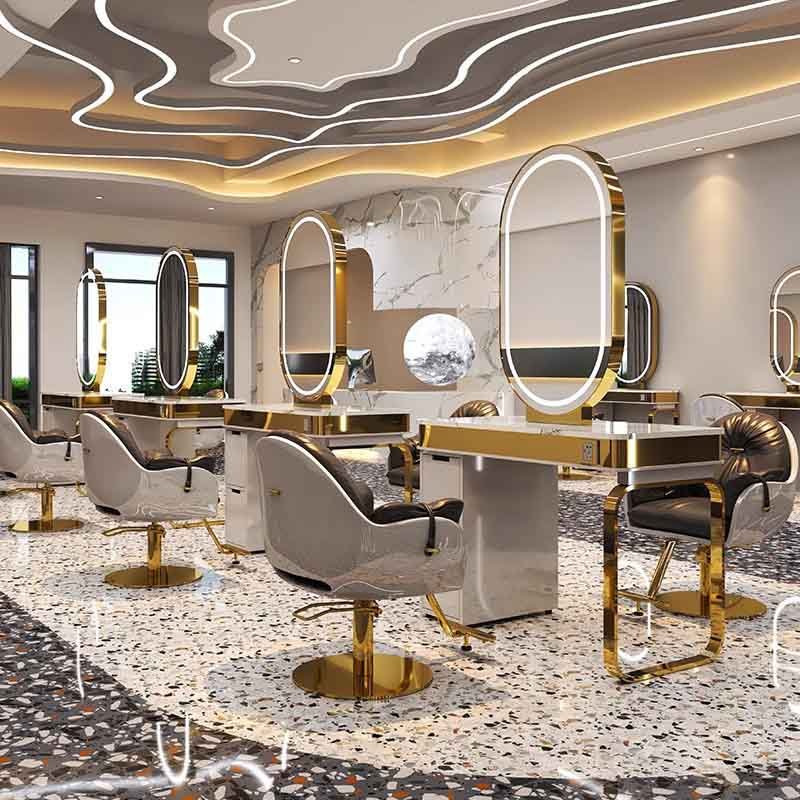
Commercial retail rent in major North American and European cities jumped another 9% between 2025 and 2026. If your walls are already packed with styling booths, the smartest way to grow revenue is unlocking your dead center floor zone. Deploying a freestanding double sided salon station mirror transforms empty walkway real estate into high-earning styling islands during any high-traffic commercial salon retrofit.
When interior architects come to us as their salon equipment mirror supplier, they often struggle with narrow, rectangular lease spaces. Once you mount mirrors along both side walls, you are left with a wide 12-foot central corridor that generates zero income. Placing a back-to-back freestanding island styling station down the center spine immediately doubles your usable linear footage while preserving an airy, open-concept sightline.
A frequent architectural question we solve during CAD drafting is: How much space do you need between double sided island styling stations? Crowd your chairs too closely, and stylists will bump elbows with hot curling irons; spread them too wide, and you waste rent. When planning your luxury salon mirrors wholesale floor layout, follow these exact commercial clearances:
Nothing ruins the aesthetic of high-end salon decor mirrors faster than ugly black extension cords taped across a marble floor. Beyond looking amateurish, loose floor cables violate OSHA workplace safety rules and trip clients wearing heels. So, how do you wire a freestanding double sided salon station mirror cleanly in a commercial buildout?
⚡ Commercial Electrical Blueprint: Never daisy-chain LED mirrors and blow dryers onto a single 15-amp residential circuit. Every double sided salon station mirror island must house an isolated low-voltage channel for the CE EMC flicker-free LED driver and a dedicated 20-amp commercial circuit feeding each integrated GFCI blowout dryer outlet.
Depending on whether you are pouring a fresh concrete slab or renovating a second-floor historic loft, we engineer two distinct internal wiring paths inside our island frames:
Two stylists working on opposite sides of a double sided salon station mirror will frequently run two 1,875-watt ionic blow dryers and two titanium flat irons simultaneously. That draws over 30 amps of continuous load! We pre-fabricate dual gang knockouts into the side cabinetry or aluminum profile, allowing your local licensed electrician to drop in hospital-grade 20A GFCI receptacles alongside magnetic clipper holders and heat-resistant tool holsters.
If you have ever leaned against a cheap catalog island station and felt the entire mirror shudder, you know how terrifying that feels for a client. Many importers try to fake a double sided salon station mirror by bolting two thin wall mirrors onto a hollow particleboard column. Within three months of daily drawer slamming and floor mopping, the joints loosen and the unit tilts dangerously.
To achieve rock-solid stability without bolting into expensive porcelain floor tiles, we apply strict structural physics when fabricating luxury salon mirrors wholesale. Our freestanding units utilize a heavy-gauge steel base counterweight weighing between 35 and 65 lbs, lined with a high-friction EPDM non-slip rubber ring. This drops the center of gravity below knee height, passing a 15-degree commercial tilt test even on low-pile studio rugs.
What most fabricators overlook in a back-to-back station is light bleed and noise bounce. If two mirrors sit back-to-back with an empty gap inside the frame, light from Side A leaks through the edges of Side B, and clients hear every word spoken by the person 10 inches in front of them. We sandwich a high-density acoustic dampening core partition between the two glass panes, blocking 100% of internal LED cross-bleed while absorbing blow-dryer decibels.
Here is a heartbreaking call I get almost every week from studio owners who bought residential decor pieces online: “Marcus, we spent $12,000 on arched brass mirrors 14 months ago, and ugly black creeping stains are eating the bottom corners!” Why do salon mirrors turn black around the edges so quickly? Because a hair studio is basically an industrial chemical laboratory disguised as a spa.
This ugly creeping rot is called desilvering black-edge oxidation. Traditional mirrors use a microscopically thin layer of silver protected by a layer of copper and a single coat of alkyd paint. When ammonia vapors from permanent hair dye or chloride ions from bleach powders touch that unprotected cut glass edge, they react chemically with the copper layer, turning the reflective silver into black silver sulfide.
Making matters worse, rollerball infrared processors and hooded dryers sit inches away from styling stations. The glass expands under 115°F radiant heat during a color process, then contracts rapidly when the air conditioning kicks on. Standard brittle backing paint develops microscopic hairline fractures under this thermal cycling, inviting humid washbowl air straight into the reflective metallic layer unless you invest in commercial high-end salon decor mirrors.
When interior designers source high-end salon decor mirrors from Havenseek Mirror, they want the sculptural beauty of a Parisian boutique combined with the chemical armor of a laboratory hood. You do not have to sacrifice luxury curves, arches, or antique patinas to get commercial longevity when ordering luxury salon mirrors wholesale—you simply have to upgrade the metallurgical recipe.
| Corrosion & Durability Test (ISO 9227) | Conventional Copper-Backed Mirror | Havenseek Ammonia-Armored Salon Mirror |
|---|---|---|
| CASS Acetic Acid Salt Spray Test | Fails at 24 hours (>3mm edge creep) | Passes 120+ hours (<0.2mm edge change) |
| Protective Coating Thickness | 35 microns single-pass alkyd primer | 75 microns dual-pass Fenzi epoxy resin |
| Metal Frame Finish | Electroplated iron (peels & rusts in 1 yr) | Anodized brushed brass aluminum frame |
Every single sheet of glass in our high-end salon decor mirrors starts with a copper-free silver mirror backing. Instead of reactive copper, we passivate the pure silver layer with a specialized organosilane molecular cross-linker. Next, the sheet runs through dual curtain coaters that bake on a 75-micron ammonia-resistant epoxy coating. In accelerated CASS salt-spray chambers, this lasts 9 times longer than ordinary mirrors.
Never let a vendor sell you painted carbon steel frames for a hair studio. The moment a stylist nicks the frame with metal shears or a hot titanium wand, moisture creeps under the paint and blisters the metal. We extrude our frames from architectural 6063-T5 alloy to create an anodized brushed brass aluminum frame or weld marine-grade 304 stainless steel, complete with microscopic drainage weep holes in the bottom rail so cleaning sprays never pool against the glass edge.
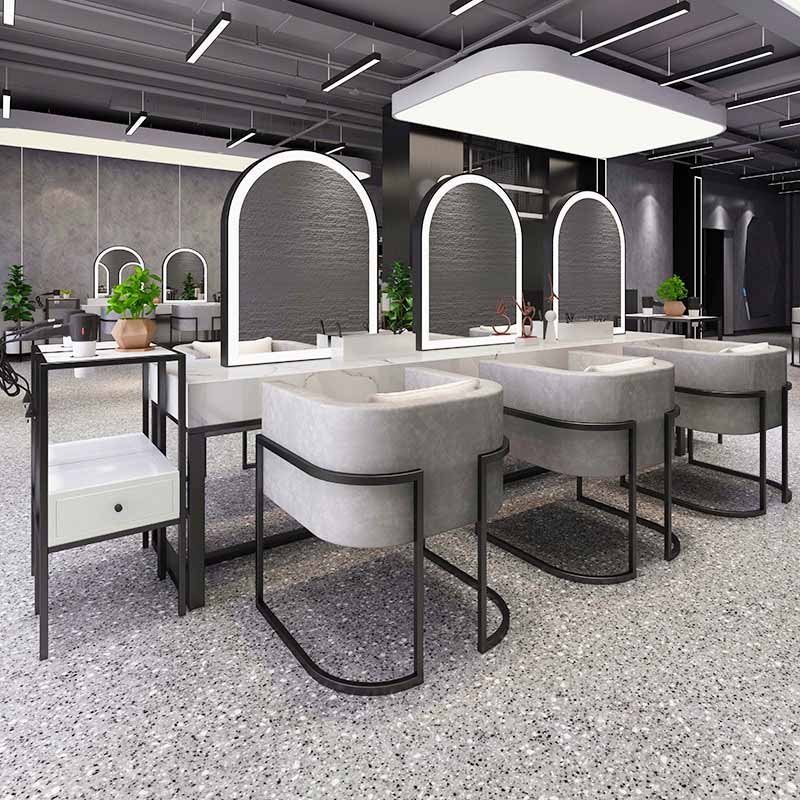
In a packed Saturday afternoon salon, wheeled metal trollies, heavy blow dryers, and hydraulic chair footrests are constantly swinging near full-length glass. If a client or child accidentally kicks the bottom of a floor-standing mirror and a 15-pound guillotine shard drops onto their foot, your insurance premium will skyrocket. That is why commercial glazing safety is non-negotiable when ordering luxury salon mirrors wholesale.
🛡️ Commercial Safety Mandate: Whether you are outfitting a boutique studio in New York or a 50-chair academy in London, your mirrors must comply with ANSI Z97.1 or BS EN 12600 impact standards. Combining heat-tempered glass or a CAT II safety shatterproof film ensures that even if the glass breaks under extreme impact, 100% of the fragments stay glued to the backing membrane.
To eliminate laceration hazards, we laminate a heavy-duty 130-micron woven polyethylene CAT II safety shatterproof film across the entire rear surface of our high-end salon decor mirrors. Tested under a 100-pound leather punching-bag pendulum drop test, the adhesive backing holds broken spiderwebbed glass safely inside the frame until your maintenance crew swaps out the panel after hours.
Did you know that 85% of spontaneous mirror cracks start at an unpolished hand-cut edge? When budget workshops score glass manually with a roller wheel, they leave jagged microscopic fissures along the perimeter. We process every single contour—from geometric hexagons to sweeping arches—using custom CNC beveled edge polishing with diamond-grit wheels. This creates a silky smooth edge that resists thermal shock and seals out chemical fumes.
Search online for a salon equipment mirror supplier, and 80% of the slick websites you find are actually two-person trading offices sitting in a rented high-rise apartment. They take your order, tack on a 35% margin, and farm your mirrors out to whichever backyard glass workshop bids the lowest price that week. When your container of luxury salon mirrors wholesale arrives with mismatched gold frames and flickering lights, the middleman vanishes.
Before wiring a 30% deposit to any salon equipment mirror supplier, demand a live video walkthrough of three specific factory zones: the automated CNC glass cutting bridge, the dust-free LED driver soldering line, and the high-voltage aging test room. If the salesperson makes excuses or shows you a tiny showroom with no machinery noise in the background, you are dealing with a broker.
Why can one quote for a led styling mirror bulk buy sit at $145 per unit while another sits at $98? Because unethical assemblers secretly swap out internal components that you cannot see from a catalog photo. When you request a factory-direct bill of materials (BOM) from Havenseek Mirror as your direct salon equipment mirror supplier, we specify every component down to the copper wire gauge.
Imagine finishing a $250,000 salon buildout, booking 200 grand-opening clients, and having the municipal electrical inspector refuse to sign your Certificate of Occupancy because your lighted mirrors lack safety stamps. Builders ask me constantly: Are commercial LED salon mirrors required to have UL or CE certification? In almost every North American, European, and Australian jurisdiction, the answer is an absolute yes.
📋 Compliance Inspector Alert: Uncertified hardwired LED fixtures are the #1 reason commercial salon buildouts fail final electrical walkthroughs. Always insist that your salon equipment mirror supplier builds to the UL 962 commercial furnishing standard (for USA/Canada) or CE EN 60598 / RoHS directives (for EU/UK), with serialized holographic labels affixed inside every junction box.
Unlike a plug-in table lamp, a commercial styling mirror combines high-wattage AC power, metal conductive frames, and moisture zones. Our engineering team builds to the strict UL 962 commercial furnishing standard, utilizing flame-retardant UL94-V0 polycarbonate driver enclosures, grounded chassis lugs, and a CE EMC flicker-free LED driver. Zero electromagnetic interference means your mirror lights will never cause static hum in your salon sound system or ugly black rolling bars on your stylists’ TikTok camera screens.
Beyond electrical shock protection, commercial drivers must survive voltage spikes caused by 20 blow dryers turning on and off all day. We pot our constant-voltage transformers in thermal silicone gel and house the diodes inside an IP44 moisture-sealed LED strip aluminum extrusion channel. This draws heat away from the LED junction, guaranteeing a documented 50,000-hour L70 lumen maintenance lifespan—over 13 years of 10-hour workdays.
The biggest fear holding buyers back from ordering luxury salon mirrors wholesale overseas is opening a 40-foot shipping container to find a pile of shattered glass. So, how can salon owners prevent broken mirrors during wholesale shipping? Glass breakage is never “bad luck”—it is purely a failure of packaging physics.
| Shipping Mode & Order Volume | Recommended Havenseek Packaging Architecture | Verified Drop Test & Breakage Rate |
|---|---|---|
| LCL Sea Freight (10 to 45 Mirrors) | ISTA 3A honeycomb drop-test packaging + LCL plywood crate palletization | 0.28% breakage across 400+ LCL shipments |
| FCL 20GP / 40HQ Container (80 to 350+ Units) | 5-ply K=K master carton + 50mm EPE foam + FCL container loading optimization | 0.12% breakage with airbag dunnage bracing |
| Express Air Sample / E-Commerce Drop-Ship | Double-wall honeycomb sandwich box + molded ABS corner armor | Passes 10-point 30-inch (76 cm) free-fall test |
Never accept crumbly white expanded polystyrene (EPS Styrofoam) for heavy salon mirrors. Upon impact, EPS crushes permanently, leaving the mirror loose inside the box for the second bump. We engineer ISTA 3A honeycomb drop-test packaging using resilient 50mm closed-cell EPE polyethylene foam, rigid 15mm structural paper honeycomb face shields, and reinforced ABS plastic corner bumpers that bounce back after multiple forklift jolts.
If your led styling mirror bulk buy does not fill an entire container, your boxes will be tossed onto mixed pallets by port stevedores. For Less-than-Container-Load (LCL) orders, we mandatory-pack all cartons upright inside fumigation-free LCL plywood crate palletization with steel strapping. For full containers, our CAD software executes FCL container loading optimization—aligning every glass pane parallel to the ship’s bow-to-stern motion and locking rows tight with inflatable dunnage airbags.
Let me share a concrete project from Q3 2025 that shows how engineering-led sourcing pays for itself. A regional luxury hair salon group operating 12 locations across Texas and Arizona approached Havenseek Mirror. They were expanding two flagship studios and retrofitting 180 aging workstations that suffered from severe edge oxidation and dim, yellow lighting.
📊 Verified Client Retrofit Results (180 Custom Stations – Dallas & Scottsdale Rollout):
• Total Procurement Savings: Saved $64,800 (38% below domestic distributor quotes) by ordering luxury salon mirrors wholesale direct from our production line.
• Floor Space Yield: Installed 36 custom double sided salon station mirror islands, adding 24 net-new styling chairs without leasing a single extra square foot.
• Service Revenue Impact: Color redo appointments dropped from 6.4% to 1.1% within 90 days thanks to CRI 96 / R9 92 lighting, while average ticket value rose 22%.
Previously, their local millwork contractor charged $690 per single-sided lighted mirror and $1,450 per island unit, using generic CRI 80 strips that failed after 16 months. We engineered a bespoke 72″ x 34″ arched anodized brushed brass aluminum frame wall mirror and a matching 360-degree stable double sided salon station mirror with built-in tool holsters and 5mm ultra-clear low-iron glass. Landed at their Dallas warehouse—including ocean freight, US customs duties, and ISTA 3A crating—their unit cost dropped to $425 per wall station and $890 per double-sided island, with zero broken units out of 180 pieces.
An unexpected bonus reported by the franchise owner happened on Instagram and TikTok. Because our shadowless facial illumination geometry and dual-color stepless touch dimmer erased under-eye bags and made fresh balayage shine like glass, clients started filming their own chair-reveal videos. We added subtle OEM private label laser etching of the salon’s hashtag at the bottom of each mirror. Within four months, organic client-tagged reels generated 410+ new first-time color bookings across the 12 locations.
Even seasoned commercial contractors and beauty equipment distributors fall into avoidable traps during international procurement. Before you sign a purchase order for luxury salon mirrors wholesale or custom island units, check your spec sheet against these five expensive blunders I see every month:
At Havenseek Mirror, our standard Minimum Order Quantity (MOQ) for custom luxury salon mirrors wholesale is just 10 to 20 pieces per size or model for boutique salon rollouts, and 50+ pieces for fully bespoke mold extrusions. We also support mixed-model container consolidation, allowing you to combine wall styling mirrors, washbowl decor mirrors, and freestanding island stations in a single shipment.
A reliable factory-direct salon equipment mirror supplier requires 7 to 10 days for a custom physical prototype and 25 to 30 days for mass production of 50 to 200 units (including our mandatory 72-hour LED burn-in test). Ocean freight typically takes 18–25 days to the US West Coast, 30–35 days to the US East Coast or UK/EU ports, and 12–15 days to Australia.
Yes, provided the mirror is engineered for commercial maintenance. Unlike sealed residential mirrors, our high-end salon decor mirrors feature either a hidden snap-off bottom service hatch or a quick-disconnect waterproof DC harness that routes the CE EMC flicker-free LED driver inside your station cabinetry, letting a handyman swap components in under 5 minutes.
Absolutely. Every double sided salon station mirror we manufacture is pre-wired to match your destination country’s voltage and receptacle codes (110V–120V UL/NEMA 5-20R GFCI outlets for North America; 220V–240V CE/BS/SAA sockets for Europe, the UK, and Australia). Your local electrician simply connects the main whip inside the floor box or ceiling drop pole.
When executing a commercial led styling mirror bulk buy, never settle for a 1-year residential policy. You should demand at least a 3-to-5-year commercial warranty covering the LED strips, constant-voltage drivers, and touch sensors, plus an 8-year anti-oxidation warranty guaranteeing the copper-free silver mirror backing against black-edge corrosion.
Yes! We offer precision OEM private label laser etching directly onto the glass surface—including backlit illuminated logos that glow softly at the top or bottom of the mirror—as well as CNC engraving or silk-screen branding on the anodized brushed brass aluminum frame to elevate your salon’s brand identity and client selfies.
Your stylists’ talent deserves optical clarity that reveals every subtle highlight, and your studio buildout deserves commercial hardware that still looks brand-new eight years from now. Stop overpaying local middlemen for residential glass that distorts hair color and rots around the edges. Whether you are designing a 10-chair boutique studio, launching a 30-location franchise retrofit, or scaling your beauty equipment distribution catalog, sourcing luxury salon mirrors wholesale directly from Havenseek Mirror gives you complete control over CRI 95+ lighting, ammonia-proof durability, and factory-direct margins.
🚀 Start Your Custom Commercial Salon Mirror Project with Zero Risk:
Send us your floor plan, CAD drawings, or target station count today. Our optical and structural engineers will review your specs and deliver a complete factory-direct BOM breakdown.
👉 Get Free Quote in 12 Hours / Request Free Sample / Download 2026 Catalog PDF