Our Location
304 North Cardinal St.
Dorchester Center, MA 02124

Written by Marcus Vance – Senior Chemical Silvering & QC Engineer at Havenseek Mirror. With over 16 years of export management in the architectural glass industry, Marcus has successfully served 800+ commercial clients across 50 countries, specializing in advanced glass surface treatments and failure prevention.
A Las Vegas luxury hotel recently faced a massive $48,000 chargeback. Within just five months of installation, their stunning 3,200-square-foot lobby feature wall started turning intensely black around the edges. This disastrous outcome was not a localized moisture issue. It was a complete failure in basic antique mirror quality control.
Many commercial buyers treat vintage-style glass just like standard clear silver mirrors. That is a massive financial mistake. The very chemical process that creates beautiful, organic distressing also severely weakens the silvering layer. If you do not enforce strict oxidized mirror b2b standards before shipping, you are buying a ticking time bomb for your project.
As a senior engineer at Havenseek Mirror, I have audited fabrication facilities globally. I see exactly where standard trading companies cut corners. In this guide, I will share the exact protocols for inspecting distressed glass sheets that save our B2B clients millions in replacement costs. We will cover everything from factory floor testing to marine-grade shipping.
Why is this guide critical for your 2026 sourcing strategy? Global supply chain costs are rising. You cannot afford an 18% fabrication waste rate or devastating post-installation claims. Read on to master antique mirror quality control and protect your project margins permanently.
| QC Metric | Standard Workshop Practice | Havenseek Engineering Standard |
|---|---|---|
| Acid Neutralization | Tap water rinse (Leaves acid residue) | Deionized water + pH 7.0 buffer test |
| Backing Paint Thickness | Single coat (~30 microns) | Dual-coat FENZI (55-65 microns) |
| Cutting Chipping Rate | High (15-20% waste) | Ultra-low (<3% waste) ASTM compliant |
| Marine Freight Packaging | Standard alkaline paper (Causes rust) | VCI anti-tarnish interleaving paper |
Modern hospitality design relies heavily on vintage aesthetics. However, industry data from 2025 shows a concerning trend. Over 📈 42% of commercial decorative glass claims were related to oxidation failures. When a mirrored wall fails, the material cost is minimal. The real pain lies in the labor required to remove glued panels and repair damaged drywall.
Contractors often blame the installation environment. While high humidity plays a role, the root cause almost always originates in the manufacturing facility. Proper vintage glass factory inspection must catch these invisible vulnerabilities before the glass ever enters a shipping container.
Creating that beautiful, distressed look is an aggressive chemical process. Factories use specialized acid compounds to eat away at the silver nitrate layer. This intentional destruction creates the vintage pattern. Unfortunately, it also compromises the structural integrity of the metallic coating.
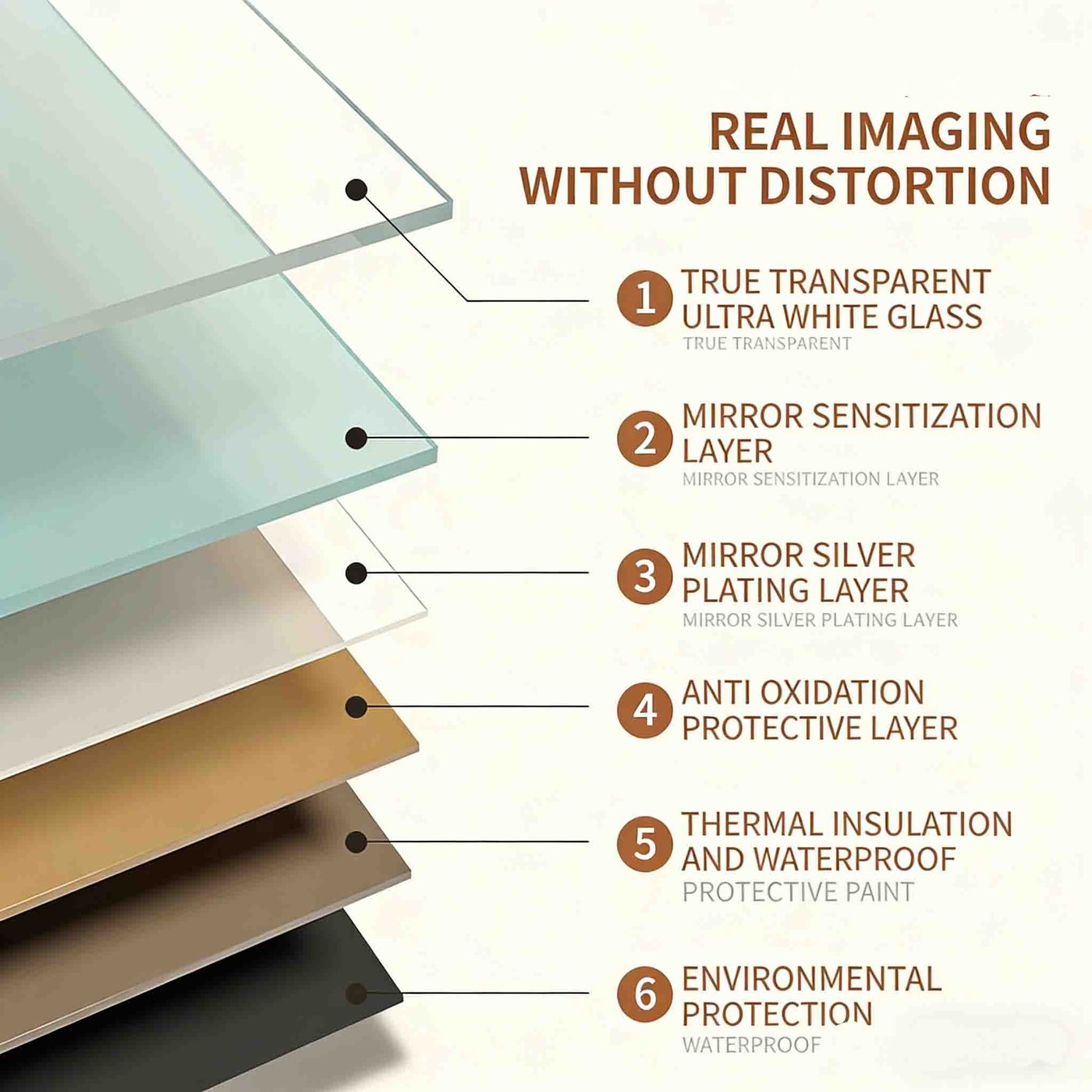
Standard clear mirrors have a uniform, solid silver layer protected by copper and paint. Distressed glass has a porous, uneven metallic structure. Without rigorous antique mirror quality control, this porous layer absorbs moisture rapidly, leading to rapid degradation and edge rot.
This is the most common question I receive from frustrated B2B buyers. The phenomenon known as “edge creep” usually appears four to six months after installation. The edges develop jagged, black stains that slowly migrate inward. It completely ruins the luxurious aesthetic of the interior space.
The primary culprit is unneutralized acid. After the distressing pattern is etched, the glass must be thoroughly washed. Cheap factories use local tap water and rush the drying process. This traps microscopic acid wash neutralization pH test failures beneath the final protective paint layer.
Once trapped, this latent acid slowly continues to react with the remaining silver. Over months, especially in climate-controlled commercial buildings with fluctuating humidity, the acid eats outward. Reliable antiqued mirror suppliers prevent this by enforcing strict chemical washing protocols.
At Havenseek Mirror, we implement a mandatory pause before the glass enters the paint curtain coater. Our technicians conduct an acid wash neutralization pH test on the bare metallic surface. The surface must read between pH 6.8 and 7.2. Anything lower means acid remains, and the batch is sent back for secondary deionized washing.
The paint on the back of the glass is your only defense against environmental moisture and installation adhesives. Low-cost suppliers often use generic, single-coat epoxy paints to save pennies per square meter. This guarantees future project failures.
High-end oxidized mirror B2B standards demand premium protection. We strictly specify FENZI Duralux mirror backing paint applied in two distinct layers. To verify this, inspectors must use a dry film thickness (DFT) micron gauge. A reading below 50 microns is an automatic rejection. We target a robust 55 to 65 microns.
Historically, copper was used to protect the silver layer. However, copper itself oxidizes and causes cloudiness over time. We mandate copper-free antique mirror backing. This advanced passivation process uses a synthetic protective film instead of copper, offering vastly superior resistance to edge blackening creep prevention in humid environments.
Glass fabricators despise working with low-quality distressed glass. When running panels through CNC machines, bad glass suffers from severe CNC waterjet cutting edge chipping. The backing paint flakes off, and the glass itself often cracks under minimal pressure. This can lead to an ⚠️ 18% fabrication waste rate.
This brittleness stems from two factors: poorly annealed raw glass and over-baked backing paint. If the curing oven runs too hot, the FENZI paint becomes brittle rather than elastic. When the cutting blade hits it, the paint shatters, exposing the silver to immediate oxidation.
You cannot determine paint adhesion just by looking at it. You need standardized mechanical testing. Proper antique mirror quality control requires physical destruction tests on random sample sheets before mass cutting begins.
During our vintage glass factory inspection, we perform the cross-hatch adhesion test ASTM D3359. We use a specialized blade to cut a grid into the backing paint, apply industrial 3M tape, and rip it off rapidly. A passing grade requires a 4B or 5B rating, meaning absolutely zero paint flakes off the grid edges.
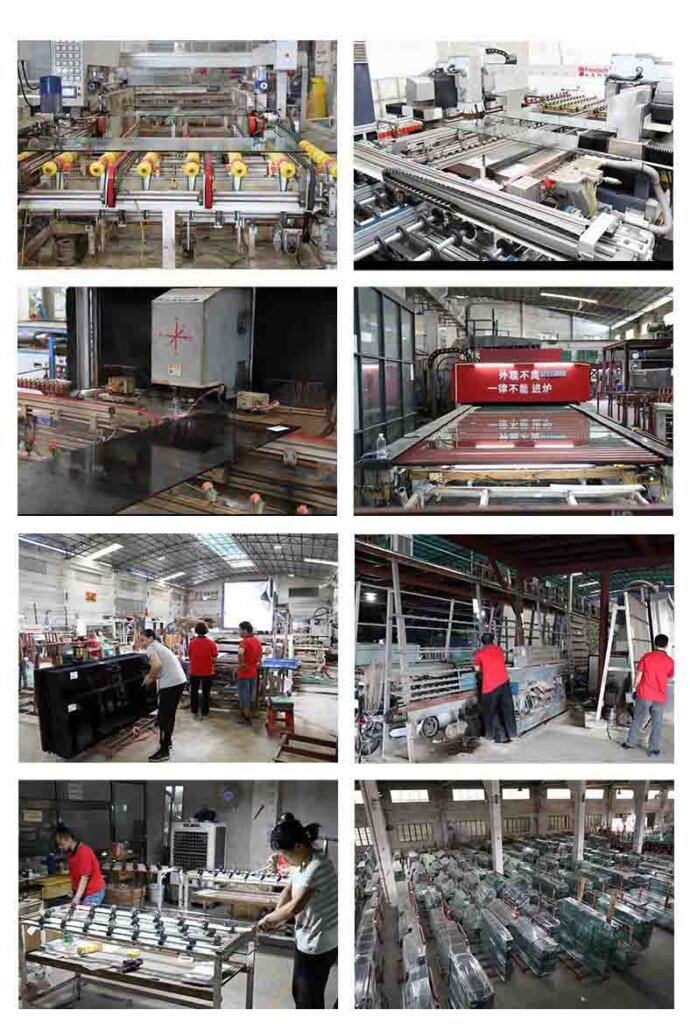
To prevent random cracking during waterjet cutting, we also examine the glass structure. We conduct a residual stress polariscope inspection. This specialized light reveals invisible tension trapped inside the low-iron vs clear float glass substrate. Sheets showing heavy stress patterns are rejected before they ever reach the cutting table.
Many buyers are confused by the pricing disparity in the market. True oxidized mirror B2B standards involve chemical etching, which creates authentic, unpredictable depth. Printed mirrors merely use digital ceramic ink to print a vintage photo onto standard glass. Hand-oxidized vs machine-sprayed patina offers vastly different aesthetic values and fabrication tolerances.
Creating vintage aesthetics is a chemical art, not a precise printing process. Therefore, slight variations are natural. However, for a hotel lobby requiring 50 interlocking panels, extreme batch-to-batch distressing tolerance is unacceptable. Controlling this variation is the hallmark of reliable antiqued mirror suppliers.
The chemical oxidation rate is highly sensitive to ambient weather. A sheet produced in humid summer conditions will look vastly darker than one made in dry winter air. Top-tier factories maintain strict climate control. By locking the reaction room at 24°C with humidity under 55%, we ensure the chemical etching happens at a predictable, uniform pace.
Never approve a production batch based on a smartphone photo. Lighting and camera sensors drastically distort the true color of silver nitrate. Antique mirror quality control demands a “Golden Sample” protocol. We cut a physical master sample in half; the buyer keeps one, and the factory keeps the other for precise visual matching during final QC.
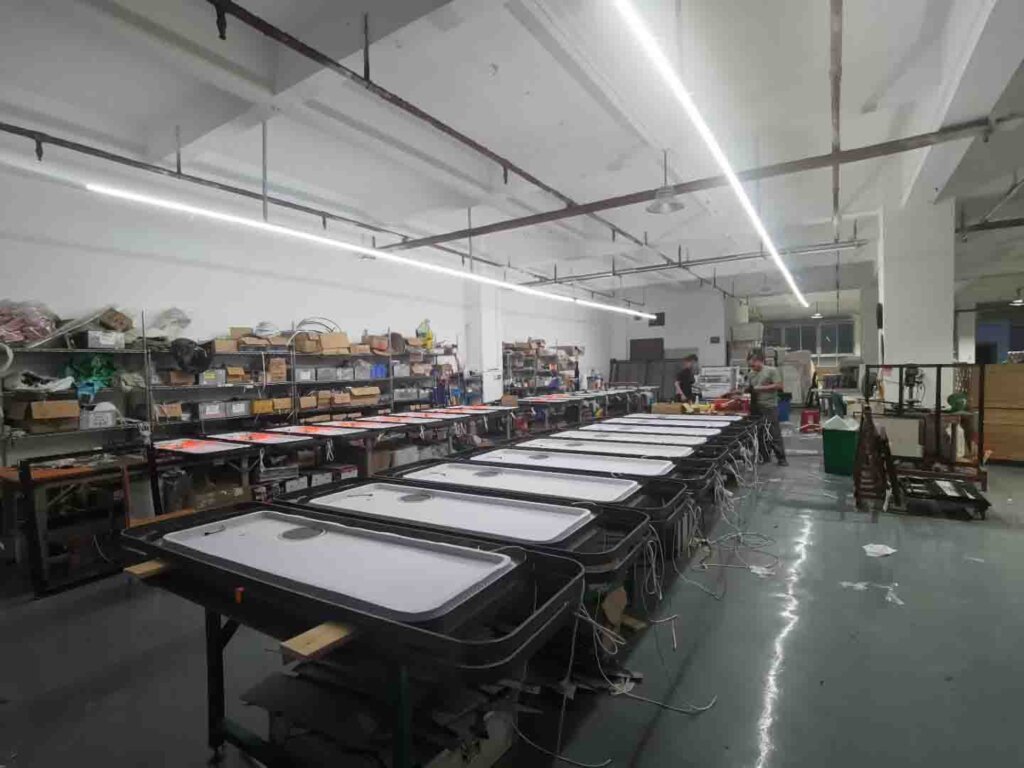
For large-scale commercial projects, individual sheet inspection is not enough. You must see how the panels interact together. We mandate a pre-shipment dry lay mockup inspection. Factory workers lay the massive panels out on a clean floor exactly as they will be installed on the wall.
This allows us to identify any jarring visual breaks in the oxidation pattern. We sequence the panels, label the backs numerically, and ensure the veins of the patina flow naturally from one sheet to the next. This extra step eliminates devastating surprises for the installation team on site.
Many buyers hire standard third-party inspection agencies. This is often a waste of money for specialized glass. Standard inspectors treat vintage glass like standard float glass. They often flag intentional, beautiful distressing marks as “defects,” while completely ignoring fatal chemical flaws hidden beneath the surface.
A generic inspector will check dimensions and packaging, but they will not measure paint thickness or perform adhesion tests. True vintage glass factory inspection requires an auditor who deeply understands the chemical vulnerabilities of silvered flat glass. You need specialized oxidized mirror B2B standards.
Because the silver layer is intentionally degraded, it is very easy for the factory to accidentally strip too much away, creating microscopic holes. These holes will eventually allow moisture to penetrate and rot the glass from the inside out.
You cannot see these pinholes while the glass is laying flat on a table under standard factory lights. Our engineers enforce a silver layer pinhole light-box check. We stand the glass vertically in front of a powerful LED backlight array in a darkened room. Every tiny, unintended perforation instantly shines through like a star in the night sky.
The challenge is separating a beautiful “vintage spot” from a manufacturing defect. Intentional patina has gradient edges and a brownish-gold hue. An uncoated blind spot is a harsh, transparent hole where the chemicals completely failed to adhere. We train our QC teams to rigorously identify and reject these blind spots.
Scratches are inevitable in heavy manufacturing, but they must be strictly managed. We implement rigorous Acceptable Quality Limit (AQL 1.5/2.5) glass defects protocols. A hairline scratch on the face of the glass might be acceptable if it is under 15mm, but any scratch penetrating the backing paint is an instant critical failure.
Do not trust a supplier’s beautiful website; trust their laboratory data. A reputable factory must provide up-to-date compliance reports. We demand the CASS test ISO 9227 mirror corrosion report, proving the glass can withstand 120 hours of copper-accelerated salt spray without edge degradation.
Furthermore, they must meet the EN 1036-1 interior mirror compliance standard for the European market, and the ASTM C1503 silvered flat glass spec for North America. If a supplier hesitates to produce these exact testing documents, immediately remove them from your vendor list.
Ocean freight is a brutal environment. The temperature fluctuations inside a steel shipping container crossing the equator create massive condensation, known as “container rain.” If your inspecting distressed glass sheets protocol ignores packaging, your entire shipment will arrive ruined.
Standard glass factories sprinkle alkaline powder between sheets to prevent sticking. When this powder mixes with container condensation, it forms a corrosive paste that eats through the vintage backing paint. We completely ban this powder. Instead, we mandate VCI anti-tarnish interleaving paper, which actively emits a vapor that halts oxidation during transit.
For high-risk equatorial routes, we wrap the entire glass stack in a heat-sealed aluminum foil barrier bag. Inside, we place a calculated ratio of calcium chloride container desiccant. The crates themselves must be ISPM-15 fumigated plywood A-frame crates to prevent moisture absorption from cheap, green wood. This adds a slight cost but guarantees a 🛡️ 0% moisture damage rate.
In early 2025, a major architectural procurement firm in Chicago approached us in a panic. They had ordered 4,500 square meters of vintage glass for a historic hotel renovation from a cheap trading company. Upon arrival, the batch-to-batch color variation was wild, and the paint was flaking off during CNC routing.
Their fabrication team was facing a catastrophic ❌ 38% rejection rate. The project was delayed, and penalties were mounting daily. They needed an emergency supplier who understood true antique mirror quality control.
We immediately took over the contract. We implemented our strict 65-micron dual-coat paint standard and locked the factory climate controls. Most importantly, we executed full pre-shipment dry lay mockups for all large lobby panels. We packed the entire shipment using marine-grade VCI paper and foil bags.
The result? The Chicago fabricator reported an unprecedented ✅ 1.2% cutting waste rate. The installation proceeded smoothly without a single color-matching complaint. By investing slightly more in reliable antiqued mirror suppliers, the client ultimately saved over $120,000 in wasted material and labor penalties.
Even if you pass every vintage glass factory inspection, the wrong installation adhesive will destroy the mirror in weeks. Standard silicone and construction mastics contain acetic acid. This acid will quickly eat through the FENZI backing paint and turn the vintage silver into a black, bubbling mess.
You must strictly specify a neutral cure alkoxy mirror adhesive. These specialized glues cure without releasing acidic vapors. Furthermore, installers must apply the adhesive in vertical strips, not complete circles, to allow ambient moisture to escape from behind the panel.
When you cut a large sheet of vintage glass, you expose the highly vulnerable silver edge to the open air. If this cut panel is placed in a high-humidity environment like a luxury hotel bathroom, it will fail rapidly without edge deletion and perimeter sealant.
Installers must apply a specialized liquid edge sealer to the freshly cut perimeter. This seals the micro-fractures and completely blocks moisture penetration. Forgetting this simple, low-cost step is the number one cause of vanity mirror claims globally.
Standard clear float glass contains iron, which gives it a slight green tint. This green hue can muddy the warm, golden tones of a vintage patina. Using a low-iron glass substrate removes this green tint, resulting in a much sharper, more authentic, and vibrant antique aesthetic. It is highly recommended for luxury projects.
No. Even some standard “neutral cure” silicones contain oximes that can slowly degrade specialized backing paints over years. You must use adhesives explicitly labeled and tested as “mirror-safe” alkoxy silicones to guarantee long-term compatibility with the silvering layer.
Developing a custom oxidation pattern requires rigorous chemical calibration. We typically require 10 to 14 days to produce physical master samples. Once the buyer approves and signs the physical sample, mass production maintaining strict oxidized mirror B2B standards usually takes an additional 20 to 25 days.
EN 1036-1 is primarily designed for standard silver mirrors. However, reliable antiqued mirror suppliers will use the testing methodologies within this standard (like humidity and salt spray resistance) as a baseline benchmark. Vintage glass will perform slightly lower than standard glass, but it must still meet strict minimum endurance thresholds.
To ensure precise antique mirror quality control, ultrasonic DFT gauges must be calibrated daily before any production run begins. We use certified metal shims of known thickness to verify the gauge’s accuracy. A miscalibrated gauge can easily lead to passing dangerously thin paint layers.
Yes. Coastal commercial properties face extreme salt and moisture levels. Beyond standard edge sealing, we recommend an active edge-deletion process where 2mm of the silver is removed from the perimeter before framing. This creates a hard physical barrier that prevents salt air from ever touching the reactive metal layer.
Procuring decorative glass shouldn’t be a gamble. As we’ve explored, the difference between a stunning, decades-lasting feature wall and a catastrophic $48,000 chargeback lies entirely in rigorous antique mirror quality control. You cannot rely on standard trading companies to understand the intricate chemistry of silver oxidation or the necessity of ASTM D3359 adhesion testing.
When you are sourcing for high-stakes hospitality, retail, or luxury residential projects, you need an engineering partner, not just a middleman. By enforcing uncompromising oxidized mirror B2B standards, demanding dual-coat FENZI protection, and executing flawless pre-shipment dry lay mockups, we eliminate the guesswork from your supply chain.
Ready to eliminate fabrication waste and post-installation claims?
Stop taking risks with generic vintage glass factory inspection. Protect your margins and your reputation today.
Request Your Free Master Sample Kit & 2026 QC Spec Sheet in 12 Hours