Our Location
304 North Cardinal St.
Dorchester Center, MA 02124

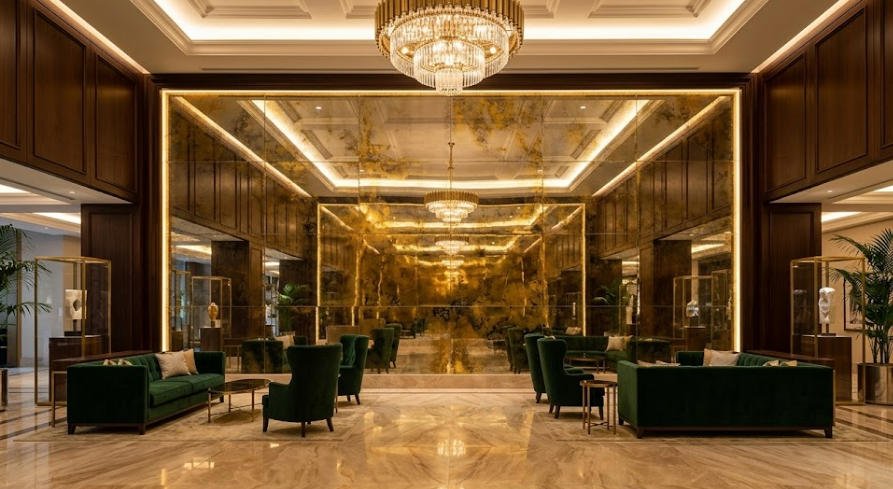
Written by Elena Voss — 11 years as a production QC lead and export specification manager in the Chinese mirror industry. I have walked coating lines in Foshan and Qingdao, rejected batches that looked perfect on the surface, and watched buyers lose six-figure programs to a backing paint that cost three cents per square meter less.
A container of anti oxidation antique mirror arrives looking flawless. Nine months later, a black halo creeps inward from every cut edge in a hotel bathroom in Dallas. The pattern is still beautiful. The reflection is still intact in the center. But the panel is dead — and nobody can explain why the sample that passed inspection in Foshan failed in service.
I have seen this exact failure more times than I care to count. The variable is almost never the visual distressing. It is the antique silver mirror backing underneath it — the silver layer, the passivation chemistry, the paint coats, the edge seal, and the adhesive compatibility that nobody puts in the purchase order. Every commercial grade vintage mirror supplier I have audited falls into one of two camps: those who control that backing system, and those who outsource it and hope.
This is not another supplier puff piece. It is the article I wish every importer had read before they wired a deposit on a durable distressed mirror wholesale program. You will leave with three things: how to read an antique silver mirror backing specification like a production engineer, how to model antique mirror cost per year instead of cost per square meter, and the nine vintage mirror factory audit checkpoints that expose a weak commercial grade vintage mirror supplier before the crates leave the factory. If you source long lasting aged mirror bulk for hospitality, retail, or distribution, the next 3,000 words will save you more than a consulting retainer.
In this article
The first thing a serious sourcing manager does is ask the supplier for a standard. The supplier sends ASTM C1503. The buyer feels protected. This is the most expensive false comfort in the anti oxidation antique mirror trade.
ASTM C1503:24 is the current U.S. specification for silvered flat glass mirror. It governs reflectance, silver coating appearance, coating resistance, blemishes, dimensions, and squareness for rectangular mirrors supplied as cut sizes or stock sheets. Those are real requirements, and an antique silver mirror backing supplier who cannot meet them has no business in your supply chain.
But read the scope exclusion carefully: the mirrors “are not intended for use in environments where high humidity or airborne corrosion promoters, or both, are consistently present (such as swimming pool areas, ocean-going vessels, chemical laboratories and other corrosive environments)”. That exclusion is the entire anti oxidation antique mirror market. Hotel bathrooms, spa reception areas, restaurant walls near kitchens, coastal residential projects — the exact spaces where durable distressed mirror wholesale programs are specified — fall outside the comfort zone of the standard that buyers wave around as a guarantee.
EN 1036-1 is the European framework for silver-coated float glass mirrors for internal building use. It sets minimum quality requirements for optical, visual, and edge faults, and it specifies durability test methods. On EN 1036 mirror durability, this is a more useful document for B2B buyers than ASTM C1503 because it at least treats durability as a testable property rather than a scope exclusion.
But EN 1036-1 has the same structural limitation: it is a minimum framework for internal use, not a hospitality-grade performance contract. A mirror can comply with EN 1036 mirror durability requirements and still fail at year two in a steam-heavy bathroom, because the standard does not know your project’s humidity load, cleaning chemical regimen, or installation adhesive.
My position, stated plainly: Treat ASTM C1503 antique mirror compliance and EN 1036 mirror durability as entry tickets, not performance guarantees. The standards tell you whether the mirror is a legitimate silvered mirror. They do not tell you whether the antique silver mirror backing will survive your building. That gap is where the purchase order has to do the work the standards refuse to do.
The Copper-Accelerated Acetic Acid Salt Spray test — CASS — is the closest thing the industry has to a time machine. A CASS test antique mirror tile is exposed to acetic acid and copper salt fog, then measured for how far corrosion has crept inward from the edge.
Here is the number the industry repeats: 120 hours gives a useful indication of a mirror’s resistance to ageing, and the CASS test is performed on 10 cm square tiles with freshly cut edges, followed by microscopic examination of edge darkening and paint peeling. That 120-hour threshold is widely treated as the commercial baseline for copper free mirror backing systems.
But 120 hours is not a durability prediction. It is an indicator. When a patent specification discusses EN 1036 mirror durability compliance, it also references 480 hours of salt spray exposure as a meaningful ageing-resistance signal. The gap between 120 and 480 hours is the gap between an antique mirror salt spray test that passes a laboratory gate and an anti oxidation antique mirror backing system that survives a decade of cleaning chemicals.
| Test | Hours | What it predicts for the antique silver mirror backing | Red-flag response |
|---|---|---|---|
| CASS (ISO 9227 / ASTM B368) | 120 h | Commercial baseline; indicator only | “We always pass” without a dated report |
| CASS extended | 240 h | Margin over baseline; better humidity tolerance | Edge corrosion >300 µm after exposure |
| Neutral salt spray (EN 1036 reference) | 480 h | Meaningful ageing resistance for humid interiors | No batch-level report; “golden sample only” |
| Federal salt spray (20% NaCl) | 300 h | Double coat mirror backing paint + edge seal integrity | Single-coat backing claimed as “two-coat equivalent” |
Thresholds drawn from published mirror durability testing practice and EN 1036-1 referenced exposure times. Field performance also depends on mirror edge sealing oxidation control, adhesive compatibility, and service humidity.
The antique mirror salt spray test uses freshly cut edges — the most vulnerable surface — which is correct. But it does not replicate the adhesive chemistry used on your wall, the alkaline cleaning agents used by the hotel housekeeping team, or the thermal cycling of a bathroom that goes from cold to steam twice a day.
A commercial grade vintage mirror supplier can pass 120 hours of CASS test antique mirror evaluation and still ship an anti oxidation antique mirror that black-edges at month eight. The number is necessary. It is not sufficient. The missing variables live in the antique silver mirror backing system, and that is the next section.
Two commercial grade vintage mirror suppliers send you samples with identical Venetian-style distressing. The surfaces look the same under showroom lighting. One panel survives four years in a Miami hotel bathroom. The other fails before the warranty period ends. The difference is invisible from the front, and it is entirely engineered into the antique silver mirror backing.
Traditional mirror manufacturing deposited a thin copper layer over the silver to slow oxidation. That copper layer is also part of why old mirrors develop the warm, dark-edged patina collectors love. Modern high-durability production has largely moved to copper free mirror backing, which is significantly more resistant to oxidation than copper-bearing systems and is the default in serious durable distressed mirror wholesale production.
But copper free mirror backing is a bare silver layer with a passivation barrier. If that barrier is thin, unevenly applied, or incompatible with the backing paint, the silver is exposed to moisture and ammonia attack. The chemistry is necessary. The coating system around it is what makes an anti oxidation antique mirror last.
Mirror backing paint is not decorative. It is the moisture barrier between the silver film and the environment. The industry baseline for a commercial grade vintage mirror supplier is double coat mirror backing paint over the silver layer, with additional edge protection. Backing resin films in controlled production are applied at roughly 25–38 microns dry thickness per coat, and thicker protection is achieved through multiple layers rather than one heavy pass.
A single coat can pass visual QC on the day of packing. It looks and feels like a coated mirror. But a single layer has no redundancy: one pinhole, one thin spot at the edge, one incomplete cure, and moisture reaches silver. At year two in a humid service environment, the difference between a single coat and true double coat mirror backing paint is the difference between a cosmetic blemish and an antique mirror backing oxidation replacement order.
“Black edge” is not a manufacturing rumor. It is a documented corrosion mechanism: silver on the cut edge of a second-surface mirror is exposed to moisture, chemical corrosion begins, and a dark boundary moves progressively inward. The edge is the open wound of the antique silver mirror backing, and mirror edge sealing oxidation control is the suture.
High-end factories apply a specialized edge-sealing lacquer after CNC beveling and grinding. The seal prevents moisture and cleaning chemicals from penetrating the silver backing and is the single most effective countermeasure against the antique mirror black edge defect. The audit question is not “do you seal edges?” Every durable distressed mirror wholesale supplier says yes. The audit question is when and where: factory-applied immediately after cutting to final size, or applied later by a distributor who has already introduced contamination during handling.
Anti oxidation antique mirror failure is not always the mirror’s fault. Certain adhesives — particularly silicone-based products containing acetic acid — can attack the resin coating and the metallic film directly. The mirror leaves the factory with a perfect antique silver mirror backing, gets installed with the wrong mastic, and the corrosion clock starts on the wall.
Film backing and pressure-sensitive adhesive must be compatible with the mirror backing paint, certified by the mirror manufacturer, and show no tendency to delaminate from or damage the silver coating. If your commercial grade vintage mirror supplier cannot name the adhesive system that is compatible with their backing paint, the specification is incomplete. This is the hidden failure mode behind most of the antique mirror humid environment failure reports I have investigated — the mirror was fine; the installation chemistry was not.
Here is the four-line specification language that separates a durable distressed mirror wholesale program from a decorative one:
If a commercial grade vintage mirror supplier resists putting those four lines in writing for your long lasting aged mirror bulk order, you have learned something more valuable than a price quote.
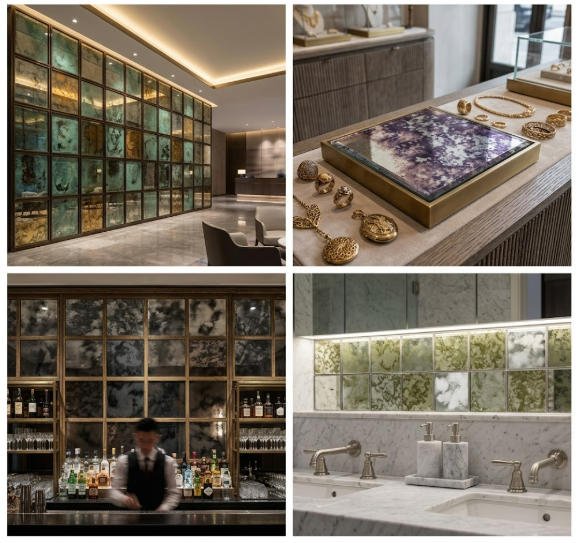
The per-square-meter price is the least important number in an anti oxidation antique mirror program. It is also the only number most buyers compare. This section is the antique mirror cost per year math that closes that gap for any durable distressed mirror wholesale buyer.
Standard sheets look cheaper than cut-to-size panels until you calculate what happens on the project floor. The industry’s own project analysis puts the distressed mirror offcut waste from standard-sheet sourcing at approximately 25%, before freight and local cutting labor are added. For a 100 m² hospitality installation, that is 25 m² of long lasting aged mirror bulk you paid to ship and then paid someone to discard.
Cut to size antique mirror panel sourcing moves the yield problem back to the factory, where the commercial grade vintage mirror supplier can nest panels against the sheet. The per-square-meter rate may be higher. The antique mirror cost per year per installed square meter is frequently lower — and the mirror edge sealing oxidation control happens on a controlled line rather than in a dusty site workshop.
An anti oxidation antique mirror panel that fails at year two does not cost the panel price. It costs removal labor, disposal, replacement freight, project downtime, and — in a hospitality program — the reputational cost of closing a guest bathroom for a second installation cycle. None of those line items appear in the distressed mirror replacement cycle cost comparison you ran last month.
| Cost line | Budget “aged” glass | Standard commercial | Anti oxidation antique mirror backing |
|---|---|---|---|
| Panel cost (relative) | Lowest | Mid | Mid–high |
| Antique mirror black edge defect risk (24 months, humid service) | High | Medium | Low |
| Distressed mirror offcut waste (standard sheets) | ~25% | ~25% | Reduced via cut to size antique mirror panel |
| Expected distressed mirror replacement cycle cost events (5 years) | 1–2 | 0–1 | 0 |
| Replacement freight + labor exposure | Highest | Medium | Lowest |
| Antique mirror cost per year ranking | Most expensive | Middle | Lowest |
Directional model based on project sourcing patterns and documented failure modes. Actual figures depend on project humidity, panel size, adhesive selection, and freight lane.
The fastest way to destroy an antique mirror cost per year model is to buy printed glass that mimics oxidation. The UV printed antique mirror risk is underreported: digital prints sit on the surface or rely on a weak single-layer backing. In hospitality humidity, the failure window is often 12 to 18 months: moisture penetrates the thin layers, and the result is edge rot, peeling graphics, and a ruined aesthetic rather than the controlled patina the designer specified.
Authentic chemical oxidation behaves differently under moisture stress: the patina is in the silver layer, not on top of it, and the failure mode of a properly backed anti oxidation antique mirror panel is slow edge darkening rather than graphic delamination. If a durable distressed mirror wholesale quote is dramatically below the market, the first question is not price. It is whether the oxidation is chemical or printed.
| Project type | Minimum antique silver mirror backing tier | Test threshold | Expected service window |
|---|---|---|---|
| Guest bathroom / spa | Double coat mirror backing paint + factory edge seal | 300 h B117 preferred | 5–8 years+ |
| Lobby feature wall (low humidity) | Two-coat + mirror edge sealing oxidation | 120–240 h CASS | 8–10 years+ |
| Warehouse / distribution stock | Two-coat + sealed packaging | 120 h CASS minimum | Depends on storage humidity |
The antique mirror export trend is unambiguous. China’s antique mirror exports reached 6.2 million square meters in 2025, up 55% year over year, with export value up 68%. The commercial distressed mirror segment specifically has seen demand climb 42% globally across 2025–2026 as engineered vintage mirror hospitality brands move away from sterile modernism toward warmer, textured interiors.
But volume without specification discipline produces exactly the outcome the industry survey reports: nearly 40% of overseas B2B buyers and hotel contractors suffer significant financial losses during their first procurement cycle. The losses are not caused by malicious commercial grade vintage mirror suppliers. They are caused by buyers treating an anti oxidation antique mirror as a commodity and discovering the antique mirror humid environment failure modes only after installation.
ASTM C1503 excludes high-humidity environments. EN 1036 mirror durability is a minimum internal-use framework. Neither document tells a hotel contractor what antique silver mirror backing chemistry to require in a steam-heavy bathroom. That gap has historically allowed weak materials to circulate under the “antique” label, eroding buyer confidence and creating the exact distressed mirror replacement cycle cost overruns cited above.
Buyers who bring a test-report-driven PO to the table turn that gap into leverage. When you specify CASS test antique mirror hours, double coat mirror backing paint, and mirror edge sealing oxidation timing, you force the commercial grade vintage mirror supplier to compete on durability rather than on pattern photography. The suppliers who cannot compete on anti oxidation antique mirror durability reveal themselves quickly — and that is a feature, not a bug.
Traditional antique mirrors are beautiful objects and poor commercial products. They were not engineered for shatter resistance, moisture protection, or the cleaning chemical regimen of a public restroom. Engineered vintage mirror hospitality product — controlled chemical oxidation, modern passivation, double coat mirror backing paint, factory edge seal, and optional antique mirror safety backing CAT I CAT II — delivers the same visual language with a service window that can be warranted.
That is why reinforced glass and functional backing upgrades are being explicitly marketed for hotel lobbies and restaurant walls. The aesthetic is the entry ticket for any long lasting aged mirror bulk program. The antique silver mirror backing system is what keeps the project from becoming a callback.
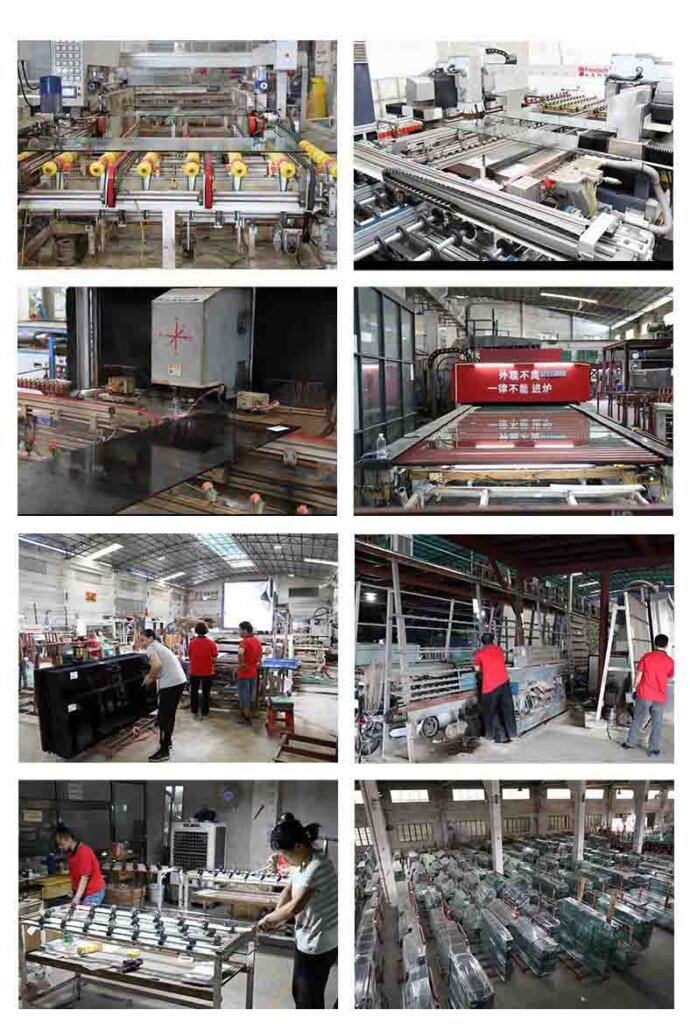
A vintage mirror factory audit is not a tour. It is a targeted interrogation of the processes that determine whether the anti oxidation antique mirror panels in the showroom and the panels in the container are the same product. Here are the checkpoints I use, in the order I use them.
The single most important structural question in a vintage mirror factory audit is whether the commercial grade vintage mirror supplier controls the coating line. A factory with a full coating line controls the silver layer, the paint coats, and the seal. A factory that buys coated mirror and only cuts and frames it has outsourced the variables that decide antique silver mirror backing durability. No in-house coating is a red flag, not automatically a disqualification — but it means the durability claim belongs to someone else, and mirror batch traceability becomes harder.
Ask for the antique mirror backing paint chemistry datasheet, not the trade name on the bucket. You want to see the chemistry family, the recommended dry film thickness, and the cure conditions. If the supplier cannot produce a datasheet, the double coat mirror backing paint claim is a verbal promise — and verbal promises do not survive the first humid summer.
A report without a batch ID is a marketing PDF. For mirror supplier CASS report verification, the audit standard is straightforward: 120 h CASS minimum, 300 h salt spray preferred for humid applications, sample size stated, pass criteria stated, and the report linkable to the antique mirror salt spray test batch being produced. If the commercial grade vintage mirror supplier can only show a report from a sample that was made for a trade show, the production line is unverified.
Look at the ground edge under raking light. Micro-chipping is the visible failure. The mirror edge sealing oxidation process criterion is just as important: sealing must happen in the factory immediately after cutting to final size, before the durable distressed mirror wholesale panels are stacked, packed, or shipped. A factory that seals only at final inspection is sealing after the antique mirror black edge defect window has already opened.
Do not accept a verbal confirmation. Ask for a cross-section or a film-thickness gauge reading during the vintage mirror factory audit. Backing films in controlled production run in the range of 25–38 microns per coat, with multiple layers used where thicker protection is required. If the line cannot demonstrate two distinct coats of antique silver mirror backing paint, the anti oxidation antique mirror durability specification is unverified.
Commercial installations increasingly require antique mirror safety backing CAT I CAT II compliant film. Factories should be capable of applying CAT I (polyester film) or CAT II (woven fabric film) to the rear of the mirror, with regular peel-strength tests and adhesive systems that comply with ANSI Z97.1 or EN 12600 impact standards. The critical compatibility question is whether the adhesive is approved for the specific mirror backing paint — not merely whether the factory owns a roll of film.
A mirror that survives a drop test can still oxidize inside a sealed container crossing the equator. Packaging is the first line of defense against antique mirror humid environment failure. Check EPE foam density, corner protection, and whether the durable distressed mirror wholesale packaging strategy accounts for condensation during sea freight. Packaging is a durability variable, not a logistics afterthought.
Can the commercial grade vintage mirror supplier link a finished crate to a coating batch and to the antique mirror salt spray test report for that batch? If not, the anti oxidation antique mirror durability claim cannot be enforced after shipment. Mirror batch traceability is the difference between a quality system and a quality story.
If you are buying cut to size antique mirror panel stock to avoid the 25% distressed mirror offcut waste problem, confirm that cut-to-size production has its own mirror edge sealing oxidation QC gate. A factory that treats cut-to-size long lasting aged mirror bulk as “standard sheets with a saw” will deliver panels with unsealed fresh edges and a shortened service life — exactly the antique mirror humid environment failure profile you were trying to avoid.
Before / After: A distributor’s antique silver mirror backing upgrade
A North American distributor was sourcing single-coat, non-edge-sealed anti oxidation antique mirror panels for hospitality projects. Year-one field failures were dominated by antique mirror black edge defect complaints, each triggering a distressed mirror replacement cycle cost event — replacement shipment plus installer labor.
The switch: double coat mirror backing paint, factory mirror edge sealing oxidation control, and a 300-hour antique mirror salt spray test report tied to batch IDs. The panel price rose. The replacement events fell. The antique mirror cost per year per installed square meter — including freight and labor — came down. Figures are directional and project-specific; the structural lesson is that the cheapest durable distressed mirror wholesale panel carried the highest total program cost.
You do not need a 40-page specification to protect an anti oxidation antique mirror order. You need seven lines that a commercial grade vintage mirror supplier cannot reinterpret. Here they are, ready to paste into a durable distressed mirror wholesale RFQ.
Copper free mirror backing or copper-bearing, named resin system, number of coats of antique mirror backing paint chemistry applied, and target dry film thickness. “Premium backing” is not a specification.
120 h CASS test antique mirror minimum for standard commercial; 300 h salt spray for humid or hospitality long lasting aged mirror bulk; report with batch ID attached as a PO annex. Third-party retest rights stated for mirror supplier CASS report verification.
Factory-applied, immediately after final cut, resin type named, UV resistance stated. No site-applied sealing accepted as a substitute for factory mirror edge sealing oxidation control. This one line prevents most antique mirror black edge defect claims.
CAT I or CAT II antique mirror safety backing as required by the project, with the adhesive system certified compatible with the specified antique silver mirror backing paint. Installation mastic brand named and approved in writing.
EPE density, corner protection, desiccant strategy, and container loading photographs before seal. Packaging is part of the anti oxidation antique mirror durability specification, not a logistics footnote.
AQL sampling plan, mirror backing adhesion test ASTM D3359 cross-hatch adhesion test where applicable, photographic evidence of mirror edge sealing oxidation, and a traceable link between the finished crate and the antique silver mirror backing coating batch.
If the delivered durable distressed mirror wholesale batch fails the agreed CASS test antique mirror or salt-spray threshold on third-party retest, replacement or credit at commercial grade vintage mirror supplier cost. This single clause changes the conversation from “trust us” to “test us.”
Standard mirror backing is engineered for indoor use in moderate humidity. Antique silver mirror backing for anti oxidation antique mirror applications adds a passivation barrier and a multi-coat paint system designed to tolerate the humidity, cleaning chemicals, and adhesive exposure of hospitality and retail environments. The visible pattern is the same; the survival envelope is not.
120 hours of CASS test antique mirror evaluation is the commercial floor. For humid, hospitality, or coastal applications, specify 300 hours salt spray or a documented 480-hour exposure equivalent for the antique silver mirror backing. A durable distressed mirror wholesale supplier who cannot produce a dated report for the production batch is unverified, regardless of the number they quote.
Copper free mirror backing is generally more resistant to oxidation than traditional copper-bearing systems. But copper-free chemistry without a compatible double coat mirror backing paint system and factory mirror edge sealing oxidation control is a bare silver layer with good intentions. The chemistry and the coating system must be specified together.
Antique mirror black edge defect is moisture-driven corrosion that starts at the cut edge and moves inward. The usual causes are unsealed or late-sealed edges, single-coat antique mirror backing paint chemistry, or an acidic adhesive attacking the antique silver mirror backing film. The failure is rarely the glass itself — it is the antique mirror humid environment failure mode.
For mirror supplier CASS report verification, check three things: the report date, the batch ID linkage, and whether the sample is identified as production material rather than a trade-show sample. Then exercise your third-party retest right on the first long lasting aged mirror bulk shipment. A supplier confident in their anti oxidation antique mirror line will not resist.
Yes — because antique mirror backing oxidation usually starts at a single point of vulnerability: a pinhole, a thin edge, an incomplete cure. Double coat mirror backing paint provides redundancy that one coat cannot. It is the lowest-cost anti oxidation antique mirror durability upgrade in the entire bill of materials.
Cut to size antique mirror panel sourcing moves the yield problem to the factory and typically reduces installed waste. Confirm that cut-to-size durable distressed mirror wholesale panels receive factory mirror edge sealing oxidation control after the final cut — otherwise the distressed mirror offcut waste savings are offset by antique mirror humid environment failure risk.
Bulk terms vary by commercial grade vintage mirror supplier, but a 20-foot container is a common wholesale antique mirror MOQ lead time threshold, with standard production lead times in the range of 7–10 working days after deposit. Custom sizing and antique mirror safety backing CAT I CAT II add a separate QC gate and should be priced accordingly.
In humid commercial environments, yes. The UV printed antique mirror risk is that printed surfaces rely on thin layers that can delaminate or fade in a 12–18 month window. Authentic chemical oxidation with a proper antique silver mirror backing system fails differently and far more slowly. The price gap usually tells you which technology you are being quoted for your durable distressed mirror wholesale program.
Start with in-house coating capability, then move to the antique mirror backing paint chemistry datasheet, the CASS test antique mirror and antique mirror salt spray test reports with batch IDs, and the mirror edge sealing oxidation sequence. If the commercial grade vintage mirror supplier cannot control the coating line, the anti oxidation antique mirror durability claim belongs to someone else.
Antique is a look. Anti oxidation antique mirror durability is a specification. The pattern sells the first container of long lasting aged mirror bulk. The antique silver mirror backing system decides whether there is a second one.
If you take three things from this article, take these: the standards are floors, not ceilings; the antique mirror salt spray test report must be tied to the batch, not to a sample; and the seven-line PO is cheaper than a distressed mirror replacement cycle cost event. Everything else — the CASS test antique mirror hours, the double coat mirror backing paint verification, the mirror edge sealing oxidation timing, the adhesive compatibility — is the detail that separates a durable distressed mirror wholesale program from a gamble.
The buyers who win in 2026 and 2027 will not be the ones who find the lowest per-square-meter quote. They will be the ones who make anti oxidation antique mirror durability a line item in the RFQ and a clause in the purchase order. That is how a long lasting aged mirror bulk program gets built — and how a commercial grade vintage mirror supplier relationship survives the first humid summer.
Ready to test the antique silver mirror backing before you wire the deposit?
Request an anti oxidation antique mirror backing specification sheet, a batch-linked CASS test antique mirror report sample, and a cut to size antique mirror panel quote with factory mirror edge sealing oxidation control included.
Get Your Free Quote in 12 HoursReferenced standards and sources